
A foot massage can ease muscle tension, help you relax, and may improve mood and sleep. It also gives you and your technician a close look at your feet. What it does not do is cure disease, “detox” your organs or fix a medical problem. Below is what the evidence supports, how a massage built into a pedicure fits in, and who should check with a doctor first.
TL;DR
- Foot massage stimulates muscles, reduces tension and often eases pain, according to Harvard Health.
- Studies of foot massage and reflexology point to less stress and anxiety and better sleep. Reflexology has not been shown to beat an ordinary foot massage.
- A massage during a pedicure is also a chance to spot blisters, corns, bunions and nail problems early.
- Skip or ask your doctor first if you have a blood clot, an open wound, recent surgery, uncontrolled high blood pressure, diabetes or poor circulation.
- Choose a licensed salon that cleans its tools and footbaths properly. The massage is only as good as the hygiene around it.
Table of Contents
- What a foot massage actually does
- Stress, anxiety and sleep
- Circulation and sore feet
- Foot massage vs. reflexology
- What a massage inside a pedicure gives you
- Who should be careful or skip it
- Hygiene matters as much as the massage
- Our view: the massage is the point, not the extra
- Choosing a pedicure for the massage
- Book a pedicure at Foxy Nails in Reno
- How often should you get one?
- FAQ
- Sources
What a foot massage actually does
Your feet carry your whole body weight through thousands of steps a day. The muscles in the arch, heel and calf work constantly, and they tighten. A massage uses pressure, kneading and stretching to loosen them.
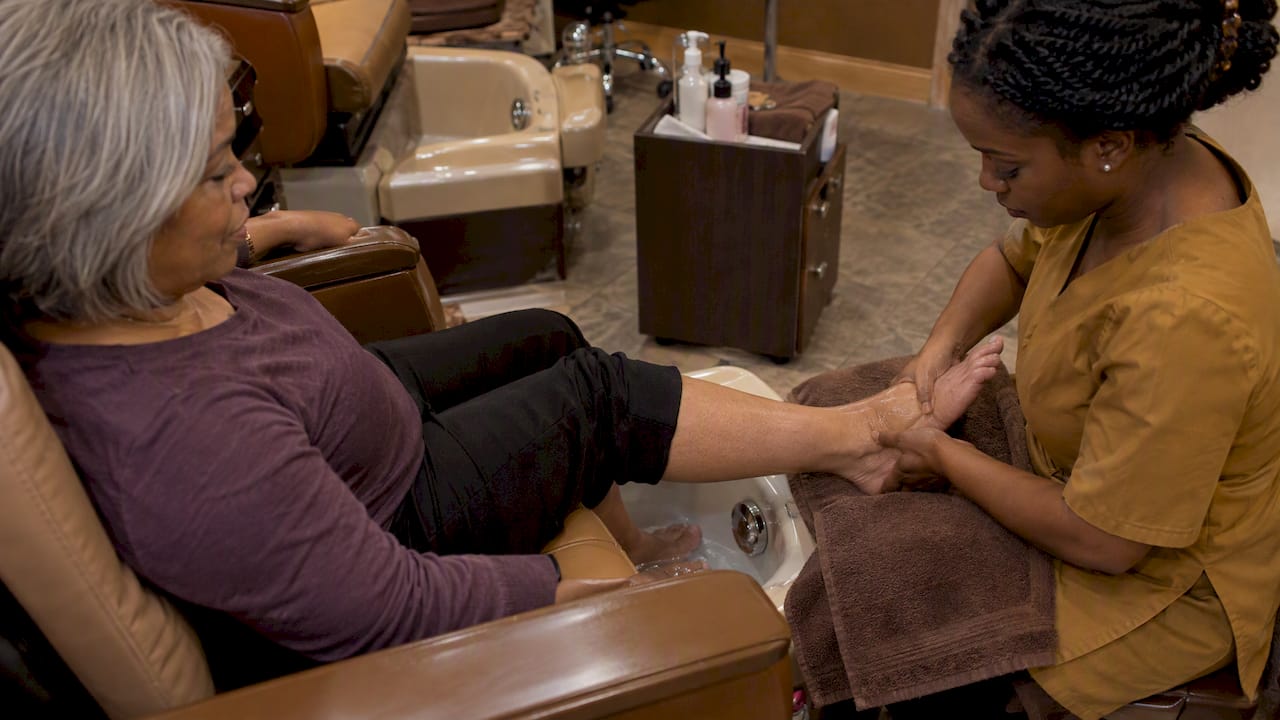
Harvard Health sums up the practical effect: massage stimulates muscles, reduces tension and often eases pain. The same article says regular foot massage improves circulation. That is a modest, plain claim, and it is the right size. A foot massage is a comfort and maintenance treatment, not a therapy for a diagnosed condition.
Here is how the commonly cited benefits stack up.
| Benefit | How strong is the support? | What to expect |
|---|---|---|
| Muscle tension and soreness | Good: Harvard Health reports it stimulates muscles and reduces tension | Looser arches and calves, less “end of day” ache |
| Stress and anxiety | Reasonable: a 2020 study found foot reflexology relieved psychological symptoms of stress by reducing anxiety and muscle tension | A calmer feeling during and after the session |
| Sleep | Promising: the same 2020 study found foot reflexology significantly improved sleep quality in adults | Easier winding down, not a cure for insomnia |
| Mood and energy | Modest: Cleveland Clinic says foot massage may improve mood, stress, energy level and sleep | A short lift, not a lasting change |
| Circulation | Reported by Harvard Health for regular massage | Warmth and a refreshed feeling in the feet |
| Early problem spotting | Practical: a massage means someone is closely handling your feet | Blisters, corns and nail trouble get noticed |
Notice what is missing from that table: claims about digestion, immunity or flushing toxins. Several pages that rank for this topic list them. We left them out because we could not find solid support for them, and we would rather give you a short honest list than a long shaky one.
Stress, anxiety and sleep
The strongest day-to-day reason people book a foot massage is simple: it feels like a pause. The research leans the same way. The 2020 study mentioned above found that foot reflexology reduced anxiety and muscle tension and improved sleep quality in adults.
A few honest limits apply:
- Study participants received structured sessions, often over several weeks. One relaxed ten minutes in a pedicure chair is not the same dose.
- Feeling relaxed is partly the setting: warm water, a reclined chair, someone else doing the work. That counts. It is a real benefit, just not a mysterious one.
- If anxiety or poor sleep is affecting your daily life, a massage is a nice addition, not a replacement for talking to your doctor.
Circulation and sore feet
Harvard Health says regular foot massage improves circulation. In practice, that means the warm, flushed feeling you get after pressure and kneading. For most healthy people, that is pleasant and harmless.
For people with circulation problems, the picture changes completely. Reduced blood flow can make feet more fragile and slower to heal, so rough pressure or a small cut is a bigger deal. We cover that below.
If you stand all day, run or walk a lot, tight arches and calves are common. Massage can take the edge off. Runners in particular should read our guide to booking a pedicure around training, since nail trimming and timing matter as much as the massage.
Foot massage vs. reflexology
These get mixed up constantly. A foot massage works the muscles of the foot for relaxation. Reflexology applies pressure to specific points that practitioners believe correspond to other organs and body parts, as Cleveland Clinic explains.
The evidence does not show that the second approach beats the first. Cleveland Clinic notes that research has not shown reflexology gives more benefit than traditional foot massage, and that many reported benefits are likely due to the relaxing effect of the massage itself. A health technology assessment cited in a 2021 abstract found reflexology may improve anxiety, yet it often performed similarly to ordinary foot massage for other symptoms.
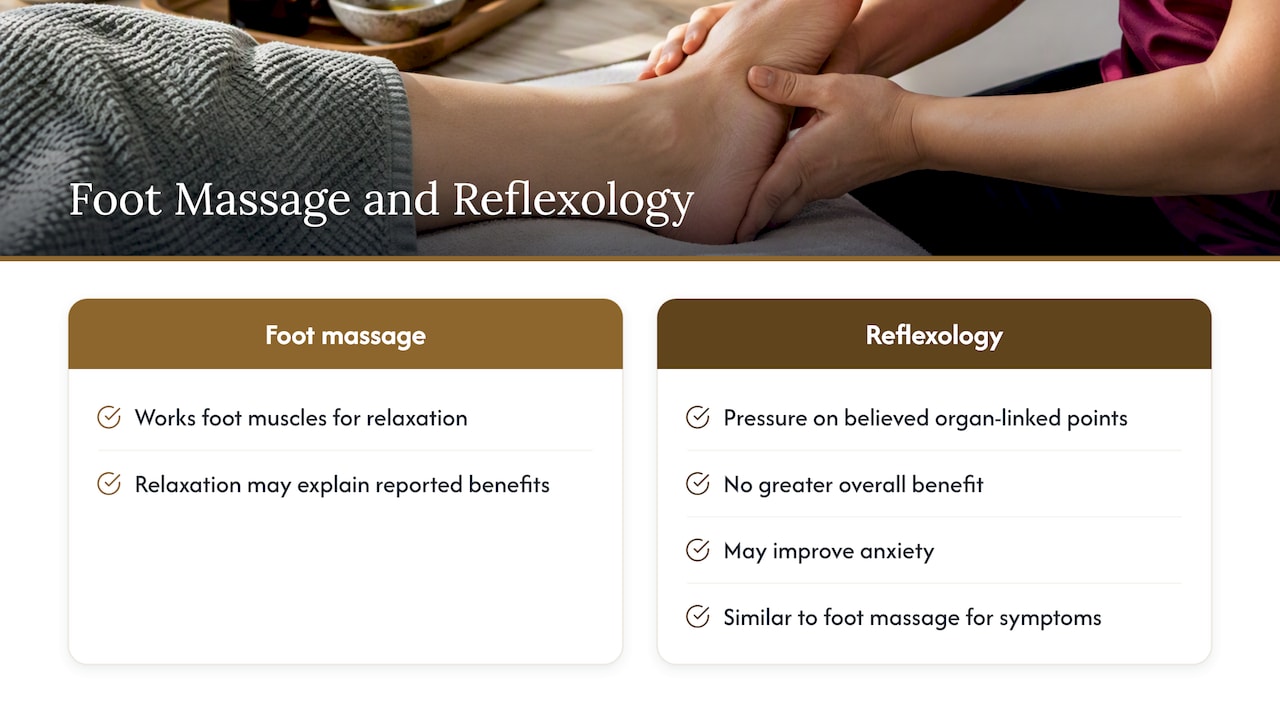
The takeaway for a salon visit: you do not need a reflexology chart to get the relaxation benefit. A skilled, unhurried massage does the job.
What a massage inside a pedicure gives you
A pedicure massage is usually shorter than a standalone massage, but it comes with advantages a spa table does not.
Your feet get a close inspection
Harvard Health points out that foot massage is a chance to check your feet for blisters, bunions, corns and toenail problems. In a pedicure, a trained technician is handling your feet anyway. If something looks off, such as a discolored nail, a crack, or a lump, ask about it. A technician cannot diagnose, but they can tell you it deserves a look from a podiatrist.
Soft skin and a finished result
The soak, exfoliation and trim happen first. Massage with lotion or oil comes after, so the skin is soft and the product absorbs well. Then polish goes on. You leave with relaxed feet and a finished look in one visit.
Relaxation without a second appointment
Most people do not book a separate foot massage. Folding it into a pedicure means the relaxation benefits come with maintenance you needed anyway. If you want more than the basics, our article on the benefits of a spa pedicure goes through what the full service includes.
What to ask for
Pedicure menus differ from salon to salon, and so does the length and style of the massage. Before you sit down:
- Ask what the massage includes: feet only, or lower legs as well.
- Tell the technician if you have sore spots, ticklish feet or a medical condition.
- Say whether you want firm or light pressure. Speak up during the massage too.
- Ask which lotion or oil they use if you have sensitive skin or allergies.
Who should be careful or skip it
For most healthy adults, a foot massage is low risk. Some situations call for a conversation with a healthcare provider first.
Clots, surgery, wounds and blood pressure
Mayo Clinic materials say people with deep vein thrombosis, recent surgery, open wounds, uncontrolled high blood pressure or blood-clotting disorders should talk to their healthcare provider about whether to have massage therapy. The same source lists areas to avoid: an unhealed bone fracture, burns and open wounds. If any of these apply, ask your doctor before you book, and tell the technician when you arrive.
Diabetes and poor circulation
The American Podiatric Medical Association says people with diabetes, peripheral vascular disease or other circulatory disorders must avoid self-treatment of foot problems and seek podiatric care as soon as possible. It also advises immediate treatment at the first signs of an ingrown toenail, and a podiatrist visit right away for drainage or heavy redness.
That does not mean you can never have a pedicure. It means you need a careful setup: a clean salon, no cutting of skin, no harsh scraping, and a technician who knows about your condition. We wrote a full guide on getting a pedicure safely with diabetes. Read it, and check with your own doctor, before booking.
Another APMA page warns that over-the-counter corn and callus treatments can do more harm than good, especially for people with diabetes, because harsh chemicals can cause burns or foot ulcers. Our callus removal safety guide covers what is reasonable to do at home and when to see a doctor.
Older adults
Skin gets thinner and circulation and sensation can change with age. If you are booking for a parent or grandparent, our caregiver checklist for senior pedicures lists the red flags to watch for.
Hygiene matters as much as the massage
A relaxing massage is not worth an infection. A CDC investigation found that pedicure whirlpool footbaths can harbor potentially pathogenic mycobacteria, although the risk of infection remained unclear. The same report noted that customers who had shaved their legs before using whirlpool footbaths had a higher risk of infection. That is why we suggest waiting 24 to 48 hours after shaving and telling your technician.
The CDC advises choosing licensed salons that sterilize instruments after every use. Not sure how to judge a salon? Our four questions to ask before you book take about two minutes. For a look at one salon’s process, read the six-part hot towel pedicure routine.
A little aftercare helps too. The CDC says washing and drying your feet completely every day can help prevent or control athlete’s foot. Dry between the toes, and moisturize the rest of the foot. A rich barrier balm, the kind explained in this piece on occlusive moisturizers and skin barrier care, can help dry heels hold on to moisture between visits.
Our view: the massage is the point, not the extra
We get this question at the salon often: is the massage just a nice add-on? Here is how we see it.
We treat the massage as part of the care, not a bonus tacked on at the end. When we hold someone’s feet in our hands, we are also seeing them: dry heels, a nail that is starting to lift, a callus that is getting thick. Many clients do not look at the bottom of their own feet. A pedicure is often the only time anyone does.
We also tell clients not to expect miracles. A foot massage will not treat a health condition, and we will not pretend a particular lotion detoxifies anything. What we can promise is unhurried attention, clean tools, and pressure that fits you. If you tell us your feet are tender, we adjust. If you have a medical condition, we would rather you tell us at the start and check with your doctor than guess.
Families come to us too, with kids who want a gentle, simple treatment. The same rule applies: comfort first, no pushing.
— Cuong
Choosing a pedicure for the massage
If the massage is the part you care about most, pick the service by how much time and care you want, not by the polish. Our published prices at the time of writing:
| Service | Price |
|---|---|
| Pedicure | $25 |
| Spa Pedicure | $40 |
| Deluxe Pedicure | $45 |
| Foxy Deluxe Pedicure | $55 |
| Foxy Signature Pedicure | $65 |
Prices are from our services page, which is the place to check current pricing and what each service includes. If you want to add gel polish or have old polish removed, our guide to spa pedicure extras explains what is worth it and what to skip.
Book a pedicure at Foxy Nails in Reno
We are a nail salon in Reno, NV, offering pedicures from the basic Pedicure at $25 up to the Foxy Signature Pedicure at $65. Tell us when you book if you have tender feet, a health condition or a child coming along, and we will plan the visit around it. See every service and price on our services page, or read about professional foot care in Reno.

If you would like your feet looked after by people who take their time, we would be glad to see you.
How often should you get one?
There is no official schedule for foot massage in healthy adults, and we found no medical guidance setting one. The studies that showed benefits for stress and sleep used repeated sessions, so regular massage seems to make more sense than a one-off. For most people, a pedicure every four to six weeks is a comfortable rhythm for nails and skin, and the massage comes along with it. Between visits, a few minutes of self-massage with lotion after a shower is a free way to loosen up. Press gently, avoid any painful spots, and stop if something hurts.
If you have pain that lasts, swelling in one foot or leg, numbness, or a sore that is not healing, that is a job for a doctor or podiatrist, not a massage.
FAQ
Is a foot massage good for you?
For most healthy people, yes, in modest ways. It stimulates muscles, reduces tension and often eases pain, and studies link foot massage and reflexology to less anxiety and better sleep. It is not a treatment for a disease.
Is a pedicure massage the same as reflexology?
No. A pedicure massage works the muscles of the foot and lower leg for comfort. Reflexology presses specific points believed to connect to other parts of the body. Cleveland Clinic says research has not shown reflexology beats ordinary foot massage.
Who should avoid a foot massage?
Anyone with a blood clot, recent surgery, open wounds, burns, an unhealed fracture, uncontrolled high blood pressure or a clotting disorder should ask a healthcare provider first. People with diabetes or poor circulation should also check with their doctor and tell the technician before the service.
Can a foot massage help me sleep?
It may. A 2020 study found foot reflexology significantly improved sleep quality in adults. A calm, warm pedicure in the evening can help you wind down, but long-term sleep problems need a doctor’s attention.
Is it safe to get a foot massage at a nail salon?
It can be, if the salon is licensed and cleans its tools and footbaths properly. Skip shaving your legs right before, and tell the technician about any cuts, sores or medical conditions.
Sources
- Foot massage: The pause that refreshes and is good for you! (Harvard Health)
- Reflexology: What It Is and How It Works (Cleveland Clinic)
- Effect of Foot Reflexology Intervention on Depression, Anxiety, and Sleep Quality in Adults (PMC)
- Efficacy and Safety of Foot Reflexology (Cambridge)
- Mycobacteria in Nail Salon Whirlpool Footbaths, California (CDC)
- Healthy Habits: Foot Hygiene (CDC)
- Medical-Based Massage Therapy (Mayo Clinic)
- Ingrown Toenails (APMA)
- Corns and Calluses (APMA)