
Yes, pedicures deliver real, measurable benefits for men: healthier nails, lower infection risk, smoother calluses, better circulation, and a genuine boost in comfort and confidence. Men on their feet all day, athletes, and anyone dealing with rough skin or nail problems gain the most. The rest of this guide covers what actually happens in the chair, how often to go, safe at-home upkeep, and when a foot issue needs a medical professional instead of a spa visit.
TL;DR:
- Men with recurring foot issues or health conditions like diabetes should seek more frequent, specialized pedicures supervised by a healthcare professional.
- Proper nail trimming during a pedicure prevents ingrown toenails by cutting nails straight across and filing edges smoothly.
- Callus removal should be done gradually with safe tools, avoiding blades that increase the risk of cuts and infections.
- Regular at-home foot care includes weekly soaking, gentle exfoliation, moisturizing, and careful nail trimming to maintain salon results.
- A professional pedicure offers precise debridement, early problem detection, and sanitation standards that are difficult to replicate at home.
Table of Contents
- Top Health and Hygiene Benefits of a Men’s Pedicure
- What Happens During a Professional Pedicure, Step by Step
- How Often Should Men Get Pedicures, and Who Needs More Care?
- Simple At-Home Foot Care Between Salon Visits
- What a Professional Salon Adds to Foot Health
- Pedicures Are Maintenance, Not Indulgence
- Book a Pedicure Built Around Your Foot Health
- Sources
- FAQ
Top Health and Hygiene Benefits of a Men’s Pedicure
Foot care sounds minor until you consider how much abuse feet take. A pedicure addresses several problems at once, and each one has a specific mechanism behind it.
Proper trimming and cleaning during a pedicure directly reduces the odds of ingrown toenails, one of the most common and painful foot complaints among active men. Technicians cut nails straight across and file the corners, which prevents the edge from digging into the surrounding skin as it grows out. This single habit, done consistently, prevents ingrown nails far more reliably than a quick at-home clip with dull clippers.
Callus control is where technique matters most. A trained technician thins built-up skin gradually instead of cutting it away entirely, which preserves the protective layer while removing the painful bulk. That distinction separates a safe pedicure from the kind of aggressive scraping that leads to cuts, bleeding, or infection.
Trained eyes also catch problems early. A technician who works on feet daily tends to notice discoloration, thickened nails, or scaling skin before you would. That early flag matters, since fungal nail infections are common in adults and often need long treatment courses once they take hold.
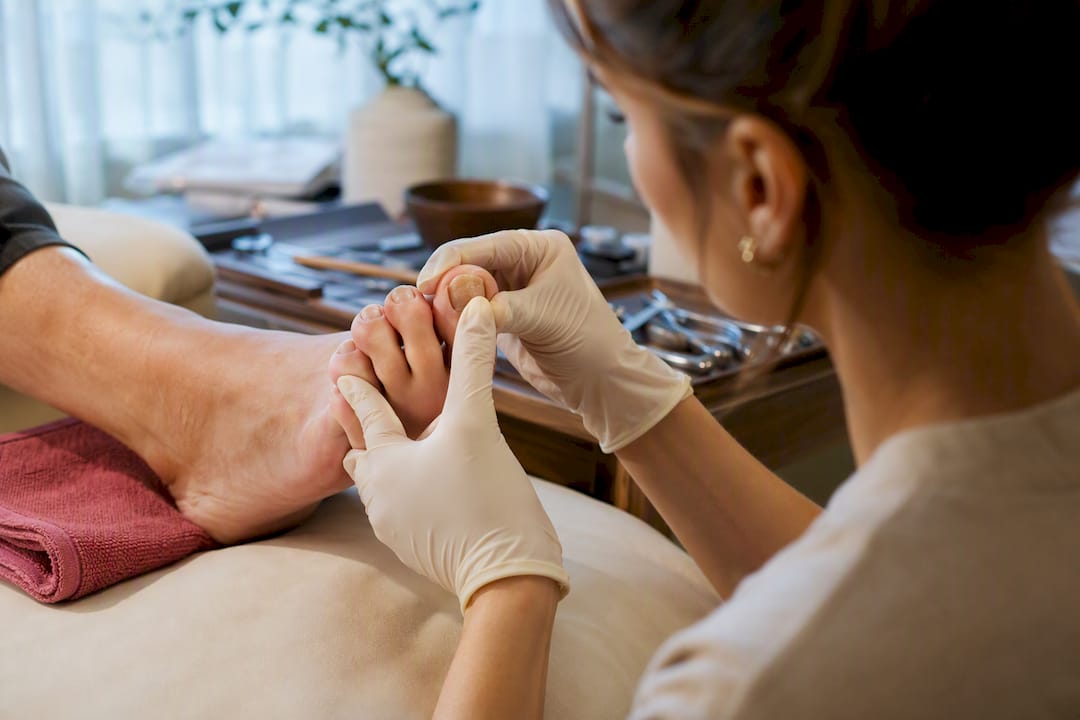
Pro Tip: Ask your technician to point out anything unusual on your feet during the appointment. Most will tell you if something looks like it needs a doctor’s attention, and that five-second heads-up can save you months of treatment later.
The benefits extend past the visible stuff:
- Warm soaking loosens tight skin and improves blood flow to the lower legs, which can ease soreness after long days standing or training.
- Foot and calf massage during the service relaxes muscles that carry tension most men never think about until it’s gone, improving overall balance and foot health as explained in Proprioception tips from Align Clinic.
- Cleaner, better-groomed feet cut down on odor caused by bacteria trapped in rough or cracked skin.
- Smoother heels and trimmed nails make everyday movement, from running to just walking around barefoot, noticeably more comfortable.
- Groomed feet quietly boost confidence, especially for guys who avoid sandals or pool decks out of embarrassment.
What Happens During a Professional Pedicure, Step by Step
Knowing the sequence helps you understand why each step exists and what to ask for.
- Soak. Warm water softens skin and nails, making everything that follows safer and less abrasive.
- Trim and shape. Nails get cut straight across to reduce ingrown risk, then filed smooth at the edges.
- Cuticle care. The technician gently pushes back cuticles rather than cutting deep, which avoids opening the skin to bacteria.
- Exfoliation. A scrub or pumice removes dead surface skin, prepping rough areas for more targeted work.
- Callus debridement. This is the precision step. A trained technician thins thick, painful skin without stripping away the protective layer underneath.
- Massage. Foot and lower-leg massage improves circulation and works out tension built up from standing or workouts.
- Moisturize. A rich cream or balm locks in hydration so skin doesn’t dry back out within a day.
Sanitation should be visible, not assumed. Clean or sterilized tools, disposable liners in foot baths, and single-use files are standard at any salon serious about hygiene, and it’s fair to ask before you sit down. If you’re managing an active issue like recurring calluses or nail changes, ask specifically about a medical pedicure or advanced foot care service instead of a standard treatment.
Pro Tip: If a technician reaches for a metal credo blade or razor on thick callus, speak up. Modern debridement tools file skin down safely; blades increase the risk of cutting too deep.
How Often Should Men Get Pedicures, and Who Needs More Care?
Frequency depends on what you’re solving. For general upkeep, every few weeks to two months keeps nails, calluses, and skin in check without over-treating healthy feet. If you’re actively treating a recurring problem like heavy callus buildup or nail issues, more frequent visits work better until things stabilize. Once you’re just maintaining, seasonal visits, roughly four times a year, are often enough.
Some men need more frequent, more careful attention:
- Men with diabetes, since reduced sensation and slower healing raise the stakes on even minor nicks or infections.
- Anyone with peripheral neuropathy or poor circulation, where a small cut can go unnoticed and worsen quickly.
- Men with recurring ingrown nails or a history of fungal infection, who benefit from tighter monitoring.
Diabetes changes the calculus enough that many podiatrists recommend a medical pedicure or direct physician involvement rather than a standard spa visit. If you notice pain, swelling, drainage, persistent discoloration, or numbness at any point, stop scheduling routine pedicures and see a doctor. Those symptoms point to something beyond cosmetic care.
Simple At-Home Foot Care Between Salon Visits
A pedicure’s benefits fade fast without basic upkeep, but the routine to maintain them takes minutes, not hours.
- Soak feet briefly, five to ten minutes, once or twice a week to keep skin manageable.
- Use a pumice stone gently on rough spots rather than aggressive metal scrapers, which can cut too deep and open the skin.
- Apply a daily moisturizer, and reach for a urea-based cream if heels or calluses are unusually thick.
- Trim nails straight across with quality clippers, avoiding rounded corners that encourage ingrown growth.
- Keep an emery board on hand for smoothing edges between full pedicures.
Pro Tip: If a callus feels tender to the touch or you spot any cracking that goes past the surface, stop the DIY approach and book a professional visit instead. That’s the line between routine maintenance and a job that needs trained hands.
DIY care works fine for light maintenance between visits. It’s not a substitute for professional debridement on thick, painful callus, and it’s never the right call once you’re dealing with an infection, an ingrown nail that’s inflamed, or skin that’s split open.
What a Professional Salon Adds to Foot Health
A salon visit brings precision most men can’t replicate at home. At Foxy Nails, Cuong and the team work with clients across a wide range of foot-care needs, backed by a strong track record of client reviews that reflect consistent, careful service.
The service lineup covers different levels of need:
- Spa Pedicure handles routine maintenance, cleaning, trimming, and basic exfoliation.
- Deluxe Pedicure adds deeper exfoliation and callus attention for feet that need more than upkeep.
- Foxy Signature Pedicure goes furthest, combining thorough callus debridement with an extended massage for both foot health and relaxation.
Trained technicians spot early signs of trouble, thin callus without over-removing protective skin, and follow sanitation protocols that DIY tools at home simply can’t match.
Pedicures Are Maintenance, Not Indulgence
The stigma around men getting pedicures never made much sense once you look at what’s actually happening: nail trimming, infection prevention, and skin care. Reframe it as maintenance, the same category as stretching before a run or seeing a dentist twice a year, and the decision gets a lot easier. Less stigma plus real physical benefits means more men catching foot problems early instead of ignoring them until they hurt. Think of a pedicure as preventive health care that happens to also feel good.
— Cuong
Book a Pedicure Built Around Your Foot Health
Foxy Nails gives you a professional option beyond the pumice stone and dull clippers sitting in your bathroom drawer, at a fraction of the guesswork involved in fixing a bad DIY callus job yourself. If routine upkeep is the goal, the Spa Pedicure at $40 price link covers the basics well. If you’re dealing with thicker callus or want a deeper treatment, the Foxy Signature Pedicure at $65 price link adds extended debridement and massage.

Technicians follow clean-tool protocols on every visit, and if you’re managing diabetes, neuropathy, or a recurring nail issue, just mention it when you book so the service can be adjusted accordingly. Full details on every option, including the Deluxe Pedicure at $45 price link are listed on the services page. Book online or call ahead, and bring the family along if you want a combined visit.
Sources
For deeper medical background, see Mayo Clinic on corns and calluses, Reid Health on diabetes and pedicure safety, and Podiatry Sports Medicine’s case for men’s foot care.
- Diabetes and pedicures: are they safe? | Reid Health
- The “Man Pedicure”: 5 Reasons Men Need Foot Care Too — The Center for Podiatric Care and Sports Medicine
- Pedicure for men: Why you should get them | Fatherly
- Is callus removal safe? What podiatrists want you to know | Prairie Foot & Ankle
FAQ
Is It Healthy for Men to Get Pedicures?
Yes. Pedicures support nail health, reduce infection risk through proper trimming and cuticle care, and help manage calluses before they become painful. The main exception is men with diabetes or neuropathy, who should ask about a medical pedicure or get physician guidance first.
Why Should Guys Get Pedicures?
Beyond appearance, pedicures prevent ingrown nails, catch fungal or skin changes early, and improve circulation through soaking and massage. Many men also notice less foot odor and less soreness after long days on their feet.
How Often Should a Man Get Pedicures?
For general maintenance, every few weeks to two months works well. Men treating an active problem, like recurring callus buildup, often benefit from monthly visits until it resolves, then can shift to a seasonal schedule.
What Does a Pedicure Do for a Man?
A pedicure trims and shapes nails, softens and thins callus safely, cleans cuticles, and improves circulation through massage. It also gives you an early warning system for nail or skin problems you might otherwise miss until they get worse.