
Yes, a pedicure can reduce a callus, but which one you book matters. A standard spa pedicure softens and smooths for cosmetic, temporary relief. A medical pedicure targets the cause with clinical debridement for longer-lasting results. If you see pain, bleeding, or discoloration, or if you have diabetes, skip both and see a podiatrist first.
TL;DR:
- Calluses caused by pressure or gait issues often require a medical pedicure with clinician-led debridement to prevent recurrence.
- Home care with gentle filing, moisturization, and keratolytic creams is effective only for mild calluses and requires caution in cases of diabetes or poor circulation.
- Symptoms like pain, bleeding, discoloration, or signs of infection indicate the need to see a podiatrist immediately rather than attempt DIY removal.
- Preventing callus regrowth involves changing footwear, using orthotics, and regularly inspecting feet for early thickening.
- Spa pedicures are suitable for cosmetic maintenance but cannot resolve stubborn, painful, or recurring calluses without professional assessment.
Table of Contents
- Salon Callus Reduction vs Medical Pedicure: How They Differ
- How Do You Safely Remove a Callus at Home?
- What Happens During a Medical Pedicure?
- When Should You Stop DIY and See a Podiatrist?
- How to Prevent Calluses From Coming Back
- How Foxy Nails Approaches Safe Callus Reduction
- Choosing Your Route: A Quick Gut Check
- Book a Pedicure That Takes Callus Care Seriously
- Sources
Salon Callus Reduction vs Medical Pedicure: How They Differ
The two services solve different problems, even though they can look similar from the pedicure chair. A salon pedicure uses softeners, a pumice stone, and mechanical filing to smooth rough skin. The results feel great immediately but fade in a few weeks because nothing about the underlying pressure has changed.
A medical pedicure starts with an actual clinical exam. According to Lansdowne Podiatry, medical pedicures focus on biomechanical causes like gait and shoe fit, and they may include sterile scalpel debridement performed by a trained clinician rather than a nail technician. That distinction changes who should book which service.
- Salon pedicure: best for mild, painless calluses where you mainly want smoother, softer skin for the short term.
- Medical pedicure: best for thick, recurring, or uncomfortable calluses, especially when you suspect a footwear or gait issue is driving the buildup.
- Either service: unsuitable as a substitute for medical care if you have diabetes, neuropathy, or poor circulation.
Neither option is “better” across the board. A salon visit is faster and cheaper for cosmetic upkeep. A medical pedicure costs more but actually addresses why the callus keeps coming back.
How Do You Safely Remove a Callus at Home?
Home maintenance works for mild, uncomplicated calluses between professional visits, but the margin for error is thinner than most people assume. Follow these steps in order, and stop immediately if you notice broken skin, redness, or swelling.
- Soak feet briefly, not too long, to avoid skin damage and increased infection risk. The Colorado Foot Institute warns that prolonged soaking macerates skin and raises infection risk, which undoes the point of softening it in the first place.
- File gently while skin is still damp. Use a pumice stone or fine foot file gently; avoid using sharp blades at home. Stride Foot & Ankle is direct about this: razors and sharp blades have no place in home callus care.
- Apply a keratolytic cream matched to severity. Urea concentrations of 10% to 20% work for moderate thickening, while 30% to 40% is reserved for very thick calluses and only under professional supervision.
- Check salicylic acid products for concentration. These fall under an FDA drug monograph, and higher-strength versions require careful, repeated use rather than one aggressive session.
- Moisturize daily and re-file lightly after bathing, roughly two to three times a week, to keep buildup from returning.
Pro Tip: Keep a foot file at your bathroom sink, not buried in a drawer. Calluses respond better to five light passes twice a week than one aggressive session once a month.
If you have diabetes or poor circulation, skip the blade entirely and skip aggressive filing. Talk to a podiatrist before using any keratolytic stronger than a basic moisturizing cream.
What Happens During a Medical Pedicure?
A medical pedicure looks nothing like a spa visit once you’re actually in the chair. It opens with a real evaluation, not a soak.
- Biomechanical assessment first. The clinician checks your gait, shoe wear pattern, and pressure points to identify what’s actually causing the callus, not just where it sits.
- Sterile scalpel debridement or nail burs. Because callused tissue is dead skin, careful removal with a scalpel is painless in trained hands, though it demands strict sterile technique to avoid injury or infection.
- Immediate smoothing, with results that last. Unlike a salon softener, debridement removes the thickened layer directly, and most people see visible improvement in one session.
- Follow-up every 3 to 4 weeks, depending on how quickly the callus rebuilds and whether the underlying cause (footwear, gait) has been addressed.
Cost varies more than people expect. Clinic-based visits with a full exam tend to run higher than a standard spa pedicure. One widely shared account put a single medical pedicure at around $90, reflecting the added time for assessment and sterile debridement rather than just filing.
When Should You Stop DIY and See a Podiatrist?
Some symptoms mean it’s time to put the pumice stone down. The American Podiatric Medical Association is clear that certain warning signs call for professional care, not more home treatment.
- Pain that doesn’t fade after removal, or pain that gets worse over days
- Bleeding, drainage, or an open crack that won’t close
- Redness, warmth, or swelling around the callus, all signs of possible infection
- Discoloration, especially a dark or black spot under the thickened skin
- Diabetes, neuropathy, vascular disease, or a weakened immune system
For anyone in a high-risk group, a podiatrist doesn’t just remove the callus. They treat the root cause, sometimes with custom orthotics, footwear changes, or, in persistent cases, a minor surgical correction.
How to Prevent Calluses From Coming Back
Removal without prevention is a cycle you’ll repeat every few weeks. The Merck Manual notes that long-term management comes down to changing the pressure and friction that caused the callus in the first place, not just filing it away.
- Choose shoes with a roomier toe box and rotate pairs so the same spot isn’t stressed daily.
- Add cushioned insoles or protective pads over pressure points.
- Ask a podiatrist about custom orthotics if calluses keep forming in the same spot despite better shoes.
- Moisturize daily and file gently after bathing, when skin is softest.
- Inspect your feet weekly for early thickening, especially if you’re on your feet all day.
| Habit | Why it helps |
|---|---|
| Roomier toe box | Reduces friction on toes and forefoot |
| Cushioned insoles | Redistributes pressure away from hot spots |
| Custom orthotics | Corrects the gait issue causing recurrence |
| Weekly foot check | Catches new calluses before they thicken |
How Foxy Nails Approaches Safe Callus Reduction
At Foxy Nails, spa pedicure callus care is treated as a skill, not an afterthought. Technicians follow strict sanitation protocols and use proper softening and filing technique so clients get smoother, healthier-feeling feet without cutting corners on safety.
That said, a spa pedicure has limits. If a client mentions ongoing pain, diabetes, or a callus that keeps returning despite regular care, the honest move is pointing them toward a podiatrist for a proper evaluation. Foxy Nails clients can expect a relaxing, thorough spa pedicure experience built around comfort and hygiene, plus straightforward guidance on when at-home upkeep is enough and when it isn’t.
Choosing Your Route: A Quick Gut Check
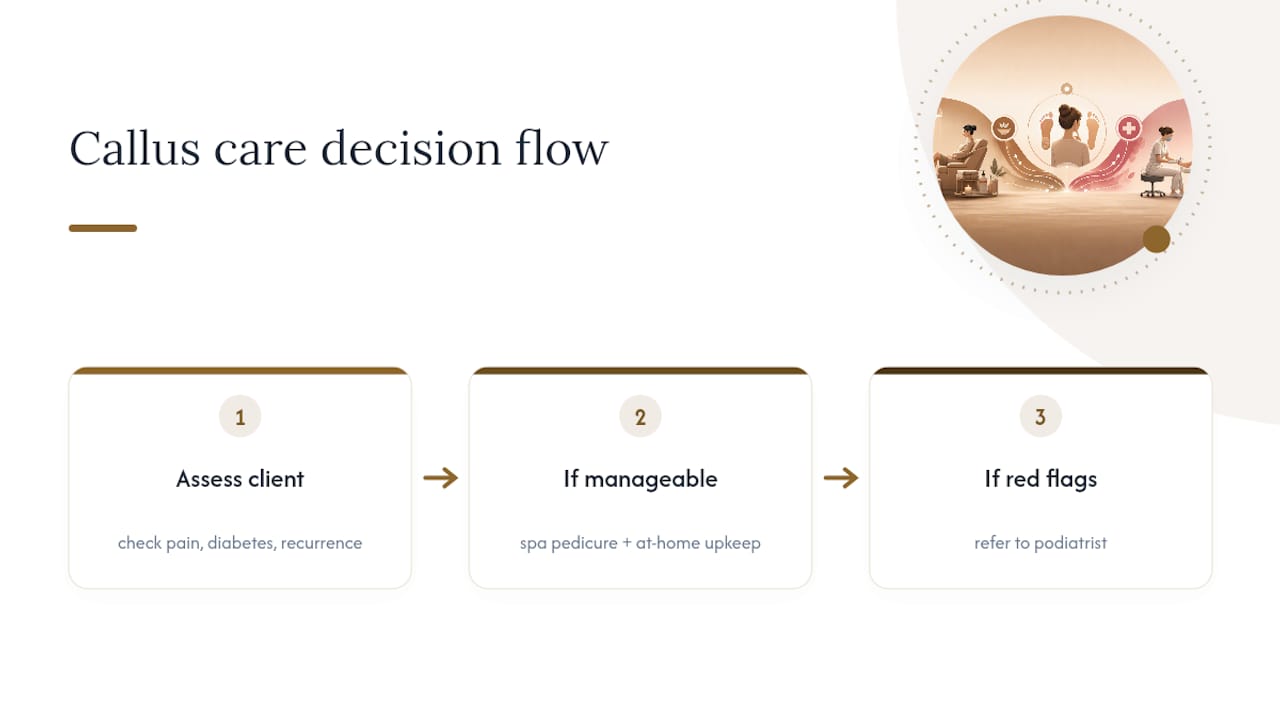
If a callus hurts, bleeds, or keeps coming back within weeks, skip DIY and book a medical pedicure or podiatry visit. If it’s mild and painless, a salon pedicure plus a basic home routine, urea cream and gentle filing twice a week, usually holds it steady. Reassess every few weeks; if nothing’s improving, move up the ladder rather than repeating the same fix.
— Cuong
Book a Pedicure That Takes Callus Care Seriously
Callus reduction is treated as part of real foot care, not a rushed add-on before polish goes on. Compared to squeezing in a quick buff at a walk-in salon, spa pedicures give calluses the soak time, filing technique, and attention they need, done by technicians who know when smoothing is enough and when to suggest seeing a podiatrist.

If your feet need more than a quick fix, our spa pedicure service is built for exactly that kind of maintenance. For general foot care and hygiene practices before your visit, our guide on professional foot care covers what to expect. Ready to get your feet back in shape? Book your pedicure at Foxy Nails today.
This article is general information, not a substitute for advice from a qualified doctor. Consult a qualified healthcare professional about your own circumstances before acting on anything here.
Sources
- How do you remove a painful callus? 7 proven steps — LMD Podiatry
- Why your pedicure isn’t solving your foot calluses: The medical pedicure advantage — Lansdowne Podiatry
- Calluses and corns — Merck Manual Professional
- Pedicure safety: protecting your feet and health — Colorado Foot Institute