
Most older adults without diabetes, nerve damage, or circulation problems can safely book a senior-friendly salon pedicure or a mobile in-home service. Anyone with foot ulcers, severe neuropathy, poor circulation, or an active infection should see a podiatrist instead of a salon service. For everyone in between, a gentle, appointment-focused pedicure offers real comfort and health benefits without unnecessary risk.
TL;DR:
- Older adults without diabetes or circulation issues can safely enjoy senior-friendly pedicures, but those with ulcers, active infections, or severe neuropathy should see a podiatrist.
- Waterless techniques and single-use tools are recommended for senior pedicures to prevent infection and accommodate fragile, slow-healing skin.
- Medicare only covers foot care for diabetics at higher risk of nerve damage, typically once every six months, not routine cosmetic pedicures.
- For safety, confirm sanitation standards, experience with mobility limitations, and discuss any medical conditions before booking a pedicure.
- Daily at-home foot care, including gentle trimming, moisturizing, and proper shoe wear, helps identify problems early and prevents serious issues.
Table of Contents
- Where to get foot care: podiatrist, medical pedicure, salon, or mobile service
- What a senior-friendly pedicure looks like in practice
- Safety red flags, exam frequency, and what Medicare actually covers
- How to prepare and what to ask when booking
- At-home foot care between professional visits
- How we think about safety and comfort for older clients
- Book a gentle, senior-friendly pedicure at Foxy Nails
- FAQ
- Sources
Where to get foot care: podiatrist, medical pedicure, salon, or mobile service
Picking the right provider starts with an honest look at medical risk, not convenience. A podiatrist is a licensed foot doctor trained to treat wounds, thickened or fungal nails, and circulation problems, and is the only appropriate choice when there’s an open sore, infection, or diagnosed nerve damage. A medical or geriatric pedicure studio sits between a spa and a clinic: these businesses commonly use waterless techniques and avoid blades specifically to lower infection risk for frail or high-risk clients, and they tend to run longer, unhurried appointments suited to thick nails or limited mobility. A senior-friendly salon, like a standard nail salon with staff trained in gentler handling, works well for healthy older adults who mainly want comfort, grooming, and relaxation. Mobile or in-home pedicure services add convenience for someone who can’t easily travel, though the tradeoff is worth checking carefully.
Use these points to sort yourself or the person you’re caring for into the right category:
- See a podiatrist if there’s a foot ulcer, diabetic nerve damage, poor circulation, or any sign of infection.
- Consider a medical or geriatric pedicure studio for thick, hard-to-cut nails or significant mobility limitations, even without an active medical problem.
- A senior-friendly salon works fine for routine grooming in someone with healthy feet and no diabetes-related complications.
- Mobile or in-home services suit someone with transportation barriers, but confirm the technician brings sterilized or single-use tools, not just a portable foot bath.
The APMA’s pedicure guidance specifically advises people with diabetes or poor circulation to consult a podiatrist for a customized approach rather than a standard salon visit.
What a senior-friendly pedicure looks like in practice
A pedicure built for older clients looks different from a typical spa visit in a few specific ways. Many providers who specialize in this group use waterless cleaning methods and skip blades entirely, relying on files and soft tools for calluses instead of metal graters or razors. This matters because thin, fragile, or slow-healing skin can be nicked easily, and a small cut that would heal quickly in a younger person can become a real problem for someone with reduced circulation.
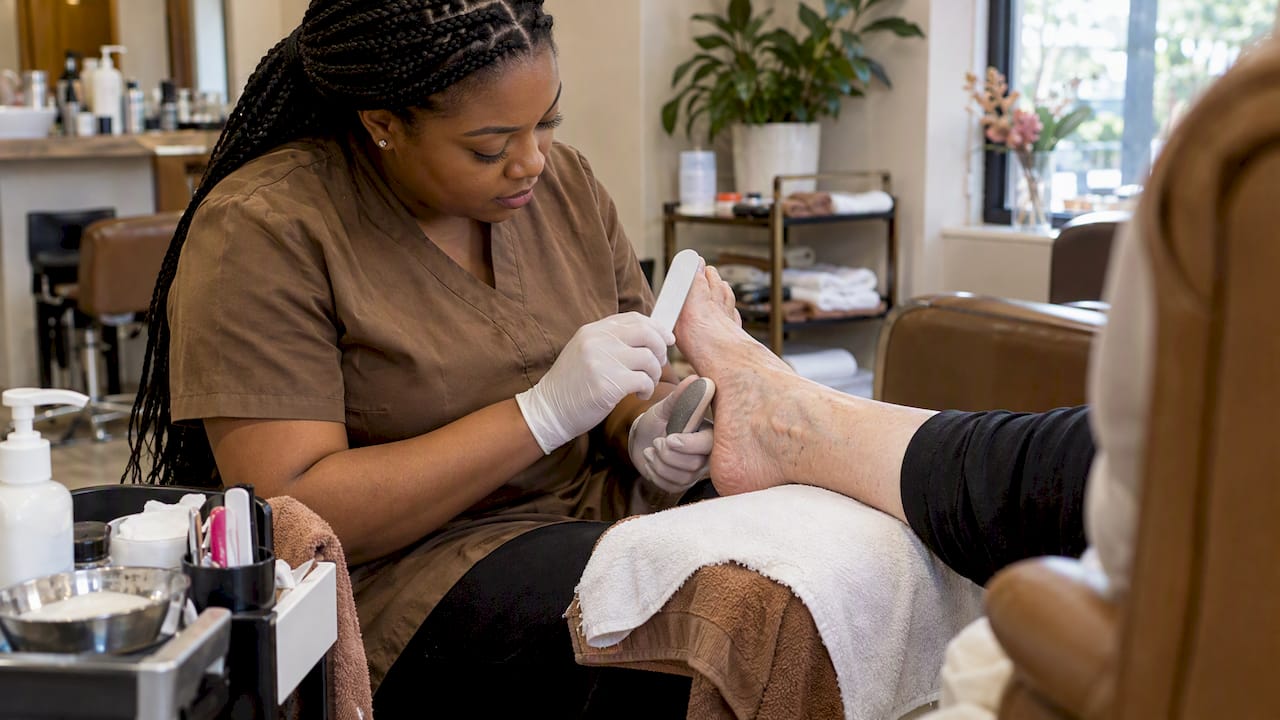
Before booking, it’s worth confirming a few sanitation basics: ask whether foot tools are autoclaved or single-use, and whether foot baths get disinfected between every client rather than just rinsed. The APMA warns against DIY removal of corns and against small curved tools that raise ingrown toenail risk, a caution that applies just as much to professional settings as to home care.
Comfort accommodations matter too. Ask about chairs with easy transfers, whether staff can help someone move from a wheelchair or walker, and whether appointments can run longer than a standard half-hour slot. If a technician needs to speak more slowly, repeat instructions, or check in frequently, say so ahead of time. One thing to flag directly: if toenails show discoloration, thickening, or a fungal-looking pattern, ask the salon not to simply polish over it. Covering a possible fungal infection with polish can mask a problem that needs a podiatrist’s attention instead of a cosmetic fix. If you’re unsure whether certain prep steps are safe beforehand, our guidance on shaving before a pedicure covers timing that applies to older skin as well.
Safety red flags, exam frequency, and what Medicare actually covers
Certain signs mean it’s time to call a doctor, not book a pedicure. Watch for:
- Open sores, cuts that aren’t healing, or skin breaks anywhere on the foot.
- Redness, warmth, swelling, or drainage, which can signal infection.
- Numbness, tingling, or a foot that feels cold compared to the other one.
- Toenails that are thick, discolored, or separating from the nail bed.
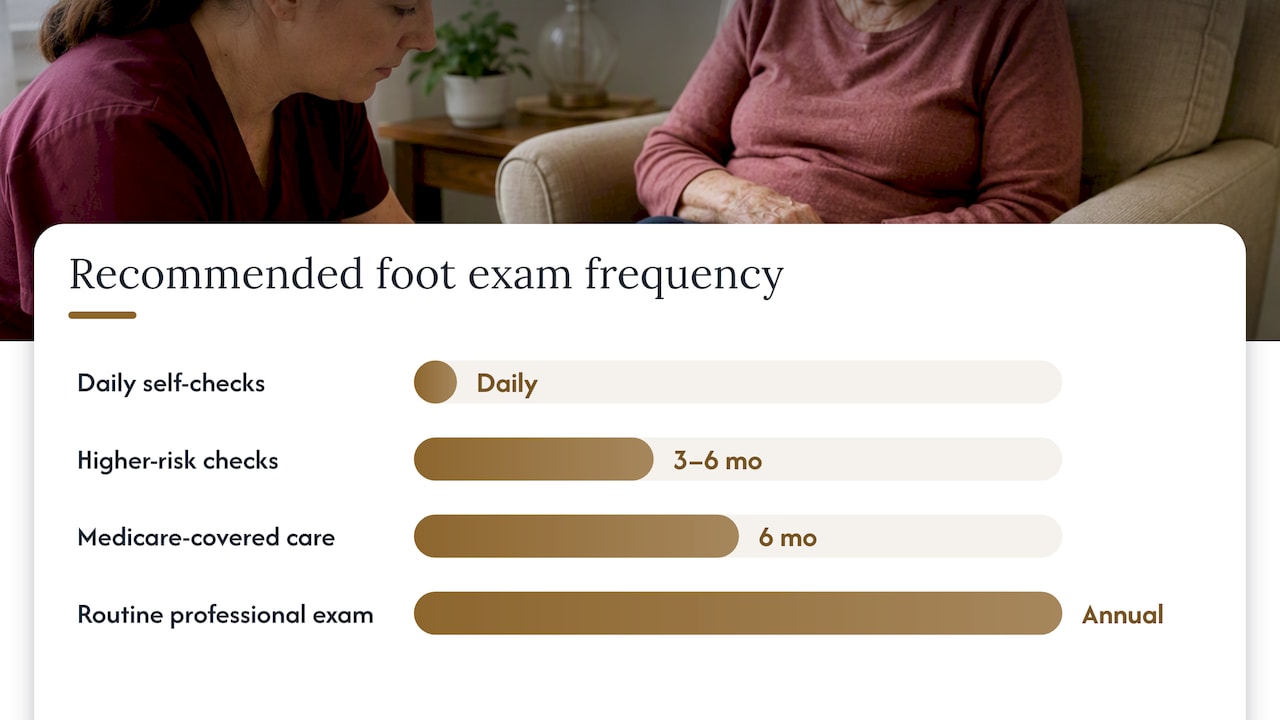
The CDC’s guidance on diabetes and foot health notes that most people with diabetes can prevent serious foot problems through daily foot checks, proper hygiene, and regular professional exams, generally annual, with checks every three to six months for those at higher risk.
Many Medicare beneficiaries with diabetes need specialized foot care, but coverage depends on a specific diagnosis. Medicare generally does not cover routine pedicures, including standard nail trimming for cosmetic purposes. What it does cover is medically necessary foot care for beneficiaries with diabetes-related nerve damage and loss of protective sensation, typically once every six months, covering exams or treatment for foot ulcers, calluses, and toenail management tied to that diagnosis. After meeting the Part B deductible, patients typically pay 20% of the Medicare-approved amount. If you want a plain-language walkthrough of how these rules apply to specific Medicare plans, the Medicare coverage primer from The Modern Medicare Agency breaks down the distinctions between routine and medically necessary care.
If a red flag shows up, the next step is a call to a primary care doctor or podiatrist, not a trip to the nail salon. Catching an issue early, before it becomes an ulcer or infection, is almost always easier to treat.
How to prepare and what to ask when booking
A little prep work before the appointment heads off most problems. Follow these steps:
- Call ahead and ask about sanitation: confirm whether tools are autoclaved or single-use and how foot baths are cleaned between clients.
- Ask about experience with older or mobility-limited clients, including whether staff can help with transfers.
- Request a waterless option if skin is fragile or circulation is a known concern.
- Mention any medical history that matters, including diabetes, blood thinners, or neuropathy, before the appointment starts.
- Plan logistics: arrange transportation, wear loose, easy-to-remove footwear, and time medications so the person is comfortable sitting for the full appointment.
Our sensitive skin pedicure hygiene checklist covers five specific questions worth asking any salon, not just ones marketing themselves as senior-friendly.
Pro Tip: Bring a written list of medications and conditions to hand the technician rather than relying on memory during the appointment.
Cost expectations are reasonable to set upfront too: a standard pedicure typically runs in the $25 to $65 range depending on the service level, and a 15 to 20% tip is customary for pedicure services at most salons.
At-home foot care between professional visits
Daily attention at home catches small problems before they grow. A quick nightly check of color, temperature, and skin condition takes less than a minute and can reveal early swelling, a cut, or an unusual cold spot.
- Trim nails straight across and smooth edges with a file; skip blades and chemical corn removers entirely.
- Moisturize daily, but avoid the area between the toes, where extra moisture encourages fungal growth.
- Choose supportive, well-fitted shoes with a wide toe box and good traction rather than loose slippers or socks-only around the house.
- Escalate to a clinician if you notice a sore that isn’t healing, new numbness, or a color change, rather than waiting for the next pedicure appointment.
The CDC’s STEADI footwear guidance specifically recommends low heels and sturdy traction to reduce fall risk, a detail worth applying to everyday shoes, not just pedicure prep. For more on safe at-home nail trimming between visits, see our guide to preventing ingrown toenails and calluses.
How we think about safety and comfort for older clients
Working with older clients has taught us that patience matters as much as technique. We slow down, explain each step, and never guess when something looks like it needs a doctor’s attention instead of a file and polish. Our approach centers on personal service and skilled, gentle techniques so every client feels valued rather than rushed. When mobility or sensory needs come up, we adjust: more time, clearer communication, and a willingness to pause. When something looks medical rather than cosmetic, we say so directly and point toward a podiatrist.
— Cuong
Book a gentle, senior-friendly pedicure at Foxy Nails
Choosing where to get a pedicure shouldn’t mean choosing between comfort and safety. At Foxy Nails, our Spa Pedicure, Deluxe Pedicure, and Foxy Deluxe Pedicure all give technicians the time and tools to work carefully with older skin and nails, without rushing through callus care or skipping sanitation steps.

When you book, let us know a few things in advance:
- Any mobility limits, including whether you use a walker, wheelchair, or need help transferring to the pedicure chair.
- Relevant medical history, such as diabetes, neuropathy, or circulation concerns.
- Whether you’d prefer a waterless approach or extra time for the appointment.
Visit our services page to see current pedicure options and pricing, or explore what makes a spa pedicure worth the visit before you call to schedule.
FAQ
Where can senior citizens go to get their toenails cut?
Healthy seniors can get toenails trimmed at a senior-friendly salon or by a caregiver at home using proper technique. Anyone with thick, hard-to-cut nails, diabetes, or poor circulation should see a podiatrist or a medical pedicure studio instead, since unsafe trimming raises infection risk for people in those groups.
Will Medicare pay for pedicures for seniors?
Medicare generally does not cover routine, cosmetic pedicures. It covers medically necessary foot care, typically once every six months, for beneficiaries with diabetes-related nerve damage and loss of protective sensation, with a 20% coinsurance after the Part B deductible.
Can elderly people get a pedicure?
Yes, most older adults without diabetes, open wounds, or severe circulation problems can safely get a pedicure at a senior-friendly salon. Those with diabetes, neuropathy, or poor circulation should choose a podiatrist or a medical pedicure studio that uses waterless, no-blade techniques instead of a standard spa service.
What is the average cost of a pedicure for seniors?
Pricing for a senior-friendly pedicure is similar to a standard salon pedicure, generally ranging from around $25 for a basic service to $65 for a premium option like our Foxy Signature Pedicure. Medical or geriatric pedicure studios may charge more due to longer appointment times and specialized waterless methods.