
Choose a salon by what you can see and what the staff will tell you, not by decor or the lowest price on the board. Look for autoclave sterilization or sealed, dated tool pouches, and expect a straight answer when you ask how they clean their instruments. If you see reused disposables, a cloudy pedicure basin, or no posted licenses, walk out. A salon that meets these standards, like Foxy Nails, is worth the extra few dollars.
TL;DR:
- Reused disposables, cloudy pedicure basins, or lack of posted licenses are clear hygiene red flags that warrant walking out immediately.
- Seeing a sealed, dated autoclave pouch or the machine itself demonstrates that a salon prioritizes proper sterilization practices.
- Licensed technicians with proper training should work efficiently without aggressive cutting or shortcuts, and should be able to explain their removal and aftercare methods.
- Choose full-service salons for advanced nail enhancements with better ventilation, or opt for express shops for quick polish changes, and verify their product brands.
- Avoid salons with cloudy tubs, unsealed tools, or strong chemical smells, as these indicate higher infection risks and poor sanitation standards.
Table of Contents
- What to inspect for hygiene when you choose a nail salon
- What technician licenses and technique tell you about skill
- Which salon type fits the service you actually want
- Red flags that mean you should walk out now
- What to ask before you book, in plain language
- How to judge pricing, tipping, and value together
- Special considerations for pregnancy, kids, and sensitive clients
- Does location and convenience actually matter?
- How much should you worry about wait times and booking?
- Why reviews matter more than star ratings alone
- Does technician experience change what you should book?
- What payment and cancellation policies reveal about a salon
- Do amenities and comfort actually matter for your choice?
- Publisher perspective: why sanitation outranks everything else
- Book with confidence: what Foxy Nails offers vetted clients
- Sources
What to inspect for hygiene when you choose a nail salon
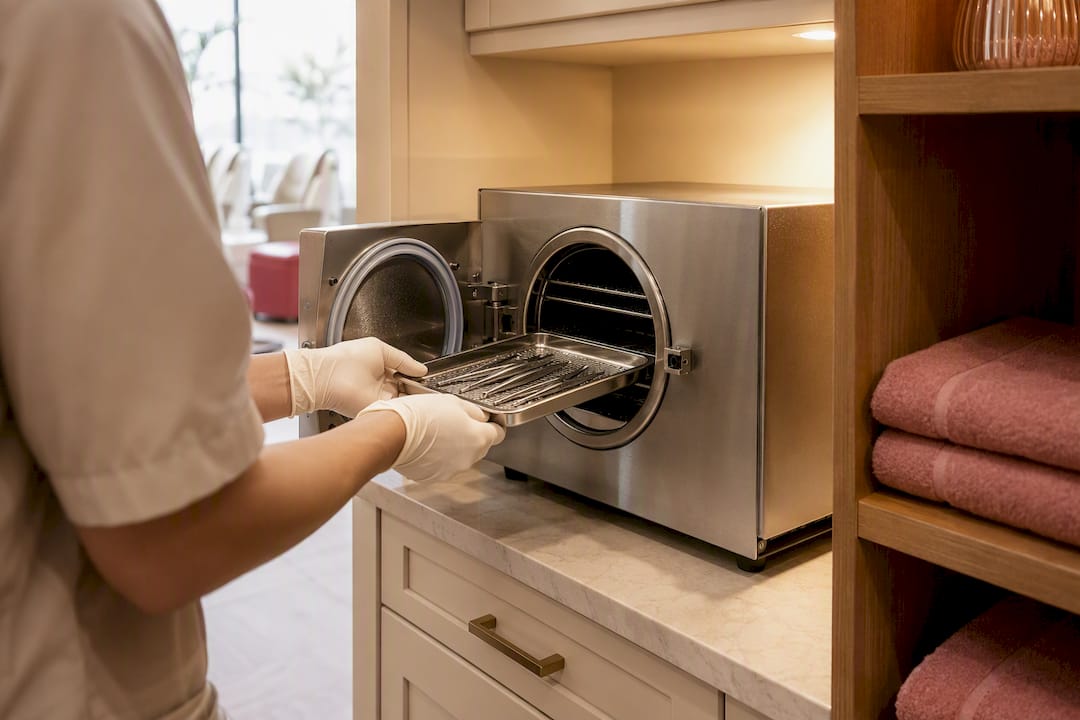
The single fastest way to judge a salon is to watch what happens to the metal tools between clients. An autoclave, the same medical-grade steam sterilizer used in dental offices, kills spores that Barbicide soaks and UV cabinets simply can’t touch. If a technician pulls your tools from a sealed, dated pouch and cracks it open in front of you, that’s the gold standard. If they’re grabbing metal implements out of an open drawer, that’s a problem no amount of nice lighting fixes.
Beyond the metal tools, check these details before you sit down:
- Files, buffers, and toe separators should come from sealed single-use packaging, not a reused bin.
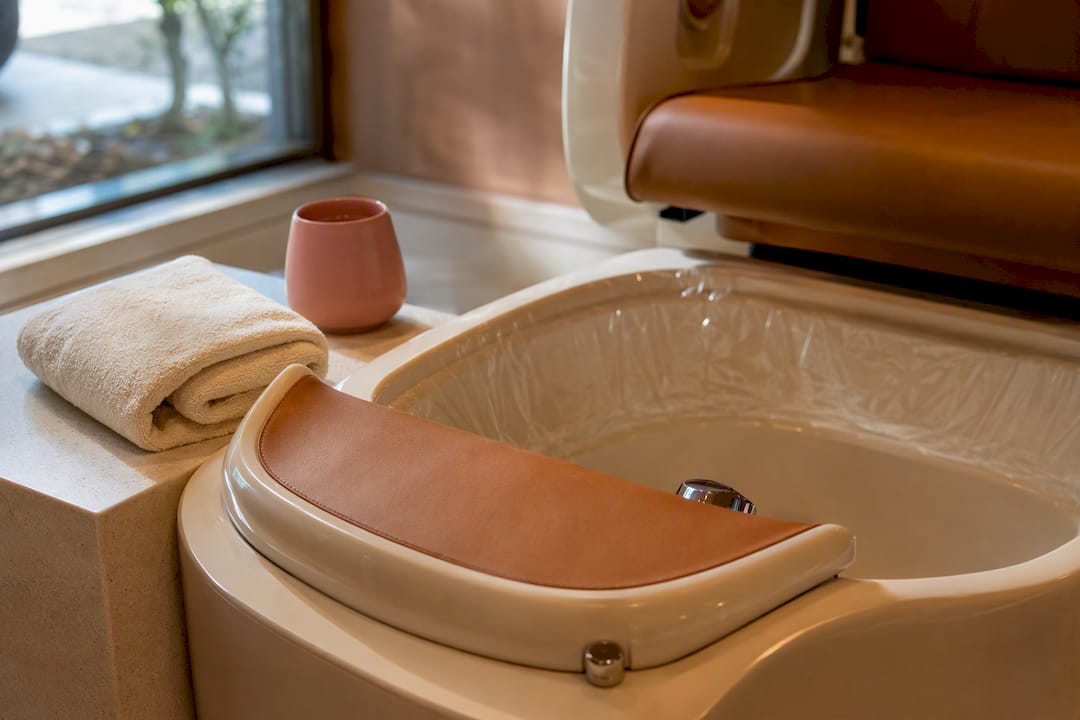
- Pedicure basins should be pipeless or fitted with disposable liners, since internal jets on old-style tubs trap biofilm that regular wiping doesn’t remove.
- Standing water or a basin that looks cloudy between clients is an automatic no.
- A faint polish or acetone smell is normal, but if your eyes or throat sting within a few minutes, the ventilation isn’t doing its job.
Small surveys and consumer reporting suggest a meaningful share of salon-goers report skin or fungal issues after a visit, usually tied back to exactly these shortcuts.
Pro Tip: Ask to see the autoclave itself. A salon proud of its sterilization process will show you the machine, not just tell you it exists.
What technician licenses and technique tell you about skill
A reputable salon posts two kinds of paperwork: the business’s operating license and each technician’s individual license, current and visible, usually near the front desk or each station. That paperwork means the state has confirmed the person filing your nails actually completed training hours on sanitation and technique, not just polish application.
Watch the technician’s hands, too. Skilled technicians work efficiently but never aggressively. Warning signs include:
- Cuticle cutting that draws blood or leaves raw, red edges.
- Excessive e-file drilling on the natural nail plate instead of just the product.
- “No-prep” shortcuts on gel or dip systems, a known cause of premature lifting within days.
A good technician explains removal method and aftercare before they start, and can answer a basic question about the product’s chemistry without hesitating. If you’re booking something advanced, like ombré or structured gel, ask whether they’ve had specialty training beyond the basic license.
Pro Tip: If a technician can’t explain how they’ll remove your gel or acrylic safely, assume they’ll pry it off, which damages the nail plate underneath.
Which salon type fits the service you actually want
Not every salon is built for every service. A full-service spa handles everything from a basic manicure to intricate nail art, but a dedicated nail bar or express shop moves faster and often costs less for simple polish changes. Match the shop to the job:
- Full-service spas tend to have better ventilation systems and more experienced technicians for advanced enhancements.
- Express shops are fine for a quick gel polish change but less ideal for acrylic fills that need careful prep.
- High-end bars are more likely to run pipeless pedicure basins and offer sensitive-skin or low-odor product lines.
Ask which brands they use for gel manicures and enhancements. Reputable salons carry 3-free or 5-free polish options and will confirm, without dodging the question, that they don’t use banned MMA in their acrylic systems.
Red flags that mean you should walk out now
Some warning signs aren’t subtle, and they’re not worth a second chance. If you notice any of the following, leave before you sit down:
- The pedicure tub looks cloudy, has visible debris, or shows no sign of being cleaned between clients.
- Tools come from an unsealed drawer instead of a sterile pouch, or you see a technician reuse a file that should be single-use.
- The chemical smell is strong enough to sting your eyes or throat within minutes of walking in.
- The technician rushes through your service, dodges a direct question about sanitation, or pushes add-ons you didn’t ask for.
Dermatologists and salon reporting consistently link these exact behaviors to higher infection rates. None of them require a trained eye to spot. They just require you to actually look before you sit down.
What to ask before you book, in plain language
A two-minute phone call or reception conversation tells you almost everything you need to know. Try these:
- “How do you sterilize your metal tools, and can I see the autoclave?”
- “Do you use single-use files, buffers, and basin liners?”
- “What’s included in this service, how long should it last, and how do you remove it?”
- “What’s your cancellation policy, and how do you handle allergic reactions?”
A confident salon answers all four without hesitation. Owners themselves say that willingness to explain sterilization matters more than a fancy waiting room. If you get a vague answer, a shrug, or “we just clean everything,” take that as your answer.
Pro Tip: Ask the removal question even if you’re not thinking about removal yet. How a salon answers it tells you how they’ll treat your natural nail six weeks from now.
How to judge pricing, tipping, and value together
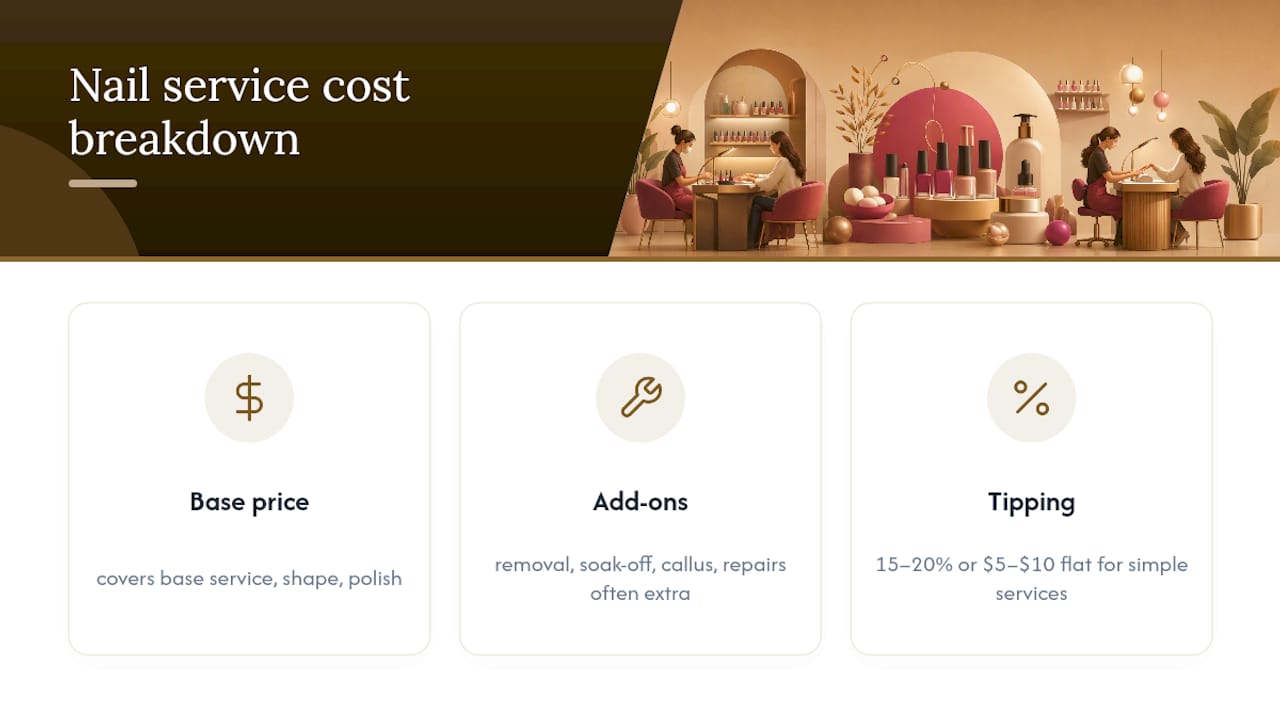
A price usually covers the base service, shape, and polish. Removal, soaking off old product, callus treatment, and repairs are common add-ons, and a clear price list should spell out which ones cost extra. Standard tipping runs 15 to 20 percent for a manicure or pedicure, or a flat $5 to $10 for simpler services.
A price far below the local average is rarely a coincidence. It usually means shorter sterilization cycles, reused disposables, or a technician working faster than the service allows. Paying a bit more often buys a real autoclave, pipeless basins, and a technician with actual training, not just a nicer chair.
Special considerations for pregnancy, kids, and sensitive clients
Pregnant clients should ask about low-odor, ventilated spaces and skip services involving heavy acrylic fumes when possible. A genuinely child-friendly salon has staff trained to work gently and patiently with kids, not just a smaller chair.
Anyone with diabetes, open wounds, or a suspected fungal infection should talk to a doctor before a pedicure. Simple requests reduce risk for anyone: skip aggressive cuticle cutting, request disposable files, and ask for a pipeless basin instead of a jetted tub.
Does location and convenience actually matter?
Convenience matters more than most guides admit, but it should never override the sanitation checklist above. A salon fifteen minutes closer to home is worth choosing over one across town, as long as it clears the hygiene and licensing bar first. Proximity affects whether you’ll actually keep up with fills, removals, and touch-ups on schedule, and a gel manicure that goes eight weeks without a fill because the salon is inconvenient does more damage than the polish itself.
Think about parking, transit access, and whether the salon sits near other errands you run regularly. A salon inside a strip mall with easy parking beats a beautiful downtown spot with a fifteen-minute walk from the nearest garage, especially for a service you’ll book every two to three weeks. If you have mobility needs, check for step-free entry and pedicure chairs with side access, since not every high-end spa is built with that in mind.
For families, a salon near a school pickup route or grocery store lets you combine a kid’s simple polish change with errands you’re already running. If you’re new to an area, search “nail salon near me” and cross-reference the results against the hygiene checklist here rather than picking whichever one shows up first. Distance is a real factor in a decision, but it should be the tiebreaker between two salons that already pass the sanitation test, not the deciding factor on its own.
How much should you worry about wait times and booking?
Walk-in availability tells you something about demand, but it doesn’t tell you everything. A salon booked out two weeks in advance for a basic manicure might just be popular, or it might be understaffed relative to its client list, which can mean rushed service once you do get in the chair.
Salons that take appointments online or by phone tend to run more predictably than pure walk-in shops, where a fifteen-minute wait can stretch to an hour on a Saturday. If a specific technician’s skill matters to you, ask whether you can request them by name and how far out their calendar runs. Some salons hold a few walk-in slots each day specifically for last-minute bookings, which is worth asking about if your schedule is unpredictable.
Wait times also signal something about pacing during the actual service. A salon so overbooked that technicians are double-seated, tending to two clients at once, is more likely to cut corners on prep and sterilization between appointments. If you show up for an appointment and wait more than fifteen or twenty minutes past your slot without explanation, that’s worth noting for next time, even if the service itself turns out fine.
Why reviews matter more than star ratings alone
A 4.8 average tells you almost nothing on its own. What matters is what the reviews actually describe. Search for specific words like “clean,” “sterilized,” “gentle,” or “licensed” inside the review text rather than trusting the overall number. A salon with hundreds of reviews mentioning cleanliness and careful technique is a far stronger signal than one with a high average and vague five-word comments.
Read a handful of the most recent reviews, not just the top ones the platform surfaces first, since older reviews may reflect a salon under different ownership or staff. Photos attached to reviews are especially useful. They show actual nail work, actual basins, and sometimes the tools themselves, which is more reliable than any written description.
Pay attention to how a salon responds to negative reviews, too. A business that addresses a hygiene complaint directly and explains what changed shows more accountability than one that ignores criticism or responds defensively. Consistency across review platforms also matters. If a salon looks pristine on one site but has recurring complaints about sanitation on another, trust the pattern, not the flattering outlier.
Does technician experience change what you should book?
A technician fresh out of licensing school can absolutely deliver a clean, safe manicure. What experience buys you is speed without sacrificed technique, and familiarity with less common requests like structured gel overlays, intricate nail art, or working around a damaged nail bed.
If you want something specific, ask directly whether a technician specializes in it. Salons with technicians who focus on advanced enhancements like nail overlays or acrylic sculpting tend to produce more even, longer-lasting results than a generalist rushing through an unfamiliar service. For a simple polish change or basic manicure, experience matters less. For anything involving product application, prep, and removal, it matters quite a bit.
Ask how long a technician has worked at that specific location, not just in the industry generally. High turnover can mean inconsistent quality even at a salon with a good reputation, since the technician you loved on your last visit may no longer be there.
What payment and cancellation policies reveal about a salon
A clearly posted cancellation policy, usually 24 hours’ notice before a fee applies, signals a business that runs on structure rather than chaos. Salons vague about this policy, or that spring a same-day cancellation fee on you without ever mentioning it, are worth a second look.
Check which payment methods a salon accepts before you book. Most now take credit and debit cards plus mobile payment apps, though some smaller shops remain cash-only or charge a card processing fee that isn’t listed on their price board. Ask about that fee upfront rather than finding it at checkout.
Refund policies for nail services are less standardized than most retail purchases, since a manicure can’t be returned once it’s done. A salon that redoes a service free of charge if the polish chips within a day or two, or that will fix an uneven set without extra charge, demonstrates a level of accountability worth paying for. Get any such promise confirmed at booking rather than assuming it applies.
Do amenities and comfort actually matter for your choice?
Comfort features are the smallest factor on this list, but they’re not nothing, especially for a service that can run 45 minutes to over an hour. Massage pedicure chairs, footrests at the right height, and seating that doesn’t strain your back over a long gel set all affect whether the appointment feels like self-care or an errand to survive.
Refreshments like water, tea, or a simple snack are a nice touch but shouldn’t outweigh anything on the hygiene checklist. A salon with a gorgeous waiting area and a jetted tub full of standing water is still a salon to avoid. Prioritize the basics first: clean air, comfortable seating, and a station that doesn’t feel cramped or rushed, then treat espresso machines and mimosa bars as the bonus they are.
Publisher perspective: why sanitation outranks everything else
After going through what actually separates a safe salon from a risky one, the pattern is obvious: technicians willing to show you their process almost always run cleaner shops than ones who get defensive about the question, as detailed in this quick checklist for evaluating braiding salon quality. That’s not a coincidence. Confidence about sterilization comes from actually doing it consistently, not from having a good excuse ready.
At Foxy Nails, that transparency isn’t optional. We’re licensed, we run a full service list from manicures to advanced enhancements, and our clients consistently mention cleanliness and careful technique in their feedback. If you visit any salon, ask to see the autoclave, check posted licenses, and watch how the technician handles your first few minutes in the chair. A salon with nothing to hide will show you.
— Cuong
Book with confidence: what Foxy Nails offers vetted clients
Foxy Nails is the option for readers who want the standards in this article without doing the vetting themselves. We run every service this guide covers, from classic and gel manicures to spa pedicures and nail enhancements, and every technician can walk you through our sterilization process the moment you ask.
When you book with us, feel free to ask exactly what this article recommends: how we sterilize metal tools, whether our pedicure basins are pipeless, and whether files and liners are single-use. We answer those questions the same way every time, because the answer doesn’t change client to client. If you’re ready to see the difference in person, book a manicure or pedicure appointment and bring your questions with you.
Sources
- How to know if a nail salon is safe? – Nail Salon Safety
- Salon nail hygiene and infection risk
- Red flags to look out for when getting a manicure, from salon owners