
Razor-style callus shavers, often called credo blades, are banned outright in many U.S. states, and the coarse “cheese grater” style foot files carry real cut and infection risks even where they’re technically permitted. If a technician reaches for one, you’re allowed to say no and ask for a pumice stone or a disinfectable rasp instead. When in doubt, your state cosmetology board’s website will tell you exactly what’s prohibited.
TL;DR:
- Razor-type callus shavers and cheese-grater foot files are often banned or considered unsafe due to infection and injury risks; enforcement varies by state.
- Disinfectable metal rasps and pumice stones are the safest options for callus removal, with the latter recommended by health professionals for home use.
- Checking your state’s rules involves searching for specific terms like “credo” or “callus shaver” on official cosmetology board websites and asking salons directly.
- Injuries from banned tools can include cuts, ulcers, and bacterial infections, with diabetics at the highest risk of severe complications.
- Responsible salons use single-use or disinfectable tools, openly show sanitation routines, and should be questioned about their methods before a pedicure.
Table of Contents
- What Counts as a “Cheese Grater” Pedicure Tool?
- Who Gets Hurt, and How Bad Can It Get?
- How Do You Check Your State’s Rules on Foot Tools?
- What’s Actually Safe for Callus Removal?
- What Should You Ask Before the Pedicure Starts?
- How a Responsible Salon Handles Callus Care
- Book a Pedicure Without the Guesswork on Tools
- Sources
- FAQ
What Counts as a “Cheese Grater” Pedicure Tool?
The nickname covers a few different implements, and mixing them up is where most consumer confusion starts. A true cheese-grater foot file has small, sharp perforations stamped into metal, similar to a kitchen grater, and it shaves away dead skin in thin layers with each pass. A credo blade or “razor-type callus shaver” is a different animal entirely. It holds a swappable razor blade and cuts skin the way a straight razor would.
Then there’s the professional rasp, a coarser metal file with a textured surface that buffs rather than slices. Regulators generally treat these three tools very differently.
- Credo blades / razor shavers: frequently named and banned outright in state rules.
- Cheese-grater style graters: not always named specifically, but flagged for infection risk because they’re hard to fully sanitize.
- Metal rasps: often allowed, provided they’re solid metal (not blade-based) and can be disinfected between clients.
State rules tend to hinge on one question: can the surface actually be sterilized, or does its blade or perforation pattern make bacteria buildup unavoidable? Oklahoma’s cosmetology code, for example, explicitly lists prohibited blades and rasp types, a pattern echoed in cosmetology boards nationwide. Sterilization capability, not sharpness alone, is usually the deciding factor.
Who Gets Hurt, and How Bad Can It Get?
Cuts from these tools aren’t rare cosmetic mishaps. Podiatrists and dermatologists interviewed by HuffPost warn that cheese-grater files can cause bleeding, open ulceration, and bacterial infection, sometimes from a nick the client never even noticed happen.
By the numbers: the CDC notes that even minor skin breaks on the feet can become entry points for infection, which is exactly why hygiene protocols exist for these tools in the first place.
The injuries that show up most often include:
- Superficial cuts that scab and then get re-opened at the next pedicure.
- Skin ulcers from overly aggressive shaving on already-thin skin.
- Cellulitis, a spreading bacterial infection that can require IV antibiotics.
One documented case in North Carolina involved a woman who nearly lost her leg after a salon used a banned foot tool, according to CBS17’s investigation. People with diabetic neuropathy face the highest stakes, since nerve damage can mask pain from a cut until infection has already set in. If calluses keep coming back or feel painful, a podiatrist visit beats another aggressive salon shave.
How Do You Check Your State’s Rules on Foot Tools?
Wording varies enough state to state that what’s banned in one salon chair might be routine two states over. Some boards name “credo” or “callus shaver” directly; others use broader language like “sharp instruments capable of cutting live tissue.” Enforcement also differs: several boards have issued fines to technicians caught with banned tools during inspections.
- Search “[your state] cosmetology board rules” and look for a section on pedicure equipment or prohibited implements.
- Search the page for “callus shaver,” “credo,” or “razor” since that’s the terminology most bans use.
- Call the board directly if the language is vague. Front-desk staff field this question often.
- Check public inspection records, which many boards post online and which sometimes name salons cited for banned tools.
- Ask the salon outright before your appointment which foot tools they use, since a five-second phone call can save you a bad visit.
Because some rasps visually resemble the banned graters, reading the rule language matters more than eyeballing the tool yourself.
What’s Actually Safe for Callus Removal?
Pumice stones, single-use emery boards, and gently applied disinfectable metal rasps are the tools most podiatrists sign off on. The Mayo Clinic specifically recommends skipping cheese-grater files altogether and sticking with pumice or professional-grade rasping performed with light pressure.
At home, a simple routine works better than aggressive shaving ever will:
- Soak feet in warm water for 5 to 10 minutes to soften skin.
- Use a pumice stone in gentle circular motions, never sawing back and forth.
- Moisturize daily with a thick foot cream, especially on heels.
- See a doctor if skin cracks, bleeds, or shows redness that spreads.
People managing diabetes need an extra layer of caution. The American Diabetes Association recommends daily foot checks and steering clear of aggressive salon removal entirely, since a routine podiatry visit catches problems a mirror check misses.
Pro Tip: Smooth-looking skin right after a grating session is deceptive. Aggressively shaved calluses often grow back thicker and rougher within weeks, which is exactly why the temporary result isn’t worth the cut risk.
What Should You Ask Before the Pedicure Starts?
A few direct questions at check-in tell you everything you need to know:
- “Do you use a disinfectable metal rasp, or a razor-type callus shaver?” Listen for the word “razor” or “blade” as your cue to decline.
- “Are your files and buffers single-use?” Disposable items should come out of a sealed package in front of you.
- “Can I see your license and sanitation station?” A valid license is usually posted on the wall, and disinfectant jars should be visible at each station.
If a technician reaches for a blade tool, it’s fine to simply say, “I’d rather not, can we use a pumice or rasp instead?” A salon that takes hygiene seriously won’t push back on that request.
How a Responsible Salon Handles Callus Care
At a reputable nail salon in Reno, technicians are trained to reach for gentle, disinfectable alternatives rather than aggressive blade tools, and sanitation between clients isn’t optional. That’s the standard any salon should meet, not a bonus feature.
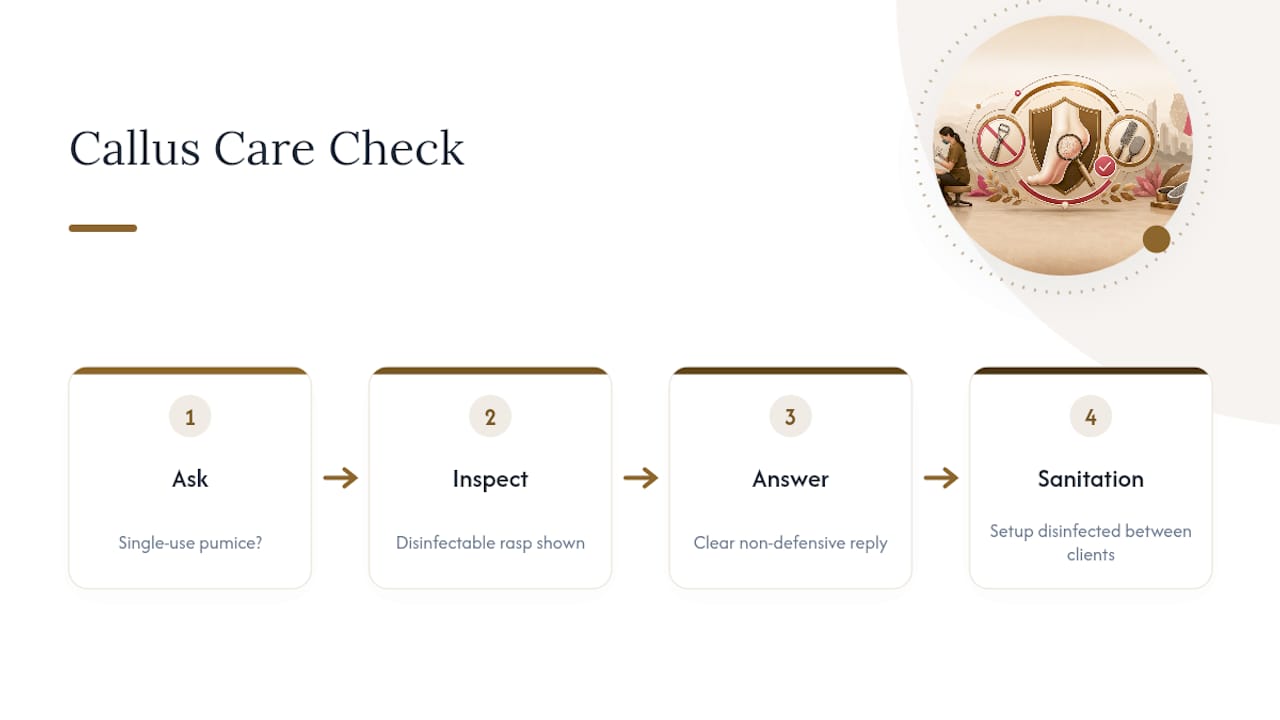
If you’re comparing salons, ask the same question we’d want asked of us: “Do you use single-use pumice or a disinfectable rasp for calluses?” A salon that answers plainly and shows you its setup, rather than getting defensive, is one worth trusting with your feet. Professional foot care done right shouldn’t leave you second-guessing what just touched your skin.
Book a Pedicure Without the Guesswork on Tools
This local nail salon is an alternative to salons that stay quiet about what’s in their tool tray. Every pedicure uses hygienic, disinfectable implements instead of blade-based callus shavers, so clients are not left wondering what touched their feet last.

The Spa Pedicure starts at a moderate price, with the Foxy Signature Pedicure costing more for a more complete treatment. If calluses are your main concern, our spa pedicure benefits page walks through what a safety-first approach actually looks like in practice. Ask any technician about our sanitation routine before you sit down, or just book your appointment through the services page and see it firsthand.
This article is general information, not a substitute for advice from a qualified doctor. Consult a qualified healthcare professional about your own circumstances before acting on anything here.
Sources
- CDC — foot hygiene
- The 1 pedicure tool you should NEVER use | HuffPost
- Diabetes and your feet: foot care tips | American Diabetes Association
- Oklahoma Administrative Code — prohibited implements (example)
- NC woman almost lost leg because salon used banned tool | CBS17
FAQ
Is It Okay to Use a Cheese Grater During a Pedicure?
No. Podiatrists and dermatologists warn against it because the perforated surface is hard to fully sanitize and can cause cuts that lead to infection.
Are Callus Shavers Illegal?
Razor-type callus shavers, also called credo blades, are banned in many states, though the exact wording and enforcement vary by state cosmetology board.
Is It Safe to Use a Cheese Grater on Your Feet at Home?
Medical experts recommend against it even for home use, favoring pumice stones or gentle filing that doesn’t risk cutting live skin, as explained in detail in Dôvody vyhnúť sa domácej depilácii: čo riskuješ.
How Do I Know if My State Bans These Tools?
Search your state cosmetology board’s website for terms like “credo,” “callus shaver,” or “prohibited implements,” or call the board directly if the rules aren’t clear.
Does Foxynailsreno Use Cheese-Grater Tools?
No. Foxynailsreno uses disinfectable, salon-appropriate implements for callus care, and technicians will walk you through their sanitation process if you ask.