
Foot scrubs remove dead skin, soften rough patches, and help the skin absorb moisturizer more effectively, while the massage involved boosts circulation and eases tension. Dermatology guidance from the American Academy of Dermatology supports gentle exfoliation paired with the right moisturizer, though people with diabetes or poor circulation need a different approach.
TL;DR:
- Regular foot scrubs remove dead skin, prevent cracks, and improve moisturizer absorption, especially important since feet lack oil glands and tend to dry out.
- Soaking feet in warm water for five to ten minutes before gentle, circular scrubbing enhances safety and effectiveness, with over-soaking risking skin dehydration.
- Chemical exfoliants like urea and alpha hydroxy acids are effective for stubborn thickened skin, whereas manual scrubs are suitable for light maintenance.
- People with diabetes, poor circulation, or neuropathy should consult a podiatrist before exfoliating to avoid injury and infection.
- Professional pedicures are recommended for persistent, painful calluses or cracks, or if safe self-care is difficult due to limited mobility or visibility.
Table of Contents
- 1. Main benefits of foot scrubs you should know
- 2. How to use a foot scrub safely and effectively
- 3. Types and ingredients: manual vs chemical scrubs
- 4. Safety and red flags: who should avoid scrubbing
- 5. When to book a professional pedicure instead
- 6. A technician’s take on realistic foot care
- Get a professional foot treatment at Foxy Nails
- FAQ
- Sources
1. Main benefits of foot scrubs you should know
Foot scrubbing does more than make your feet look tidy. Here’s what regular, careful exfoliation actually accomplishes:
- Removes dead skin and prevents cracking. Sloughing off built-up dead cells keeps the skin surface smoother and less likely to split, especially around the heels.
- Improves moisturizer absorption. Once dead skin is cleared away, creams and oils penetrate better. The AAD notes that exfoliation meaningfully increases how well skin absorbs hydrating or medicated products.
- Boosts circulation through massage. The rubbing motion involved in scrubbing stimulates blood flow in the feet, which can ease the heavy, tired feeling many people get after a long day on their feet.
- Helps manage odor. Removing dead skin and bacteria buildup supports basic foot hygiene, though it works best alongside proper drying and clean socks rather than as a standalone fix.
- Keeps cuticles and surrounding skin in better shape. Gentle scrubbing around the nail area smooths rough edges that can otherwise snag on socks or shoes.
- Offers real relaxation value. A warm soak and a slow scrub are genuinely calming, which is part of why pedicures remain a popular self-care ritual.
- Delivers a cosmetic payoff. Smoother feet feel more comfortable in open shoes and sandals, and calluses that once caught on fabric stop being a daily annoyance.
Feet lack the oil glands found elsewhere on the body, which makes them naturally prone to dryness. Foot health experts point out that this is exactly why exfoliation followed by moisturizing matters more here than on most other skin.
2. How to use a foot scrub safely and effectively
A good foot-care routine follows a simple order: soften, scrub, moisturize. Skipping steps or rushing any one of them is where most people go wrong.
- Soak first. Warm water for about five to 10 minutes softens the skin enough for safe exfoliation, according to Mayo Clinic. Longer soaking isn’t better: the AAD warns that extended soaking can actually dehydrate skin rather than help it.
- Scrub gently in circles. Use a pumice stone, foot scrubber, or loofah with light, circular pressure. Mayo Clinic recommends this motion over a loofah rather than aggressive filing.
- Consider a chemical exfoliant for stubborn areas. Creams with 10 to 25% urea, alpha hydroxy acid, or salicylic acid, as described by the AAD, soften thickened skin without mechanical scraping.
- Moisturize within five minutes. Apply a thick, occlusive cream while skin is still damp for the best effect, then slip on cotton socks overnight if you’re treating dry heels.
- Repeat about twice a week. Daily scrubbing is rarely necessary and can irritate skin; ease off if you notice redness or sensitivity.
- Watch for over-exfoliation. Shiny, tight, or stinging skin after scrubbing means you’ve gone too far. Pause for a few days and moisturize more, scrub less.
Pro Tip: Keep a separate pumice stone or file for your feet only, rinse it after every use, and let it air-dry completely to avoid bacterial buildup.
3. Types and ingredients: manual vs chemical scrubs
Manual and chemical exfoliants work differently, and picking the right one depends on what your feet actually need.
- Sugar and salt scrubs physically buff away surface flakes and work well for light, all-over maintenance.
- Pumice stones and foot files target thicker, localized rough patches like heels and the sides of the big toe.
- Urea and ammonium lactate creams chemically loosen the bonds between dead skin cells, making them ideal for persistent dry patches without scraping.
- Alpha hydroxy acids and salicylic acid, used at the concentrations the AAD describes, dissolve built-up skin gradually over repeated use.
- Fragrance-heavy or alcohol-based scrubs can irritate already-dry or cracked skin, so check labels and patch-test anything new on a small area first.
For cracked heels, a urea-based cream tends to outperform a sugar scrub alone. For light upkeep between pedicures, a gentle manual scrub is usually enough.
4. Safety and red flags: who should avoid scrubbing
Not every foot benefits from the same approach, and some situations call for caution rather than a home remedy.
- Never use razors, blades, or sharp tools to shave down calluses. Mayo Clinic advises against pumice use entirely for people with diabetes, and sharp instruments raise the risk of cuts and infection for everyone.
- If you have diabetes, neuropathy, or poor circulation, check with a podiatrist before exfoliating. Reduced sensation can mask an injury until it becomes serious.
- Stop and see a clinician if you notice bleeding, a crack that won’t close, or signs of infection like warmth, swelling, or discharge.
- Protect problem spots with moleskin or padding, and make sure shoes fit properly to reduce the friction that causes calluses in the first place.
Calluses exist for a reason. Harvard Health Publishing notes that calluses protect skin from friction, so the goal is keeping skin pliable, not stripping it down completely. Over-exfoliating risks micro-abrasions that can open the door to infection.
5. When to book a professional pedicure instead
Home care handles most routine dryness, but some cases call for trained hands and tools that aren’t meant for a bathroom cabinet.
- Persistent, painful calluses that keep returning despite regular home exfoliation often need professional thinning rather than another round of scrubbing.
- Deep heel cracks benefit from the higher-strength urea treatments available in a salon setting, applied under proper sanitation.
- If you can’t safely reach or see your own feet, or you fall into a higher-risk category, a technician trained in safe callus care reduces the chance of injury.
- Pairing a monthly or seasonal spa pedicure with simple home maintenance between visits tends to keep results going longest.
Sanitized tools and consistent technique matter more than people realize once calluses get thick or heels start splitting.
6. A technician’s take on realistic foot care
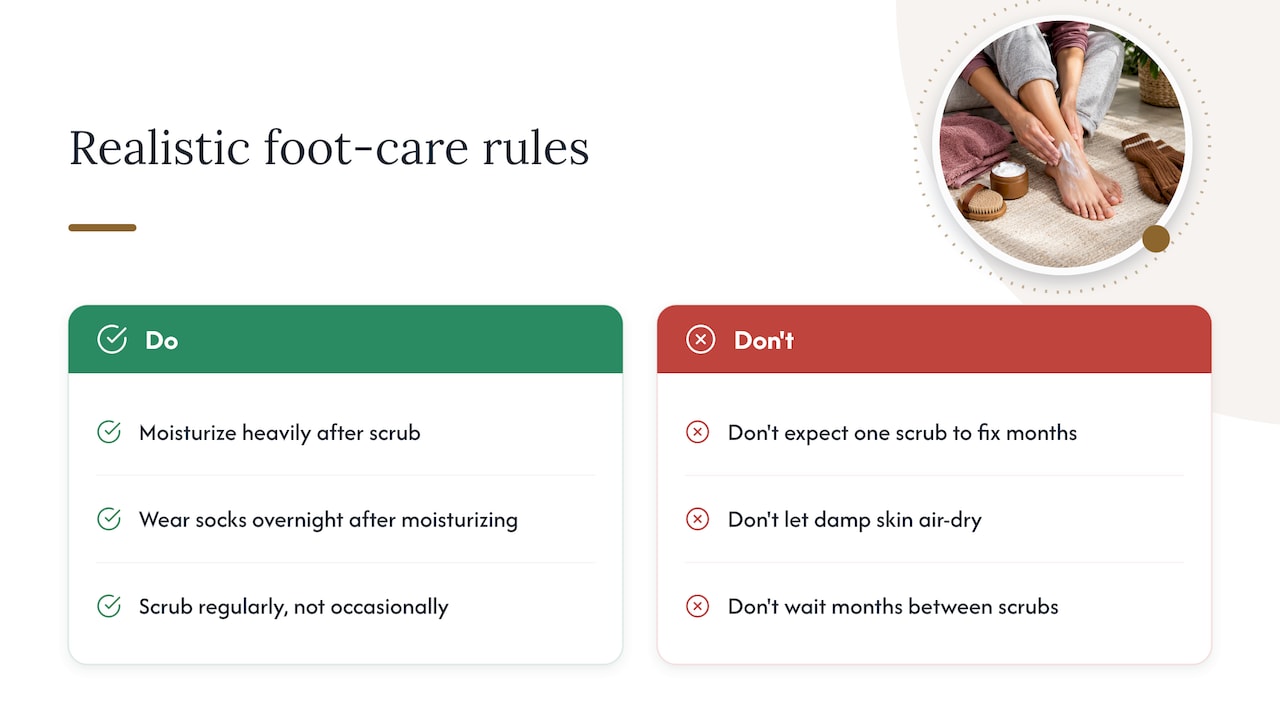
Working in a salon day to day, the pattern is clear: people wait too long between scrubs and then expect one session to undo months of dryness. Foot care rewards consistency far more than intensity.
One rule worth following: moisturize heavily and slip on socks overnight right after any scrub or soak, rather than letting damp skin air-dry.
— Cuong
Get a professional foot treatment at Foxy Nails
A home scrub handles daily upkeep, but a salon visit reaches what a bathroom routine can’t, especially for stubborn calluses or cracked heels that need closer attention. Our Spa Pedicure and Deluxe Pedicure both include thorough, sanitized exfoliation, and our team knows when gentle callus care is appropriate and when it isn’t.

- Spa Pedicure starts the basics: soak, scrub, and moisturize, done properly and safely.
- Deluxe and Foxy Signature options add deeper treatment for heavier calluses or dry, cracked heels.
- Every visit uses sanitized tools and techniques suited to your skin.
Book a pedicure through our services page and let a trained technician handle the parts home care tends to miss.
FAQ
Is it good to scrub feet?
Yes, for most people, gentle scrubbing removes dead skin and helps prevent cracking, especially on heels that tend to dry out faster than the rest of the body. People with diabetes or poor circulation should check with a podiatrist first, since even minor injuries can become serious for them.
How often should you do a foot scrub?
Twice a week is a reasonable starting point for most people, with adjustments based on how dry or callused your skin gets. Scrubbing daily often irritates skin rather than helping it, so back off if you notice redness or tightness.
How long should you soak your feet before scrubbing them?
Mayo Clinic recommends soaking for about five to 10 minutes in warm water, which is long enough to soften skin without drying it out. Soaking much longer can strip natural oils and leave skin worse off.
What’s the healthiest thing to soak your feet in?
Plain warm water works well for softening skin before a scrub, and it’s the approach dermatology sources consistently recommend. Afterward, applying a thick, urea-containing moisturizer like a whipped shea butter blend while skin is still damp locks in hydration better than the soak itself.
Sources
- American Academy of Dermatology — How to treat corns and calluses
- Mayo Clinic — How to heal cracked heels
- Mayo Clinic — Corns and calluses: Diagnosis and treatment
- Harvard Health Publishing — Calluses and corns