
For most people, the fastest reliable route to healing cracked heels is professional debridement paired with a urea-based keratolytic and overnight occlusion. A spa or paraffin pedicure adds comfort and hydration on top of that. If you see bleeding, deep fissures, or you have diabetes, skip the cosmetic route and book a medical pedicure or podiatry visit instead.
TL;DR:
- Professional debridement combined with urea-based keratolytics and overnight occlusion accelerates healing of cracked heels, especially in moderate to severe cases.
- Thicker callus and active fissures may require chemical peels or medical pedicures, while mild dryness responds to spa treatments every two to three weeks.
- Conditions like bleeding, deep cracks, or diabetes necessitate a medical pedicure or podiatrist consultation instead of cosmetic treatments.
- Home care involves a regular routine of soaking, applying high-concentration urea cream, and occlusion with socks, showing visible improvement within two weeks.
- Heel healing duration varies; superficial cracks resolve in weeks with consistent care, but deeper fissures may need ongoing podiatric intervention.
Table of Contents
- Which pedicure for cracked heels actually works?
- What happens during a professional cracked-heel pedicure?
- When do cracked heels need a podiatrist instead of a pedicure?
- Home protocol to soften, treat, and seal cracked heels
- How long does it take to heal cracked heels?
- How Foxy Nails handles cracked heels differently
- Book a cracked-heel pedicure in Reno
- Sources
Which pedicure for cracked heels actually works?
Not every pedicure treats cracked heels the same way, and picking the wrong one wastes both money and healing time. Each style works through a different mechanism: some smooth the surface, some hydrate, and some actually break down the hardened tissue causing the crack.
- Classic or spa pedicure: light exfoliation plus moisturizer. Good for mild dryness, not for real fissures.
- Spa pedicure with paraffin: the wax coats skin in an occlusive layer that traps moisture and softens callus, making it a strong add-on once debridement has already happened.
- Dry or cracked-heels rescue pedicure: skips the soak and uses precision filing to reduce thick callus without swelling the skin first.
- Heel peel / chemical exfoliation: an acid-based treatment that dissolves dead skin layers faster than filing alone, suited to moderate buildup.
- Medical pedicure: performed in a sterile, health-focused setting for painful, bleeding, or infection-prone heels.
Mild dryness usually responds to one or two spa visits. Thick callus with early cracking often needs a rescue pedicure or heel peel, and improvement tends to show within two to three sessions spaced a couple of weeks apart. Anything painful or bleeding belongs with a medical pedicure, not a standard appointment.
What happens during a professional cracked-heel pedicure?
A well-run cracked-heel treatment follows a specific order, and skipping steps is usually why at-home fixes fall short.
- Assessment. The technician checks fissure depth, looks for bleeding or signs of infection, and decides whether the case is cosmetic or needs a referral.
- Minimal soak or dry prep. Severe fissures often get filed dry first. Skipping the soak keeps skin from swelling, which would otherwise hide the true edges of a crack and risk cutting too deep. A short 5 to 10 minute warm soak is still fine for milder callus.
- Controlled mechanical filing. Precision tools reduce hardened tissue layer by layer instead of one aggressive pass.
- Chemical heel peel or in-salon urea application. For thicker callus, this step chemically breaks down keratin the file couldn’t reach.
- Paraffin or occlusive finish. Wax or a rich balm seals in moisture right after the skin has been opened up to absorb it.
- Nail care and final moisturizer. The service wraps up like a standard pedicure.
Pro Tip: Ask whether the salon uses single-use or autoclave-sterilized tools for callus reduction, especially if you have any open skin. It’s a fair question at any reputable salon.
If a technician sees a fissure that’s actively bleeding or looks infected, the right move is a referral to a podiatrist or a dedicated medical pedicure appointment rather than continuing the cosmetic service.
When do cracked heels need a podiatrist instead of a pedicure?
Some cases go past what any salon should treat, no matter how skilled the technician is.
- Bleeding fissures or fissures that reopen repeatedly.
- Severe pain when walking or standing
- Redness spreading beyond the crack itself
- Discharge, odor, or other signs of infection
- Diabetes, peripheral neuropathy, or a compromised immune system
- Cracks that haven’t improved after two to three weeks of consistent care
A podiatrist works with tools a salon won’t have: sterile scalpel debridement, liquid bandage for deep splits, prescription-strength creams or oral antibiotics if infection is present, and orthotics when the real problem is how your foot strikes the ground. When you book, just say you need a medical pedicure or podiatry consultation for a cracked heel with a specific concern (bleeding, diabetes, sensitive skin). That framing alone will change how the visit is run.
Home protocol to soften, treat, and seal cracked heels
Salon visits move things faster, but the nights in between matter just as much. This three-step routine is the same logic podiatrists use, scaled for home.
- Soften first. Take a warm, not hot, 10 to 15 minute soak, or do a dry prep with a foot file if your skin is prone to swelling. Use a pumice stone or file in one direction, never a razor blade. Razor blades at home carry real risk of cutting too deep without the control a professional has.
- Occlude overnight. Layer petroleum jelly or a rich heel balm over the urea cream, then pull on a pair of cotton socks before bed. Occlusion dramatically improves how much of the active ingredient actually penetrates, which is the step most people skip and the reason so many creams “don’t work” when the formula was fine all along.
Stick with this nightly for a stretch, and most superficial cracks show visible improvement within a week or two.
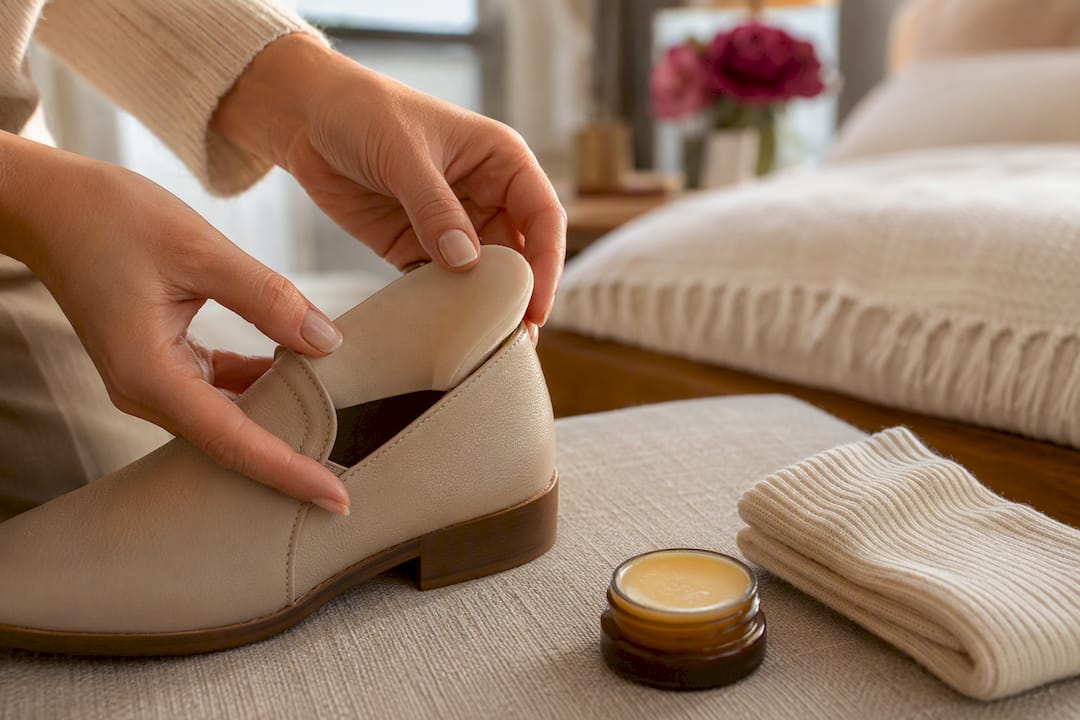
Footwear matters just as much as the cream. Open-heeled sandals let the heel’s fat pad spread sideways with every step, which pulls existing cracks wider. Switching to closed-back shoes or adding heel-cup insoles reduces that lateral shear and cuts down on repeat cracking. A rich natural balm, like Rose Petal Glam’s whipped tallow sugar scrub, can also serve as a gentler occlusive option on nights when skin feels irritated by urea.
How long does it take to heal cracked heels?
Superficial fissures typically heal in one to three weeks with the debride, urea, occlude routine done consistently. Deeper fissures take longer and may need ongoing podiatric care rather than a fixed timeline.
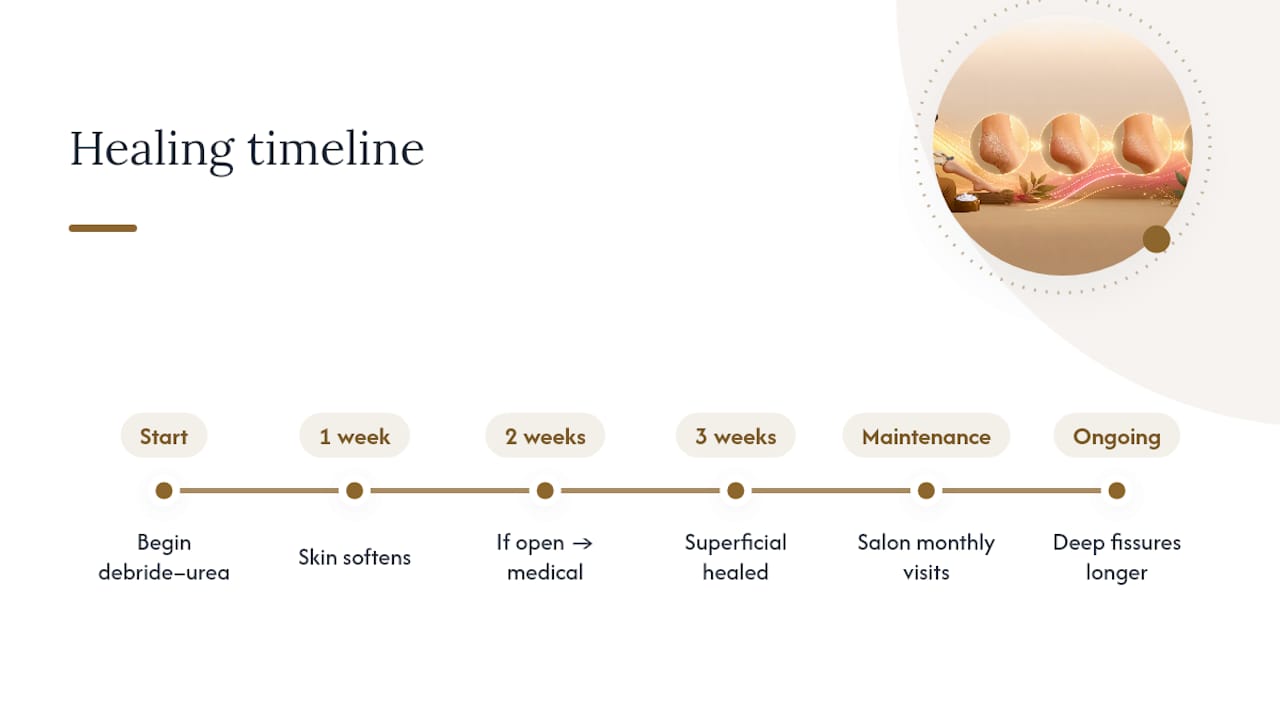
For salon visits, start with every two weeks while the heel is actively cracked, then shift to monthly maintenance once skin feels smooth. Skin getting softer and less painful each week is a good sign. Cracks that stay open, deepen, or start bleeding after two weeks mean it’s time for a medical review, not another round of the same routine.
How Foxy Nails handles cracked heels differently
We treat cracked heels as a foot health issue first, polish second. Our spa pedicures include a cracked-heels rescue option built around the same debride, hydrate, occlude logic podiatrists recommend, and our team is used to working gently with kids and sensitive skin alike.
When you book, tell reception exactly what you need: “dry cracked-heels rescue,” “spa pedicure with paraffin and a urea follow-up,” or “medical-style pedicure” if your heels are painful or bleeding. That one sentence changes how your appointment is set up, from tool choice to how long we spend on your feet.
— Cuong
Book a cracked-heel pedicure in Reno
Foxy Nails treats cracked heels as a health issue, not just a polish job, and that’s the real difference between a quick buff-and-shine and a service that actually closes fissures.

Our spa pedicure with paraffin is built for hydration and comfort, running about 45 to 60 minutes and pairing well with early-stage dryness. For thicker callus or active cracking, ask for our cracked-heels rescue add-on, which uses dry prep filing before any moisturizing step. If your heels are painful, bleeding, or you manage diabetes, mention that when you call so we can set up a medical-style pedicure with the right precautions.
Ready to get your heels back in shape? Book your pedicure at Foxy Nails and mention any sensitivities or health conditions when you schedule, so we can tailor the tools and timing to your skin.