
An exfoliation pedicure is a regular pedicure with extra attention on removing dead, dry skin from your heels, soles and sides of the feet, usually with a sugar or salt scrub, a foot file or both, followed by moisturizer. Done well, it leaves skin soft but intact. Done aggressively, it backfires: skin that is scraped too hard grows back thicker. Below is what happens in the chair, how often to go, who should skip it, and what to ask before you book.
TL;DR
- A good exfoliation pedicure softens skin with a warm soak, removes dead cells with a scrub or gentle file, then locks in moisture. It should never involve razors or blades.
- Most healthy adults do well with exfoliation once or twice a week in total, counting home care. Salon visits fill in the heavy lifting between.
- “Baby smooth” is not the goal. Over-exfoliating triggers thicker, tougher skin.
- If you have diabetes, poor circulation, open cracks or painful calluses, talk to a podiatrist before any exfoliation.
- At Foxy Nails in Reno, pedicures run from $25 to $65, so you can choose the level of pampering that suits you.
Table of Contents
- What an exfoliation pedicure actually is
- What happens step by step
- Sugar scrub, file or chemical: which exfoliation suits you
- How often should you exfoliate your feet?
- Why smoother is not always better
- Tools that should never be in your pedicure
- Foot bath hygiene: the question worth asking
- Who should talk to a doctor first
- Our perspective at Foxy Nails
- Pedicure options at Foxy Nails in Reno
- Caring for your feet between visits
- Frequently asked questions
- Sources
What an exfoliation pedicure actually is
The skin on your feet is built like a stack of tiny shingles: flat cells of keratin held together by lipids. When pressure or friction hits one spot again and again, the body responds by laying down more layers. That is how calluses form. The American Podiatric Medical Association describes calluses as thickened skin that develops to protect an area from repeated rubbing or pressure.
Exfoliation removes the top layer of those cells. Trade publication Nailpro explains that there are two main methods: manual, using a rubbing or scrubbing action, and chemical. In a salon, the manual route is the one you will meet most often: a scrub with fine particles, a foot file, or a pumice-type tool, used on the soles and sides of the feet.
When people search for a sugar scrub pedicure, this is usually what they mean. Sugar granules are rounder and dissolve more easily than harsh crystals, so they are a gentle way to polish skin that has already been softened by a soak.
What happens step by step
Every salon runs its routine a little differently, but a thoughtful exfoliating pedicure follows this order:
- Assessment. The technician looks at your skin and nails before touching them. Cracks, cuts, rashes, signs of fungus or very thick calluses change the plan.
- Soak. Warm water softens skin. The APMA’s guidance on healthy exfoliation points to a soak of roughly 5 to 15 minutes before any scrubbing.
- Nail shaping and cuticle care. Nails are trimmed and shaped, cuticles tidied.
- Exfoliation. A sugar or salt scrub is massaged over the foot and lower leg. Stubborn spots on the heel may get a light pass with a file.
- Rinse and massage. Scrub is removed and a lotion or oil massage follows.
- Moisturizer and polish. A rich cream goes on, then polish or gel if you want it.
The moisturizing step matters more than most people think. Foot specialists quoted by Michigan Foot Doctors say skipping hydration after exfoliating is the most common mistake. Dry, brittle skin prompts the body to build more callus as protection, which undoes the work.
Sugar scrub, file or chemical: which exfoliation suits you
| Method | How it works | Best for | Watch out for |
|---|---|---|---|
| Sugar or salt scrub | Fine granules polish away loose dead skin | Dry, dull feet, regular upkeep, sensitive skin | Salt stings on tiny cracks |
| Foot file or sanitizable tool | Light mechanical smoothing on heels and sides | Moderate rough patches | Pressure that is too heavy; porous tools that cannot be sterilized |
| Chemical exfoliant (acids, enzymes) | Dissolves the bonds between dead cells | Professionally selected, low-strength products | High-strength acids sold for home use |
| Razor or credo blade | Cuts away skin | Nothing in a salon | Invasive, risk of deep cuts and infection |
One thing to know about chemical products: in July 2024 the FDA warned consumers against buying or using chemical peel products without professional supervision because of the risk of serious skin injuries. That warning concerns strong peel products, but the lesson carries over to your feet: if a product promises dramatic peeling, skip it.
If you want to understand how scrubs compare with exfoliating tools such as gloves, this comparison of exfoliating gloves and sugar scrub is a useful read on why technique matters more than the tool. For a broader look at what a scrub can and cannot do, see our guide to foot scrub benefits and when to see a pro.
How often should you exfoliate your feet?
Less than you think. According to the APMA’s pedicure guidance, as summarized in our research, most healthy adults can exfoliate once or twice a week, and people with heavy callus buildup or very active lifestyles may go up to three times a week, as long as the skin is not broken or painful.
That total includes what you do in the shower. A practical rhythm for most people:
- At home, weekly: a gentle scrub or a few passes with a file after a warm shower, then cream.
- In the salon, every 3 to 4 weeks: a full pedicure to reset the skin, shape the nails and check for problems.
- Before an event or trip: book a week or two ahead so any redness settles. Our vacation pedicure guide walks through the timing.
Runners and other athletes build callus faster. Our pedicure for runners article explains the straight-across trim and the timing that works best around training.
Why smoother is not always better
Technicians hear the same request all the time: take it all off. The trouble is that skin treats aggressive scraping as an injury. Nailpro’s reporting on exfoliation practice describes a rebound effect: over-exfoliate in one visit and the body produces thicker, tougher skin to compensate. Clients can also end up with tender soles that make walking uncomfortable.
We would rather see you three or four times over a season and leave with healthy, hydrated feet than promise a one-visit transformation. If your calluses are thick, ask for a gradual plan. Our article on why calluses keep coming back lays out when a salon pedicure is enough and when a medical pedicure is the better route.
Tools that should never be in your pedicure
This is the part of the brief where you protect yourself.
Razors and credo blades. Podiatry guidance holds that sharp blades used to shave calluses are not a standard salon tool. Removing thickened skin by cutting, which podiatrists call paring or debridement, is a medical procedure. The APMA’s corns and calluses page advises seeing a podiatrist for painful or thick lesions rather than trying to cut them off. Many states restrict these blades, and we explain how to spot safe tools in our guide to credo blade rules.
Tools that cannot be cleaned. Experts quoted in the APMA’s pedicure advice favor tools that can be sanitized, such as stainless steel, over porous items like emery boards or pumice stones that cannot be fully sterilized. If a file looks worn and papery, ask for a fresh one. Nevada’s cosmetology regulations include specific provisions on foot spas and disinfection, so asking how a salon cleans its equipment is a normal question, not a rude one.
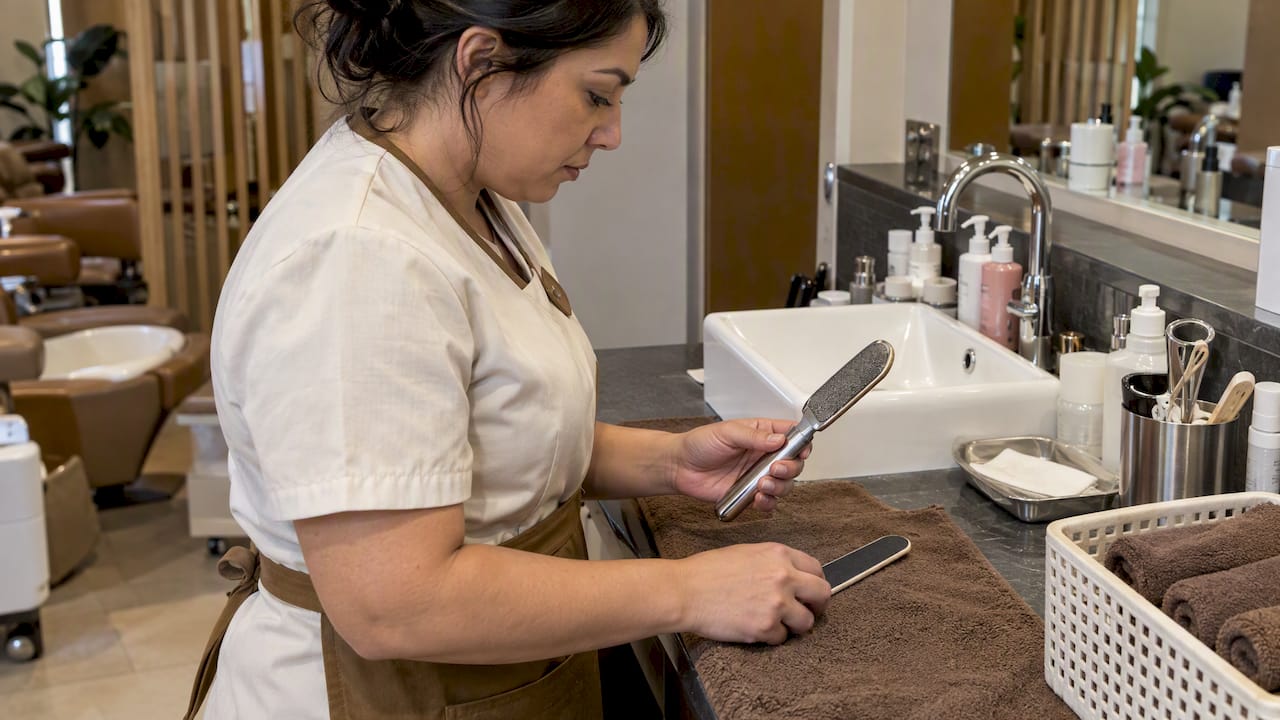
Freshly shaved legs. Do not shave right before a pedicure. Tiny nicks give bacteria a way in. We recommend waiting a day or two, and our page on shaving before a pedicure explains what to tell your technician.
Foot bath hygiene: the question worth asking
The water is part of the exfoliation experience, so it is worth knowing about the risks. A study published in the CDC’s journal Emerging Infectious Diseases swabbed 30 whirlpool footbaths in 18 California nail salons and found mycobacteria in 29 of them, after an outbreak of boils linked to a salon’s footbaths. That was one region, in 2005, and practices have since improved, but the takeaway holds: the footbath has to be cleaned and disinfected between every client, including the screen and filter.
Before you book anywhere, ask:
- How do you disinfect the tub between clients?
- Are files and metal tools sterilized, and are single-use items thrown out?
- Is the technician licensed?
A salon that answers plainly and without hesitation is telling you something good. We also describe our own six-part hot towel routine for keeping feet safe.
Who should talk to a doctor first
Exfoliation is not for everyone.
- Diabetes or poor circulation. Even small breaks in the skin can turn into ulcers and deep infections. The APMA advises people with diabetes or poor circulation to consult a podiatrist so they can recommend a customized pedicure that you and your salon can follow. Skip scrubbing until you have that guidance.
- Open cracks, cuts, rashes or suspected fungus. Wait until a doctor has looked at it.
- Thick, painful calluses, corns or recurring problems. See a podiatrist. Our callus removal safety guide covers the line between salon care and medical care.
- Older family members. Our caregiver checklist for senior pedicures lists the red flags to watch for.
A pedicure can be a pleasant part of foot care, but it is not treatment for a medical problem.
Our perspective at Foxy Nails
We get asked for a deep scrub or a heavy scrape almost every week, and our answer is always the same: let us look at your feet first. Foot health depends on a professional eye on the skin, not on the number of add-ons. A long list of masks, wraps and hot stones can feel wonderful, but the most useful part of a pedicure is the technician who notices that your heel is cracking, or that a nail looks off, and tells you.
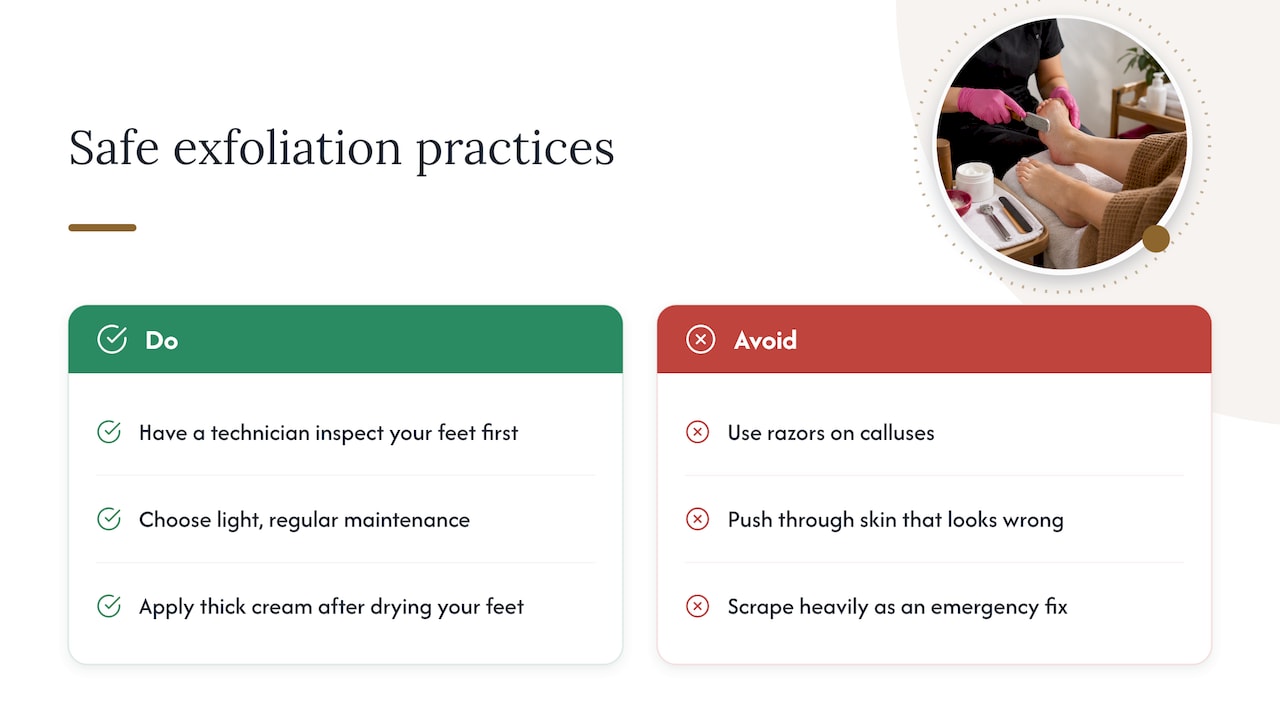
So we treat exfoliation as maintenance. We prefer a light, regular routine to an emergency scrape-down, we do not use razors on calluses, and we would rather send you to a podiatrist than push through something that does not look right. Parents bring their kids in for gentle services, and the same principle applies to everyone in the chair: comfortable, clean and unhurried.
If you take one thing home from this article, make it moisturizer. Put a thick cream on within minutes of drying your feet, every night if you can.
— Cuong
Pedicure options at Foxy Nails in Reno
If you are in Reno and want a pedicure that fits how much attention your feet need, our services page lists everything with its price:
| Pedicure | Price |
|---|---|
| Pedicure | $25 |
| Spa Pedicure | $40 |
| Deluxe Pedicure | $45 |
| Foxy Deluxe Pedicure | $55 |
| Foxy Signature Pedicure | $65 |
Tell your technician you want exfoliation and moisturizing, mention anything about your health, and ask what is included at each level so you only pay for what you want. If you are curious about the benefits of a full treatment, read about why your feet deserve a spa pedicure. Want polish that lasts? Gel manicures are $40, and removal of gel polish is $10, which we explain in our comparison of gel and regular polish.
Caring for your feet between visits
A salon visit works best when your habits support it.
- Wash and dry your feet daily, including between the toes. The CDC’s foot hygiene advice recommends daily washing and well-fitting, protective footwear.
- Moisturize every night. Look for a thick cream. Ingredients like urea are often suggested for dry, rough heels, as discussed by foot doctors.
- Use a gentle sugar scrub once a week, not daily, and stop if skin turns red or sore.
- Avoid heavy scraping and DIY blades.
- Wear socks and shoes that fit. Friction is what builds calluses in the first place.
- Book your pedicure early in the day. Equipment is freshest and you will not be rushed.
Frequently asked questions
What do nail salons use to exfoliate feet?
Most use a sugar or salt scrub after a warm soak, sometimes with a foot file or other sanitizable tool on the heels. Chemical exfoliants are used only in controlled, professional strengths. Razors and credo blades should not be part of a standard pedicure.
Is exfoliation good for feet?
Yes, in moderation. Removing dead skin keeps feet comfortable and helps lotion absorb. The key is to be gentle and follow with moisturizer, since over-exfoliation leads to thicker skin. People with diabetes or poor circulation should see a podiatrist first.
What is the healthiest pedicure to get?
The one with the cleanest setup, not the longest menu. Look for a licensed technician, disinfected tubs, sanitized or single-use tools, and no blades. Some practitioners suggest a waterless pedicure if your salon offers one, because it avoids footbath water altogether.
How often should I get an exfoliation pedicure?
Every 3 to 4 weeks suits most people, with a gentle scrub at home once or twice a week in between. If you notice cracks, pain or very thick skin, a podiatrist is the better next stop.
Sources
- APMA: Pedicure Pointers
- APMA: Corns and Calluses
- Nailpro: Pedicure Exfoliation Techniques, Best Practices and Products
- FDA: warning on chemical peel skin products without professional supervision
- CDC Emerging Infectious Diseases: Mycobacteria in Nail Salon Whirlpool Footbaths, California
- CDC: Healthy Habits, Foot Hygiene
- Michigan Foot Doctors: How to Exfoliate Your Feet
- Nevada Administrative Code, Chapter 644A: Cosmetology