
If you want chip-free color for two to three weeks, gel is the better choice; if you like changing shades every few days without commitment, regular polish wins. Gel holds up far longer than traditional lacquer, and when you want it applied or removed without damaging your nails, booking a professional gel manicure at a salon keeps the process safe.
TL;DR:
- Regular polish chips within 3 to 7 days, while gel manicures last 2 to 3 weeks and gel pedicures can last 3 to 6 weeks.
- Gel application takes about 30 to 45 minutes, compared with 20 to 30 for regular polish; an underpowered or mismatched lamp can leave gel undercured.
- Remove gel with a 10 to 15 minute acetone soak and push it off gently; frequent color changes favor professional removal to prevent nail thinning.
- During curing, the American Academy of Dermatology recommends hand sunscreen or fingerless UV protective gloves; gel acrylates can also trigger allergic dermatitis.
Table of Contents
- Quick Comparison: Gel and Regular Polish Side by Side
- How Long Each Polish Actually Lasts
- What Happens During a Regular or Gel Application
- Safe Removal and Everyday Aftercare
- How the Finish and Shine Differ
- Health Considerations and How to Lower Your Risk
- A Quick Checklist to Help You Decide
- A Salon Technician’s Take on Choosing Between Gel and Regular
- Book a Professional Gel or Regular Manicure With Us
- FAQ
- Sources
Quick Comparison: Gel and Regular Polish Side by Side
Here is the short version before we get into specifics:
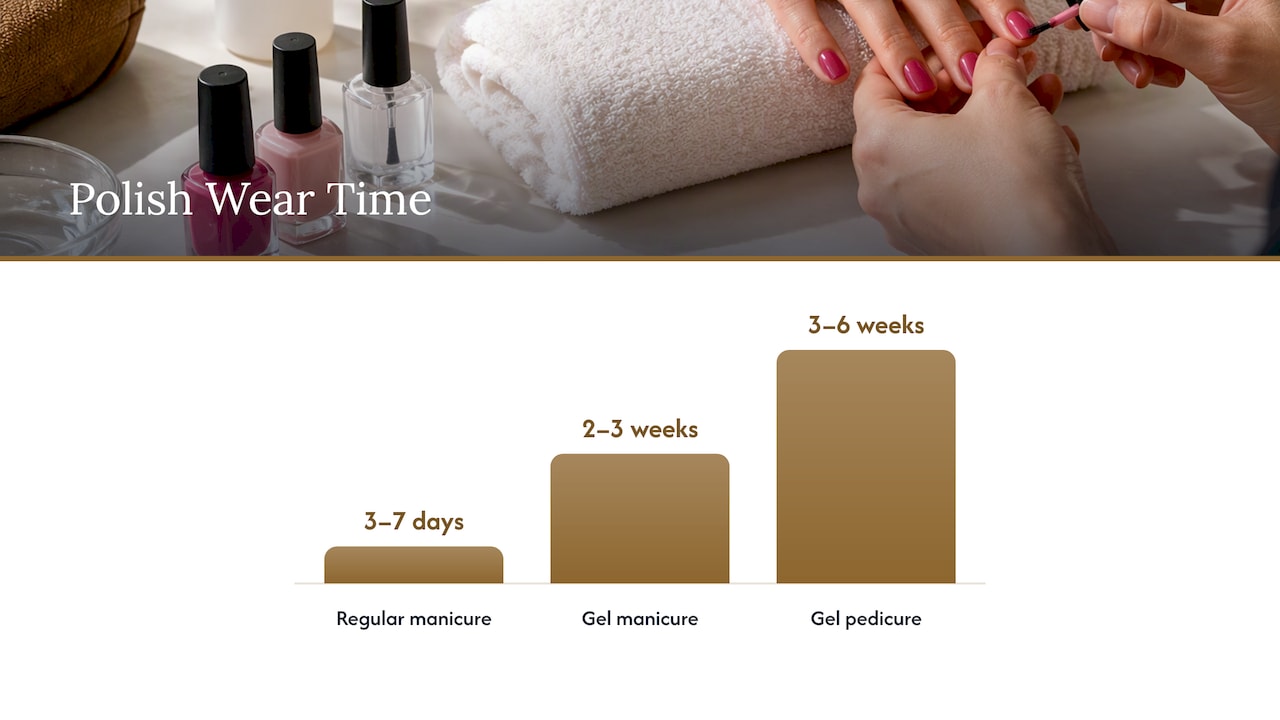
- Wear time: regular polish typically chips within 3 to 7 days, while gel holds strong color for 2 to 3 weeks.
- Application: regular polish takes about 20 to 30 minutes; gel runs 30 to 45 minutes because each layer cures under a lamp.
- Removal: regular polish wipes off with remover in seconds; gel needs an acetone soak or professional removal to avoid damage.
- Cost: gel services generally carry a premium over regular polish because of the extra product and curing step.
- Finish: gel delivers a glassier, high-gloss look that regular polish can’t match without added topcoats.
For long-lasting gloss with minimal upkeep, a gel manicure from a trained technician is the more dependable route.
How Long Each Polish Actually Lasts
The wear-time gap between these two options comes down to chemistry. Regular polish dries through solvent evaporation, which leaves a softer film that’s more prone to scratches and chipping. Gel polish cures into a hardened plastic-like layer under UV or LED light, which is why it resists wear so much longer.
Mayo Clinic notes that regular manicures usually show visible chipping within 3 to 7 days, while gel manicures typically last 2 to 3 weeks. Gel pedicures can stretch even longer, often 3 to 6 weeks, since toenails grow more slowly than fingernails.
Real-world wear also depends on how fast your nails grow, how much your hands take on through chores or workouts, and whether you use a quality topcoat. UV exposure from sun or repeated lamp cycles can also affect how gel ages between appointments.
What Happens During a Regular or Gel Application
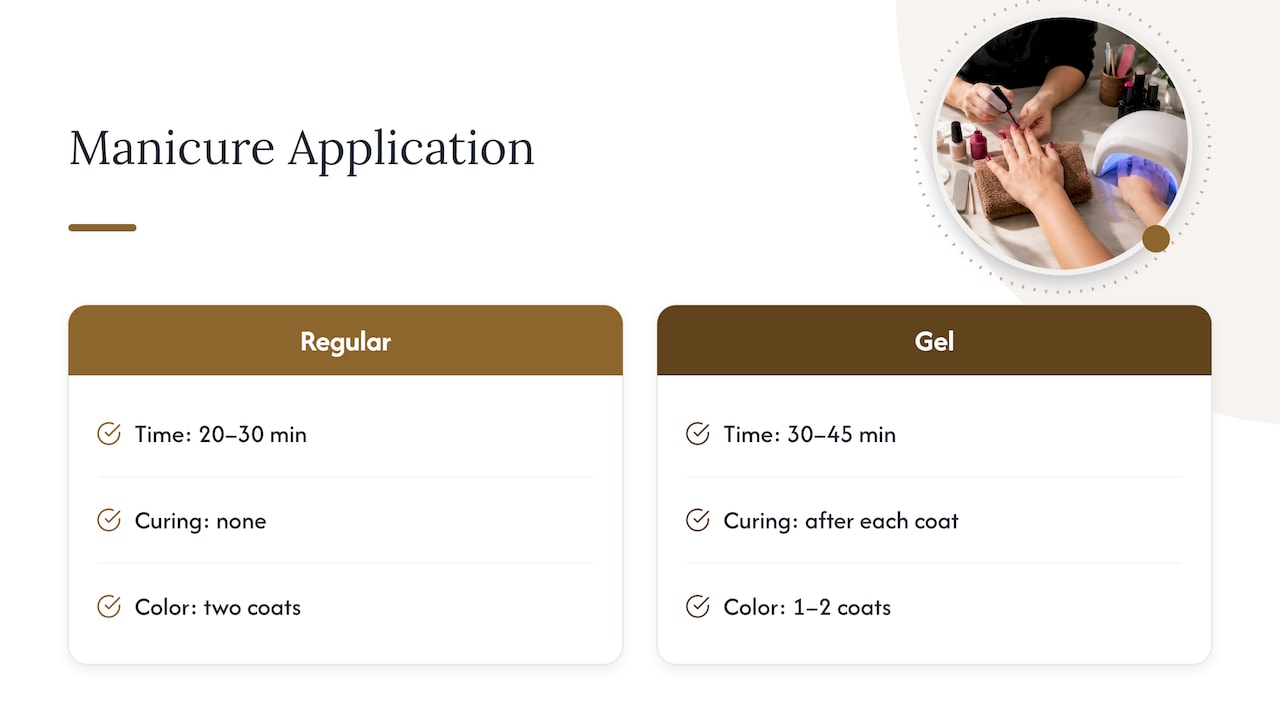
A regular manicure follows a familiar sequence: nail shaping, cuticle care, base coat, two coats of color, and a top coat, finished in about 20 to 30 minutes with no curing step required.
Gel application adds a layer of precision. After prep and shaping, a technician applies a base coat, cures it under a lamp, adds one or two color coats with curing between each, then seals everything with a top coat and a final cure. That process runs about 30 to 45 minutes, longer than regular polish because of the repeated curing stages.
Technique and equipment matter here. A calibrated professional lamp cures each layer fully, while an underpowered or mismatched lamp can leave the gel undercured, which raises the risk of lifting and skin contact with uncured monomers.
Safe Removal and Everyday Aftercare
Regular polish removal is simple: a cotton pad and polish remover usually does the job in under a minute. Gel removal takes more care since the cured layer has to be softened before it comes off.
- Gently buff the top shine layer without digging into the natural nail.
- Soak a cotton ball in acetone, place it directly on the nail, and wrap each finger tightly in foil or plastic wrap for about 10 to 15 minutes.
- Gently push off the softened gel with a cuticle stick, never scraping or forcing it.
- Finish with a nourishing cuticle oil to replace lost moisture.
If you switch gel colors often, professional removal is worth the appointment since repeated at-home scraping tends to thin the nail plate over time. Between gel cycles, giving your nails a short rest and applying dermatologist-backed aftercare helps them recover their natural flexibility.
Pro Tip: Skip the foil and use plastic wrap instead. It creates a tighter seal around the acetone-soaked cotton, which speeds up softening without extra scraping.
How the Finish and Shine Differ
Gel polish dries into a glassy, high-gloss finish that holds its shine for the full wear cycle, while regular polish starts shiny but dulls faster as the surface wears. Both can look equally polished fresh out of the salon, but a quality top coat narrows the visual gap for the first few days.
For an event or a trip where you want nails to photograph well for two weeks straight, gel is the safer bet. For casual week-to-week wear where you like switching shades on a whim, regular polish keeps things flexible without the extra time or cost.
Health Considerations and How to Lower Your Risk
Both options are generally safe for most people, but gel comes with a few specific things worth knowing. The American Academy of Dermatology notes that acrylate monomers used in gel polish, including HEMA, can trigger allergic contact dermatitis in some people, with symptoms like swelling, itching, and redness around the nail.
A clinical review in the Journal of Cosmetic Dermatology links acrylate-containing nail cosmetics, gel polish included, to allergic contact dermatitis and other nail disorders, meaning that repeated or prolonged exposure carries a real but manageable risk.
UV and LED curing lamps raise a separate question. The AAD suggests applying sunscreen on your hands or wearing fingerless UV-protective gloves during curing to limit light exposure, and a professionally calibrated lamp reduces the chance of undercured gel that can irritate skin.
To keep risk low: avoid getting gel on the skin during application, have gel removed by soaking rather than peeling, and see a dermatologist if you notice recurring redness or swelling after manicures.
A Quick Checklist to Help You Decide
Ask yourself these questions before your next appointment:
- Do you change your color often? If yes, regular polish fits your habits better.
- Do you want low-maintenance color for two or more weeks? Gel is built for that.
- Have you had skin reactions to nail products before? Mention it before choosing gel.
- Is this for a special event or trip? Gel’s durability and shine hold up best under pressure.
- Are you comfortable paying a bit more for longer wear? Gel’s premium reflects the extra time and product.
If gel wins, book with a regular manicure alternative in mind for lighter weeks, and always schedule professional removal rather than peeling it off yourself.
A Salon Technician’s Take on Choosing Between Gel and Regular
In our chairs, the pattern is consistent: clients who switch colors weekly stay happiest with regular polish, while clients prepping for travel, weddings, or long stretches without touch-ups lean toward gel. Neither is the “right” answer across the board. It comes down to how much upkeep you want between visits and whether chip-free shine matters more than variety. For aftercare tips that keep either option looking its best, our manicure aftercare guide covers the basics we walk clients through every day.
— Cuong
Book a Professional Gel or Regular Manicure With Us
Choosing between gel and regular polish is easier when the application and removal are handled by someone trained to protect your natural nails. Our Gel Manicure and Regular Manicure services give you either option without the guesswork, and our Gel Removal Add-On keeps the process from thinning or stressing your nail plate.

If you’re ready for color that lasts or a quick refresh between events, visit our services page to book the option that fits your week, and let us handle the application and removal from start to finish.
This article is general information, not a substitute for advice from a qualified doctor. Consult a qualified healthcare professional about your own circumstances before acting on anything here.
FAQ
Can you use gel nail polish as normal?
Gel polish can be applied the same way as regular polish in terms of color and finish, but it requires a UV or LED lamp to cure between coats, which regular polish does not need. Without curing, gel stays tacky and won’t set properly.
What is the healthiest nail option?
Neither gel nor regular polish is inherently healthier, but regular polish involves fewer steps and no curing light, which some people prefer if they’re prone to skin sensitivity. The American Academy of Dermatology recommends protective steps during gel curing and gentle removal for either type to keep nails healthy long term.
Can I remove gel polish at home?
Yes, gel polish can be removed at home using an acetone soak, cotton, and foil or plastic wrap for about 10 to 15 minutes before gently pushing off the softened gel. Professional removal is a safer option if you change gel colors often, since repeated at-home scraping can thin the nail plate.
What are the disadvantages of gel polish?
Gel polish takes longer to apply, costs more than regular polish, and requires a proper acetone soak for removal rather than a quick wipe. Clinical literature also links acrylate ingredients in gel polish to allergic contact dermatitis in some people, so those with sensitive skin should mention any history of reactions before booking.
Sources
- American Academy of Dermatology — Gel manicures: Tips for healthy nails
- Journal of Cosmetic Dermatology — Dermatologic conditions associated with nail cosmetics (systematic review)