
The single most important rule of manicure aftercare is simple: apply cuticle oil every night, keep your hands out of hot water for the first hour, and never pick at a lifting edge. Wear gloves for dishes and cleaning. If a gel edge lifts or a nail chips within a few days, that’s a sign to book a repair, not a DIY fix.
TL;DR:
- Applying cuticle oil nightly and moisturizing hands after washes significantly extend the lifespan of any manicure, especially in the first week.
- Gel manicures should last two to three weeks if properly cured, but lifting within five days usually indicates an application issue rather than poor aftercare.
- Regular polish needs thin coats, a full hour to dry before water contact, and touch-ups with matching top coats to hold up nearly as long as gel.
- Dip powder and acrylics last longer but require spacing between fills and full month-long breaks to prevent thinning and damage.
- For safe home removal of gel polish, use acetone-soaked cotton with sealed plastic wraps, avoiding metal tools and prolonged soaking to prevent nail damage or infection.
Table of Contents
- Manicure Aftercare Checklist for Any Type of Polish
- Gel Manicure Aftercare: The Habits That Actually Extend Wear
- Standard Polish Aftercare: Dry Time, Layering, and Quick Fixes
- Dip Powder and Acrylics: Spacing, Patch Tests, and Recovery Breaks
- How to Remove Gel Polish Safely at Home
- When Lifting or Redness Means More Than a Bad Manicure
- The Nightly Routine That Actually Moves the Needle
- What a Salon Can Fix That Home Care Can’t
- Book a Repair or Removal Instead of Fighting It Yourself
- Sources
- FAQ
Manicure Aftercare Checklist for Any Type of Polish
Whether you left the salon with regular polish, gel, or a full acrylic set, the same handful of habits keep your manicure looking fresh longer. The biggest threat to any fresh set isn’t time. It’s water, chemicals, and your own hands.
Here’s what matters most in the first week:
- Moisturize daily. Dry skin around the nail bed makes polish edges lift faster, so hand cream after every wash matters.
- Oil your cuticles nightly. This is the one habit nail techs mention more than any other for extending wear.
- Wear gloves for chores. Dish soap, bleach, and laundry detergent break down polish and weaken the bond between product and nail.
- Rinse and dry after pools or hot tubs. Chlorine and prolonged water exposure soften the top layer of polish and enhancement product.
- Never use your nails as tools. Opening cans, scraping labels, or peeling stickers is how chips and lifting start.
- Don’t pick at lifting polish. Picking pulls off healthy nail layers underneath, not just the product.
These six habits apply across every manicure type. The details shift depending on whether you’re wearing gel, regular polish, or a powder or acrylic enhancement, which is where the real differences in post-manicure maintenance show up.
Gel Manicure Aftercare: The Habits That Actually Extend Wear
Gel polish cures under UV or LED light, and the first two to four hours after your appointment matter more than people realize. The product is fully hardened on the surface, but the deeper layers continue to set. Rough activity, heavy water exposure, or knocking a nail hard during this window can cause micro-cracks that turn into lifting days later.
A properly applied gel manicure should last two to three weeks and typically fails by growing out at the cuticle, not by chipping or peeling off in sheets. If your gel starts lifting or chipping within five days, that’s usually an application issue, not something aftercare could have prevented.
Once you’re past the initial cure window, a short nightly routine keeps gel looking salon-fresh:
- Apply cuticle oil every night, working it into the nail fold, not just the nail plate.
- Keep the free edge sealed with a capped tip; avoid filing the tip thin.
- Refresh shine with a compatible top coat after about a week if the surface starts looking dull.
- Avoid picking at any lifted corner. It spreads under the intact polish and takes healthy nail with it.
Pro Tip: If one nail lifts before the rest, don’t remove the whole set yourself. Ask your salon for a single-nail patch repair. It usually takes five minutes and saves you from tearing off nine perfectly good nails.
The American Academy of Dermatology also recommends asking your salon about LED curing lights instead of UV, along with SPF 30+ on hands before curing, since repeated UV exposure adds up over many appointments.
Standard Polish Aftercare: Dry Time, Layering, and Quick Fixes
Regular polish carries less long-term risk to the nail plate than gel or powder systems, but it demands more patience up front. Thin coats dry faster and more evenly than one thick layer, and rushing the dry time is the number one reason polish dents or smudges within hours.
A few habits make regular polish hold up almost as well as gel:
- Apply two thin coats rather than one thick one, and let each coat set for a minute before the next.
- Give the final coat a full hour before hot water, tight gloves, or bedding contact.
- Use a top coat formulated to pair with your base and color polish, not a random bottle from the drawer.
- Touch up chips with a matching top coat swipe rather than repainting the whole nail.
If your nails feel weak, brittle, or thin after a run of gel or acrylic, regular manicures give the nail plate a break while still looking polished. It’s the lower-commitment option, and it comes off with regular remover instead of acetone soaking.
Dip Powder and Acrylics: Spacing, Patch Tests, and Recovery Breaks
Dip powder, acrylics, and gel extensions all require acetone soak-off or heavy filing to remove, and that process is harder on the natural nail than gel polish removal. The tradeoff is real: these systems last longer per appointment, but frequent touch-ups and repeated removal cycles thin the nail plate over time.
Dermatologists specifically recommend a single-nail patch test before a full dip powder application, since the adhesives used in dip systems can trigger allergic reactions that show up hours or days later rather than immediately.
A few rules keep long-term damage in check:
- Space fills or soak-offs at least two to three weeks apart rather than rebooking the moment one nail looks off.
- Test dip powder on one nail first if it’s your first time with that brand or salon.
- Take a full month off enhancements after several back-to-back sets, especially if nails feel soft or bendable.
- Use a nail overlay as a lighter alternative when you want strength without added length.
Frequent removal and reapplication cycles are the main driver behind thinning and damaged nails, according to AAD guidance on artificial nail wear.
How to Remove Gel Polish Safely at Home
Dermatologists recommend a specific method for safe at-home gel removal, and it’s not soaking your whole hand in a bowl of acetone. Whole-hand soaking dries out the skin around every nail at once and does nothing to speed up the actual process.
Here’s the method the AAD backs:
- Apply petroleum jelly around each cuticle and the surrounding skin to protect it from acetone.
- Soak a small piece of cotton in acetone and press it directly onto the nail.
- Wrap each nail in a small square of plastic food wrap to hold the cotton in place and create a tighter seal than foil.
- Wait 10 to 15 minutes, checking that the gel has softened before removing the wrap.
- Gently push off the loosened polish with a cuticle stick. Never scrape or pry with metal tools.
That 10 to 15 minute window comes directly from AAD’s removal guidance, and it’s long enough to soften properly cured gel without over-soaking skin.
If the polish still won’t budge after 15 minutes, stop. Forcing it or scraping with a metal tool peels off layers of natural nail along with the product. That’s the point where professional removal at a salon is worth the appointment.
When Lifting or Redness Means More Than a Bad Manicure
Some lifting is cosmetic and just means it’s time for a fill or a fresh set. Other signs point to something that needs medical attention, not a touch-up.
Watch for these red flags:
- Redness, warmth, or swelling around the nail fold that doesn’t fade in a day or two.
- Fluid-filled bumps or visible pus near the cuticle.
- Persistent itching or burning under or around a fresh set, which can signal an allergic reaction to gel product.
- Pain that worsens rather than improves over 48 hours.
If you spot signs of infection, stop wearing product on that nail, soak it in warm salt water for 10 to 15 minutes twice a day, and see a clinician if redness spreads or pus develops. This lines up with standard paronychia care, which also recommends topical antibiotics for early cases and oral antibiotics or drainage if it progresses. After any infection or allergic reaction, leave the nail bare for two to four weeks before reapplying anything.
The Nightly Routine That Actually Moves the Needle
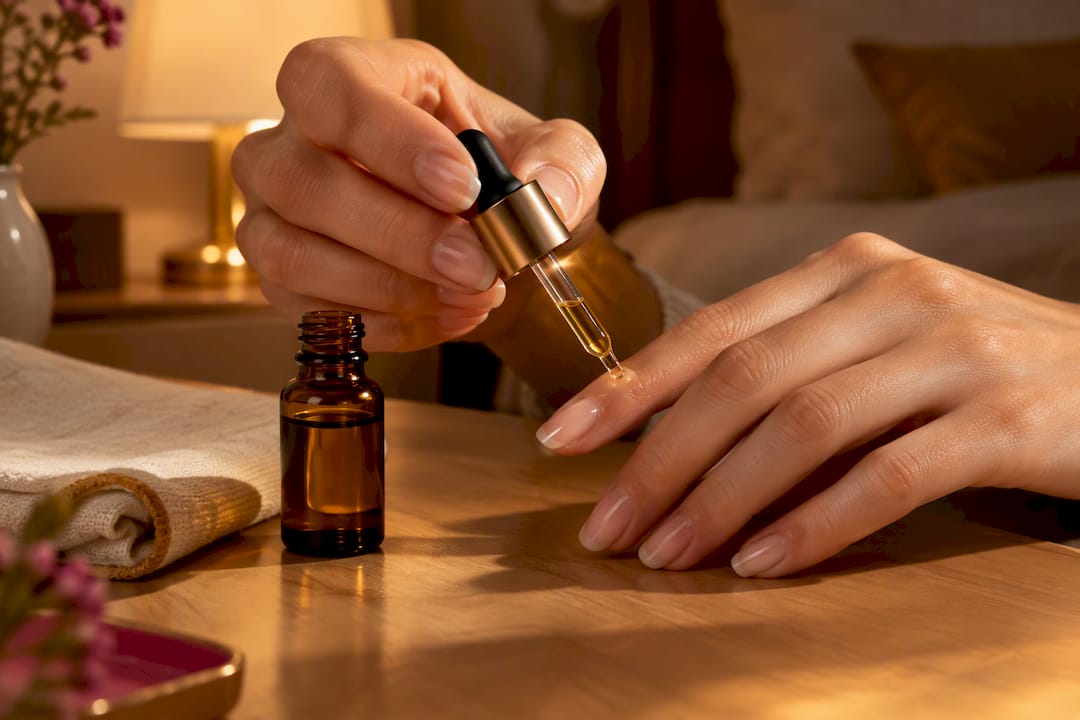
Nail techs consistently point to one habit above all others for wear and nail health: oiling your cuticles every single night, not just when you remember.
A short, realistic routine looks like this:
- Every night: Massage a small amount of cuticle oil into each nail fold before bed.
- After every hand wash: Apply a fragrance-free hand cream to replace lost moisture.
- Weekly: Check for lifting, dullness, or rough edges and file gently if needed.
- Every 10 to 14 days: Refresh shine with a salon-safe top coat if your gel or regular polish looks dull but isn’t lifting.
Pro Tip: Keep the cuticle oil next to your toothbrush. If it’s part of a routine you already do every night, you’ll actually use it instead of losing it in a drawer.
Favor nourishing oils like jojoba or vitamin E blends over anything with heavy fragrance, and avoid letting acetone-based products sit on skin longer than needed. Diet plays a role too. Nails that stay brittle despite good topical care sometimes point to a nutritional gap worth addressing alongside your regular routine.
What a Salon Can Fix That Home Care Can’t
Most lifting or early chipping traces back to prep, not aftercare, which is why a repair visit at Foxy Nails usually starts with checking how the nail was primed and capped in the first place. A technician can patch a single lifted nail, reseal an edge, or rebalance a set without stripping the whole manicure, which almost always beats a full DIY removal and redo. Avoiding cuticle cutting during application also matters here. It reduces infection risk and helps product bond more safely to the nail plate over the following weeks.
— Cuong
Book a Repair or Removal Instead of Fighting It Yourself
A professional nail salon is the better call than a DIY fix when lifting, a chip, or a stubborn removal has you reaching for tools that weren’t made for your nails. A Gel Polish Take Off runs $10, and a full Gel Removal Add-On pairs cleanly with a fresh Gel Manicure at $40 if you’re ready for a new set instead of a repair.

Nail techs at Foxy Nails check your nail bed before deciding whether a single-nail patch, a full soak-off, or a fresh application makes the most sense, so you’re not guessing at home with a bowl of acetone. If your nails feel thin or damaged after a long run of acrylics or dip powder, a nail overlay can rebuild strength without adding length while they recover. Book online through the Foxy Nails services page and get a technician’s read on whether you need a repair, a full removal, or just a break.
FAQ
How Soon After a Manicure Can I Shower?
Wait at least one hour after a regular polish manicure and closer to two hours after gel before showering, since heat and steam can soften polish that hasn’t fully hardened. Keep the water lukewarm rather than hot for the first day to protect the seal around the cuticle.
What Should You Not Do After Gel Nails?
Don’t pick at lifting edges, don’t soak your whole hand in acetone for touch-ups, and don’t skip gloves during cleaning or dishwashing. Avoid using your nails to open packages or scrape labels, since that’s one of the fastest ways to chip a fresh gel manicure.
What Strengthens Nails After Gel?
Nightly cuticle oil and fragrance-free hand cream after washing do the most to support nail health between gel sets. Taking a break from enhancements for about a month after several back-to-back applications also gives the nail plate time to recover, based on AAD guidance on reducing artificial nail damage.
Can You Wash Your Hair After a Manicure?
Yes, but wait at least an hour for regular polish or a couple of hours for gel before washing your hair, since shampoo and hot water can soften a manicure that’s still curing. Wearing thin gloves while washing is an easy way to avoid direct contact with hot water and shampoo residue.