
The longest-wearing manicures come from BIAB (builder gel in a bottle), dip powder, or acrylic at the salon, and from LED-cured gel polish kits or a long-wear polish like OPI Infinite Shine at home. The one habit that moves the needle more than any product choice? Clean, oil-free nails, a rubberized base coat like Orly Bonder, thin color layers capped over the free edge, full curing or drying time, and a topcoat refresh every few days.
Everything else, including your polish brand or your technician’s technique, works better or worse depending on whether that sequence gets followed. Skip the base coat and even a premium system like CND Vinylux will lift early. Rush the cure under a cheap lamp and gel polish smudges before you leave the chair.
Here’s where to start right now:
- Wash and dehydrate your nails with soap and isopropyl alcohol before any polish touches them. Oil is the number one reason polish won’t grip.
- Apply color in two thin coats, not one thick one, and swipe the brush over the tip of the nail to seal the free edge.
- Refresh your topcoat every three to four days even if nothing looks chipped yet. It’s the cheapest insurance against a full redo.
Key Takeaways
A durable manicure depends on proper prep, thin capped color layers, correct curing time, and consistent aftercare far more than it depends on brand choice.
| Point | Details |
|---|---|
| Prep decides adhesion | Clean, oil-free nails with a rubberized base coat like Orly Bonder outperform any premium polish applied without it. |
| Thin layers beat thick ones | Two thin coats with the free edge capped resist chipping far longer than one heavy coat. |
| Cure and dry fully | Rushed LED curing or a short air-dry window is one of the top causes of early smudging and lifting. |
| Maintain daily, refresh weekly | Nightly cuticle oil plus a topcoat refresh every few days can add several extra days of wear. |
| Choose Foxy Nails for salon durability | Foxy Nails pairs BIAB, dip powder, and gel services with capped-edge application and minimal filing to protect both wear time and nail health. |
Table of Contents
- What Kind of Long Lasting Manicure Lasts the Longest?
- How Do You Prep Nails for Maximum Wear?
- Which At-Home Products Actually Extend Wear?
- What Should You Ask For at the Salon?
- How Do You Make a Manicure Last Weeks, Not Days?
- How Do You Remove a Long-Wearing Manicure Safely?
- What Does a Long Lasting Manicure Cost and How Long Does It Take?
- What Does the Evidence Say About Manicure Longevity?
- When Is a Salon Manicure Worth It Over DIY?
- How Foxy Nails Delivers a Manicure That Actually Lasts
- Where This Article’s Information Comes From
- Frequently Asked Questions
- Sources
What Kind of Long Lasting Manicure Lasts the Longest?
Not all manicures age the same way, and the differences come down to chemistry as much as technique. Traditional polish, even a good one, is a lacquer film sitting on the nail’s surface. Gel, dip, and BIAB all form a harder, more cohesive layer that flexes with the nail instead of cracking off it.
Gel polish cured under an LED or UV lamp typically holds for about two weeks or slightly longer, according to editorial testing that tracks wear day by day, per RealSimple’s manicure longevity guide. Dip powder often edges past that mark. The layered powder and resin bond creates a denser, more chip-resistant shell than gel, though it can feel thicker on the nail and removal needs more care, based on comparative reporting on gel versus dip powder durability.
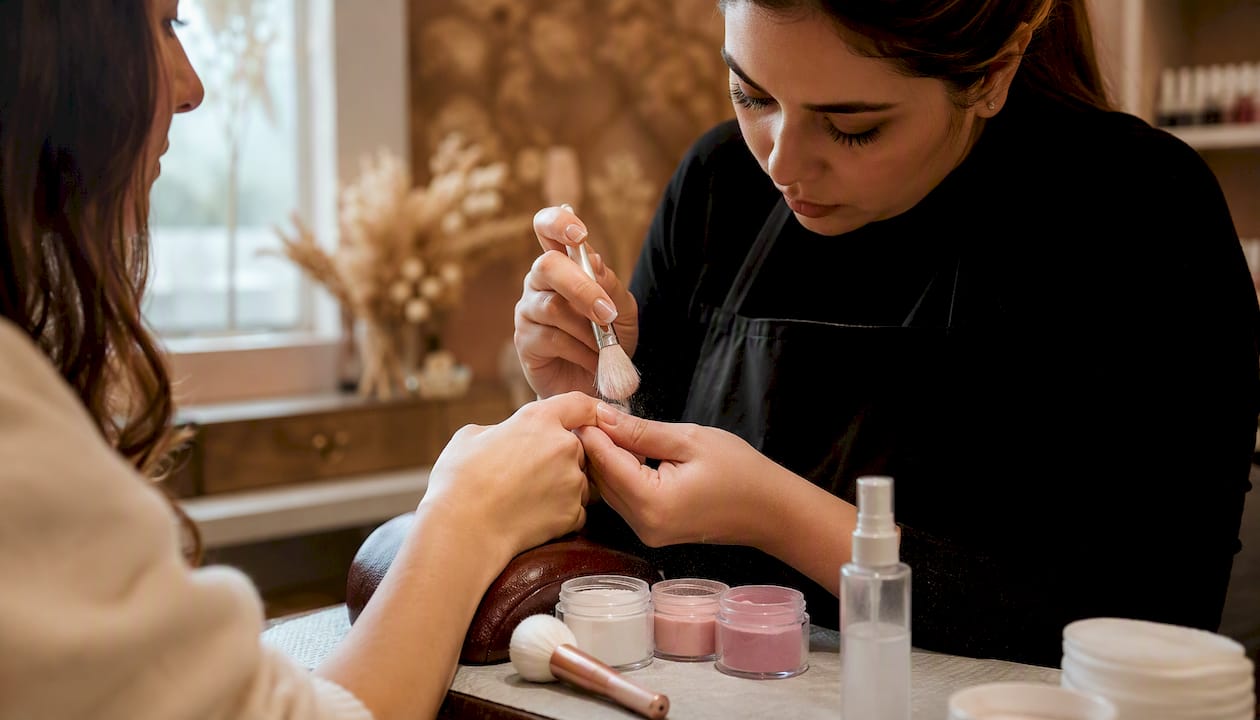
BIAB and acrylic sit at the top of the durability scale. Both are typically good for two to four weeks depending on lifestyle and upkeep, and BIAB in particular is engineered for heavier daily wear, according to Vogue’s breakdown of the main manicure types. Traditional and at-home LED gel polish land in the middle. Done right, with the prep sequence above, a strong at-home system can realistically deliver 7 to 15 days of chip-free wear, based on Allure’s tested wear-time results.
| Manicure type | Typical wear time | Nail health risk | Removal difficulty | Lamp/tools needed | Cost & appointment time | Best for |
|---|---|---|---|---|---|---|
| Traditional polish | 3 to 7 days | Low | Easy, remover only | None | $20 to $35, 30 to 45 min | DIY, sensitive nails |
| At-home LED gel | 7 to 15 days | Low to moderate | Soak-off, 10 to 15 min | LED/UV lamp | $15 to $40 kit cost | DIY-comfortable users |
| Salon gel polish | About 2 weeks | Moderate if over-buffed | Soak-off, 15 to 20 min | LED/UV lamp | $35 to $60, 45 min | Reliable salon wear |
| Dip powder | 3 to 4 weeks | Moderate, depends on sanitation | Soak-off, longer than gel | None | $40 to $60, 60 min | Long wear without a lamp |
| BIAB/hard gel | 3 to 4 weeks+ | Low when filed minimally | Soak-off preferred over filing | LED/UV lamp | $50 to $75, 60 to 75 min | Weak or heavy-use nails |
| Acrylic | 3 to 4 weeks | Moderate to high if abused | Soak-off or gentle filing | None | $45 to $65, 60 to 75 min | Length plus durability |
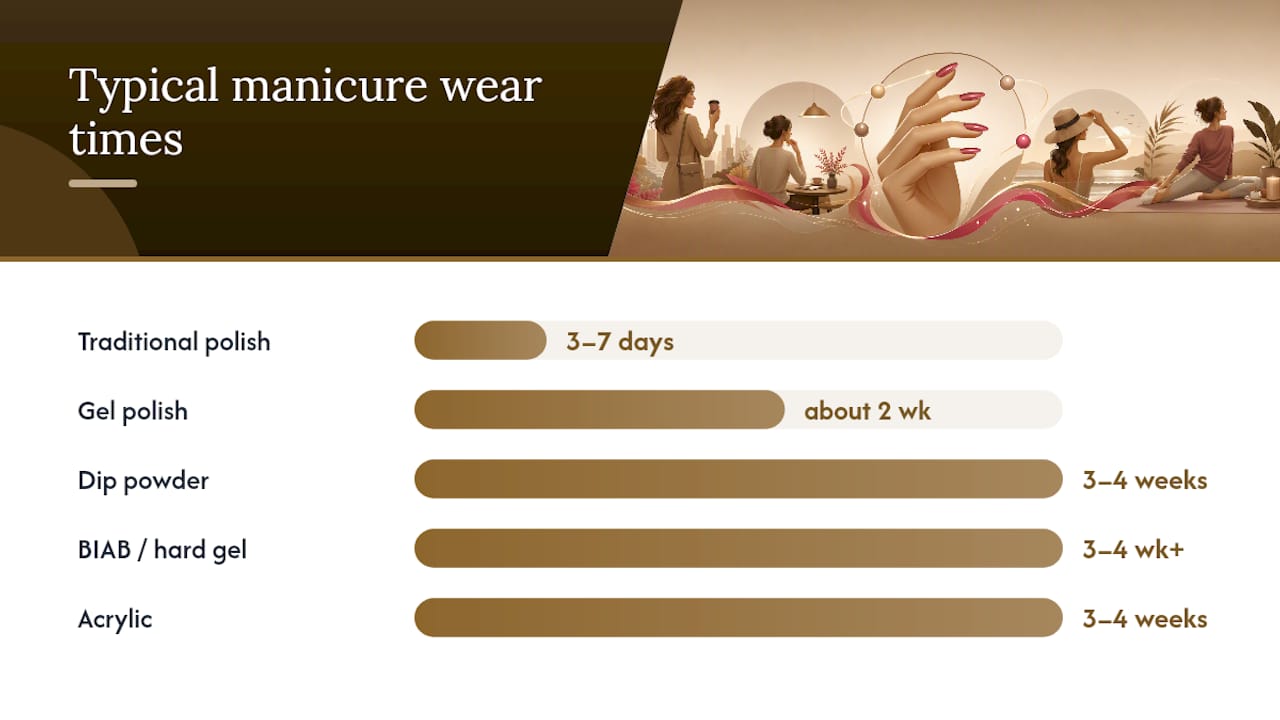
The takeaway isn’t “pick the fanciest option.” It’s that BIAB and dip tend to outlast gel polish, and gel outlasts traditional lacquer, but every one of them loses that advantage if the removal process damages the nail plate underneath. A gel manicure removed by peeling does more harm than a dip manicure properly soaked off.
Pro Tip: If you’re getting BIAB, ask your technician to do minimal filing on the natural nail before applying the builder gel. Most of the shaping should happen on the product itself, not your nail bed.
How Do You Prep Nails for Maximum Wear?
Application technique decides more of your manicure’s lifespan than the product label does. This sequence works whether you’re at a salon chair or your own kitchen table.
- Trim and shape first. File nails to your target length and shape before you touch any polish. Filing after color goes on disturbs adhesion.
- Push back cuticles gently with an orange wood stick. Never cut healthy cuticle tissue. It’s a seal that protects the nail matrix.
- Clean nails with antibacterial soap, then wipe each nail with isopropyl alcohol on a lint-free wipe. This step removes the natural oil layer that keeps polish from bonding.
- Buff lightly, if at all. A light matte pass on the nail plate helps grip. Aggressive buffing thins the nail and actually shortens wear over time.
- Apply a rubberized base coat, such as Orly Bonder, in one thin layer and let it set for a full minute before color.
- Paint two thin coats of color, capping the free edge each time by dragging the brush over the very tip of the nail. This single move is what keeps tips from chipping first.
- Cure or dry properly. LED gel systems typically need 30 to 60 seconds per coat depending on the lamp’s wattage; air-dry polish needs a genuine 10 to 15 minutes before you touch anything.
- Finish with a two-step topcoat, one immediately after color and a second the next day for extra shine and armor.
Tools worth having on hand:
- A 100/180 grit file for shaping and light buffing
- A quality LED or UV lamp if you’re doing gel at home
- Lint-free wipes and 99% isopropyl alcohol
- Orange wood sticks for cuticle work
- A fine detail brush for cleanup around the cuticle line
Pro Tip: Time your coats. Waiting 90 seconds between color coats lets the first layer set enough that the second doesn’t drag or bubble, which is a bigger cause of early chipping than most people realize.
Prep and layering matter more than the polish formula itself, and clean, oil-free nails paired with a compatible base and top coat routine consistently extend wear across nearly every product tested, according to Dazzle Dry’s guidance on preventing chips.
Which At-Home Products Actually Extend Wear?
You don’t need a salon chair to get real durability. The gap between a mediocre at-home manicure and a two-week one usually comes down to picking a system built for wear, then using it correctly.
LED gel kits. Manucurist Green Flash LED Gel Polish is built specifically for at-home curing and pairs a soft-gel formula with a compact lamp, delivering wear closer to salon gel than traditional polish.
Long-wear “gel-like” polishes need no lamp at all. OPI Infinite Shine uses a three-step system (ProStay Primer, two coats of color, Gloss topcoat) that manufacturer testing lists at up to 10 to 11 days under good conditions. Sally Hansen Miracle Gel works similarly, applying two coats over clean, dry nails and finishing with its matching topcoat, with no UV curing required.
Durability topcoats are where a lot of the real magic happens. Seche Vite dries fast and adds a hard, glossy shell over any polish, and Londontown Gel Genius layered under Seche Vite is a combination DIY testers rely on to push a regular manicure closer to the two-week mark.
Strengthening base coats protect the nail while adding grip. Orly Bonder remains the standard rubberized base for helping any topcoat system hold onto the nail plate longer, and CND Vinylux offers a weekly system with its own base and topcoat pairing designed for extended air-dry wear. Essie Gel Couture and Olive & June Long Lasting polish round out the list of tester-favorite formulas that combine well with these bases.
If a full gel system feels like too much, the Dazzle Dry Truth System is a non-gel, breathable alternative that pairs a base, two color coats, and a top and finishing coat for a formula that dries hard without a lamp.
| Product/system | Typical wear time | Best-use scenario |
|---|---|---|
| Manucurist Green Flash | 7 to 15 days | Gel wear at home with a small lamp |
| OPI Infinite Shine | Up to 10 to 11 days | No-lamp long wear |
| Sally Hansen Miracle Gel | 7 to 10 days | Budget-friendly gel look, no lamp |
| Seche Vite (topcoat) | Extends any polish by days | Layered over any color for extra armor |
| Orly Bonder (base coat) | Extends any polish by days | Grip and adhesion for chip-prone nails |
| Dazzle Dry Truth System | 7 to 15 days | Non-gel breathable option |
| CND Vinylux | About 7 days | Weekly system with matching base/top |
Use two thin coats for every color product on this list, never one thick one. Cure LED formulas for the manufacturer’s stated time per coat rather than eyeballing it, and let air-dry systems sit untouched for a full 15 minutes before you resume normal hand use.
What Should You Ask For at the Salon?
A skilled technician can double your manicure’s lifespan compared to a rushed one, and the difference usually shows in the questions they answer without hesitation.
Ask these before your service starts:
- “Do you use a rubberized base coat before color?”
- “How do you remove my previous gel or dip? Do you soak it off or file it off?”
- “Do you sanitize your dip powder or use single-use containers per client?”
- “How long do you cure each layer under the lamp?”
- “Can you cap the free edge on each coat?”
For BIAB or hard gel, direct the technician toward minimal filing of your natural nail. The strength should come from the builder gel layer, not from thinning your own nail plate. For dip powder, confirm they’re using single-use powder or a sanitized dipping method, since shared open jars are a real infection risk. For gel polish and acrylic, ask about in-fill timing. Most nails need a fill around the two- to three-week mark rather than a full soak-off and reapplication every time.
Watch for these red flags:
- The technician buffs the natural nail aggressively before every service.
- They pry or peel off old gel or dip instead of soaking it.
- Dip powder comes from an open jar dipped straight into by multiple clients.
- Cure times under the lamp seem rushed or inconsistent between coats.
If you hear anything close to “we’ll just pop that old gel right off,” it’s worth asking them to soak it instead. Peeling gel or acrylic pulls layers off the nail plate itself, not just the product.
How Do You Make a Manicure Last Weeks, Not Days?
Small daily habits add up faster than most people expect, and none of them take more than a minute.
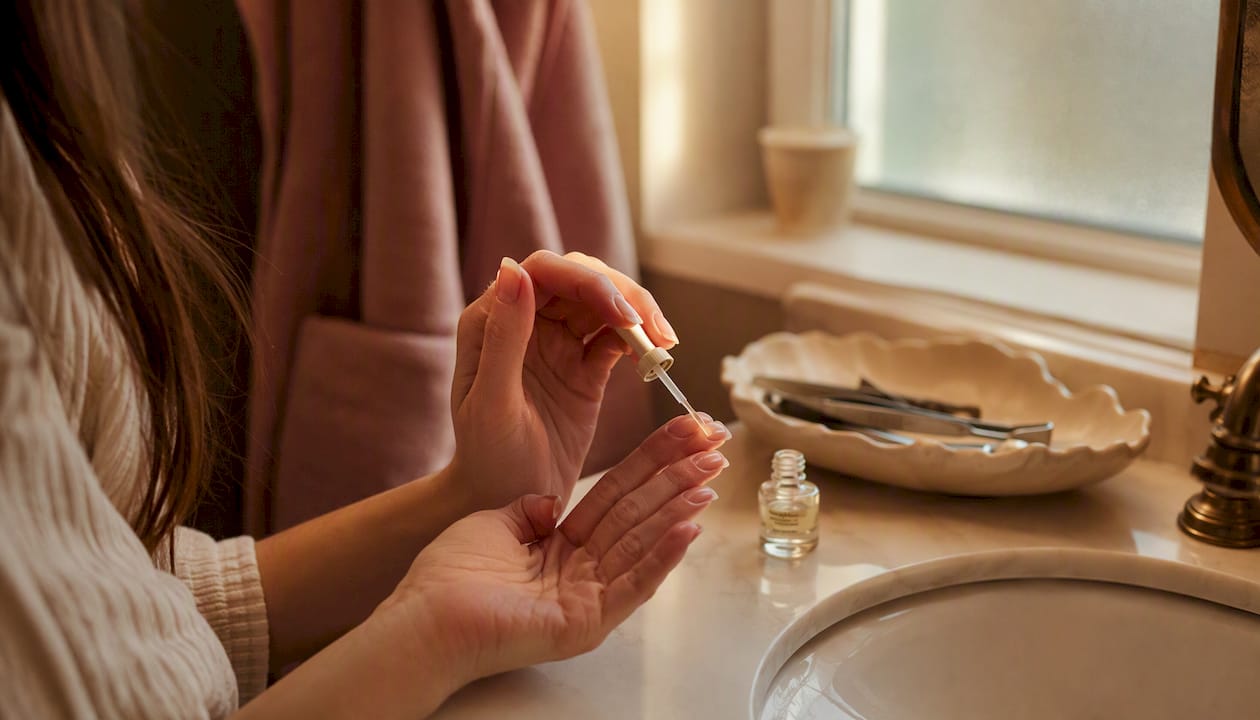
Cuticle oil, every night. Nails and the surrounding skin lose flexibility as they dry out, and a brittle nail is a nail that cracks polish off at the tip. A drop of oil worked into the cuticle and nail bed each evening keeps that flexibility intact.
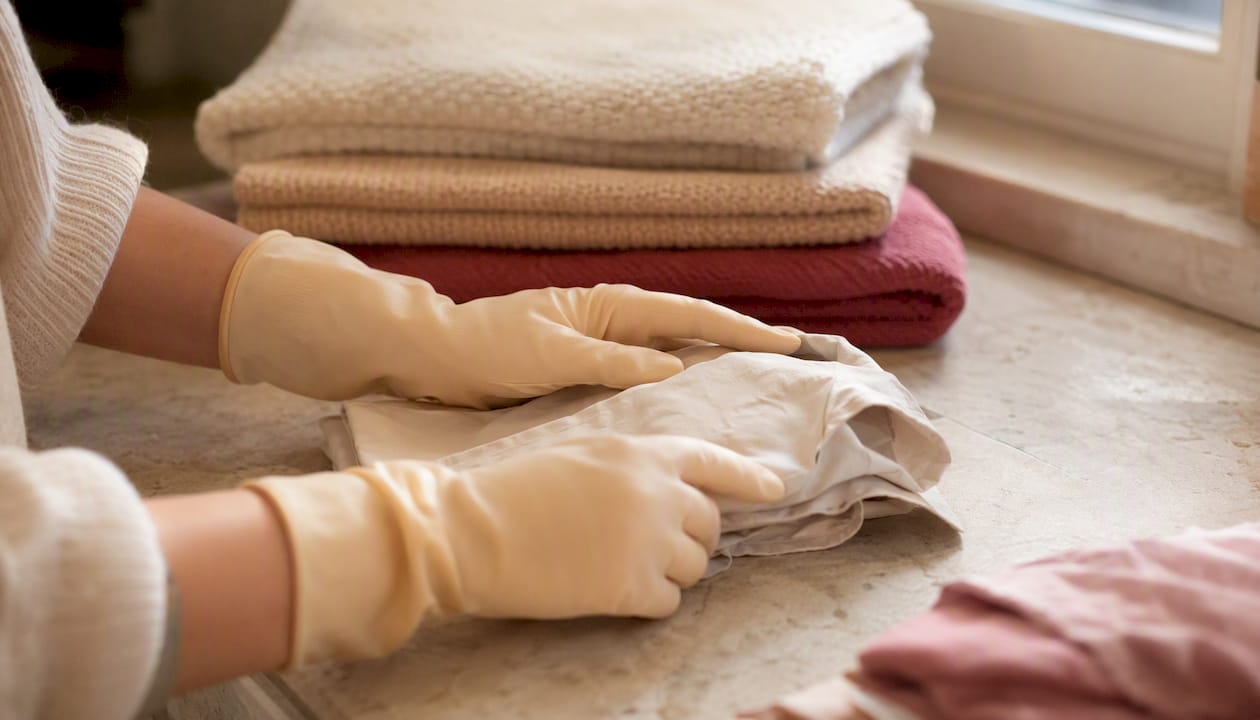
Gloves for wet or chemical chores. Dishwashing, cleaning, and gardening are the top culprits behind early lifting. Water seeping under the edge of your polish weakens the bond from underneath, where you can’t see it happening.
Hand lotion, applied to the back of the hand and worked toward the cuticle, not slathered directly onto fresh polish, which can soften a topcoat that hasn’t fully cured.
Weekly maintenance takes five extra minutes:
- Swipe on a fresh layer of topcoat, even over polish that still looks fine.
- Check the free edge for early lifting and smooth any rough spots with a soft buffer, never a coarse file.
- Push back any new cuticle growth so it doesn’t creep over your polish line.
Quick repair cheatsheet. A small chip can be filled in with matching polish and sealed with topcoat the same day. A tiny lift at the edge can sometimes be smoothed and resealed with topcoat if it’s under a millimeter. A full smudge that happened before curing needs to be filed flat and repainted, not covered up. Anything beyond a small chip, especially lifting that’s spreading or a crack that goes into the nail bed, needs a salon fix rather than a home patch.
How Do You Remove a Long-Wearing Manicure Safely?
Removal is where most long-term nail damage actually happens, not during wear. Peeling off gel or acrylic pulls surface layers of keratin off with it, leaving nails thin and prone to peeling for weeks afterward.
Gel polish removal:
- Lightly buff the topcoat to break its shine.
- Soak a cotton pad in acetone, press it against the nail, and wrap in foil.
- Wait 10 to 15 minutes.
- Gently push off the softened gel with a cuticle stick. Never pry or scrape hard.
Dip powder removal:
- File down the topcoat layer slightly.
- Soak in acetone for 15 to 20 minutes, longer than gel because the layers are denser.
- Push off gently in sections rather than all at once.
BIAB/hard gel removal:
- File the shiny topcoat layer to dull it.
- Soak 15 to 20 minutes in acetone.
- Use a cuticle pusher to lift softened product, working slowly.
Acrylic removal:
- Soak 20 to 30 minutes, since acrylic is the densest of the group.
- Gently push off softened product; never rip or snap it off.
Once nails are bare, give them room to recover. Skipping straight into another full set stacks solvent exposure and filing on top of nails that haven’t rebuilt their moisture barrier. Clinical literature on nail plate health backs this up directly: minimizing aggressive filing and replenishing lipids after solvent exposure protects the nail’s structural integrity over repeated services, according to research on nail and skin biology. A strengthening treatment and a week or two of bare nails between heavy services, especially after several rounds of acrylic or BIAB, goes a long way toward preventing the thin, peeling nails that come from back-to-back applications.
Pro Tip: If your nails feel unusually flexible or translucent after removal, that’s a sign to skip the next fill and let them rest. Reapplying onto weakened nails just accelerates the damage.
Common mistakes that compound damage: over-filing at every appointment instead of only when needed, soaking longer than necessary “just to be safe,” and going straight from removal into a fresh set without any recovery time in between.
What Does a Long Lasting Manicure Cost and How Long Does It Take?
Expectations matter as much as technique here. A $70 dip powder set that chips in five days because of poor prep isn’t actually a better deal than a $35 gel manicure that holds for two full weeks.
- Traditional polish: 3 to 7 days wear, 30 to 45 minute appointment, $20 to $35.
- At-home gel kits: 7 to 15 days wear, 20 to 30 minutes to apply, $15 to $40 for the kit.
- Salon gel polish: about 2 weeks wear, 45 minute appointment, $35 to $60, refill or reapply every 2 to 3 weeks.
- Dip powder: 3 to 4 weeks wear, 60 minute appointment, $40 to $60.
- BIAB/hard gel: 3 to 4 weeks or longer, 60 to 75 minute appointment, $50 to $75, fills typically every 3 weeks.
- Acrylic: 3 to 4 weeks, 60 to 75 minute appointment, $45 to $65, fills every 2 to 3 weeks.
Higher cost usually reflects longer appointment time and product quality rather than guaranteed longer wear. A rushed BIAB application at a premium price will still lift early if the technician skips capping the free edge or cures each layer too quickly. Technique, more than price tag, decides how many of those weeks you actually get.
What Does the Evidence Say About Manicure Longevity?
Editorial testing across multiple outlets lines up on one point: the formula matters less than how it’s applied. Testers at Allure who tracked wear day by day found that prep and compatible base and topcoat pairings mattered as much as the color formula itself, with the best-performing polishes lasting 7 to 15 days largely because testers followed strict prep protocols alongside them, per Allure’s tested wear-time results.
Vogue’s reporting on manicure categories backs the same pattern from the salon side: gel, BIAB, and acrylic wear times cluster around two to four weeks, but the range within each category is wide, and lifestyle and application quality explain most of that spread, according to Vogue’s manicure guide.
Prep and a compatible base coat do more for how long a manicure lasts than the specific polish brand you choose. Clean, dehydrated nails and a rubberized base like Orly Bonder give any topcoat system something solid to hold onto.
The science backs the practical advice too. Clinical research on nail plate structure supports minimizing aggressive filing and replenishing moisture after acetone exposure, which is exactly why over-buffing and repeated soaking without recovery time show up again and again as the two habits that shorten both manicure life and nail health, according to research on nail and skin biology.
When Is a Salon Manicure Worth It Over DIY?
If you’ve got the time and steady hands, an at-home LED gel system with proper prep can genuinely rival a salon gel manicure. But there’s a point where DIY stops being the more practical choice, and it usually shows up around nail health, not just wear time.
Weak, peeling, or thin nails need a technician who can judge how much filing is too much and knows when to recommend BIAB over acrylic for extra reinforcement without extra weight. Anyone getting dip powder regularly should care about sanitation more than convenience, and a salon that uses single-use powder or sanitized dipping systems is worth the extra few dollars over one that doesn’t. At Foxy Nails, our approach leans on capping the free edge, minimal natural-nail filing, and proper cure timing on every gel and BIAB service, because durability and nail health aren’t actually in conflict when the technique is right.
Frequency matters too. Fills every two to three weeks keep nails from experiencing the shock of full removal and reapplication every single time. A full soak-off and fresh set makes more sense every third or fourth appointment, giving nails a brief reset without abandoning the durability you’ve built up.
How Foxy Nails Delivers a Manicure That Actually Lasts
Foxy Nails runs the same durability protocol you just read about on every appointment, not just the premium ones. Our technicians use rubberized base coats, cap the free edge on every color layer, and time cure sessions properly under our LED lamps rather than rushing you out the door in 20 minutes.
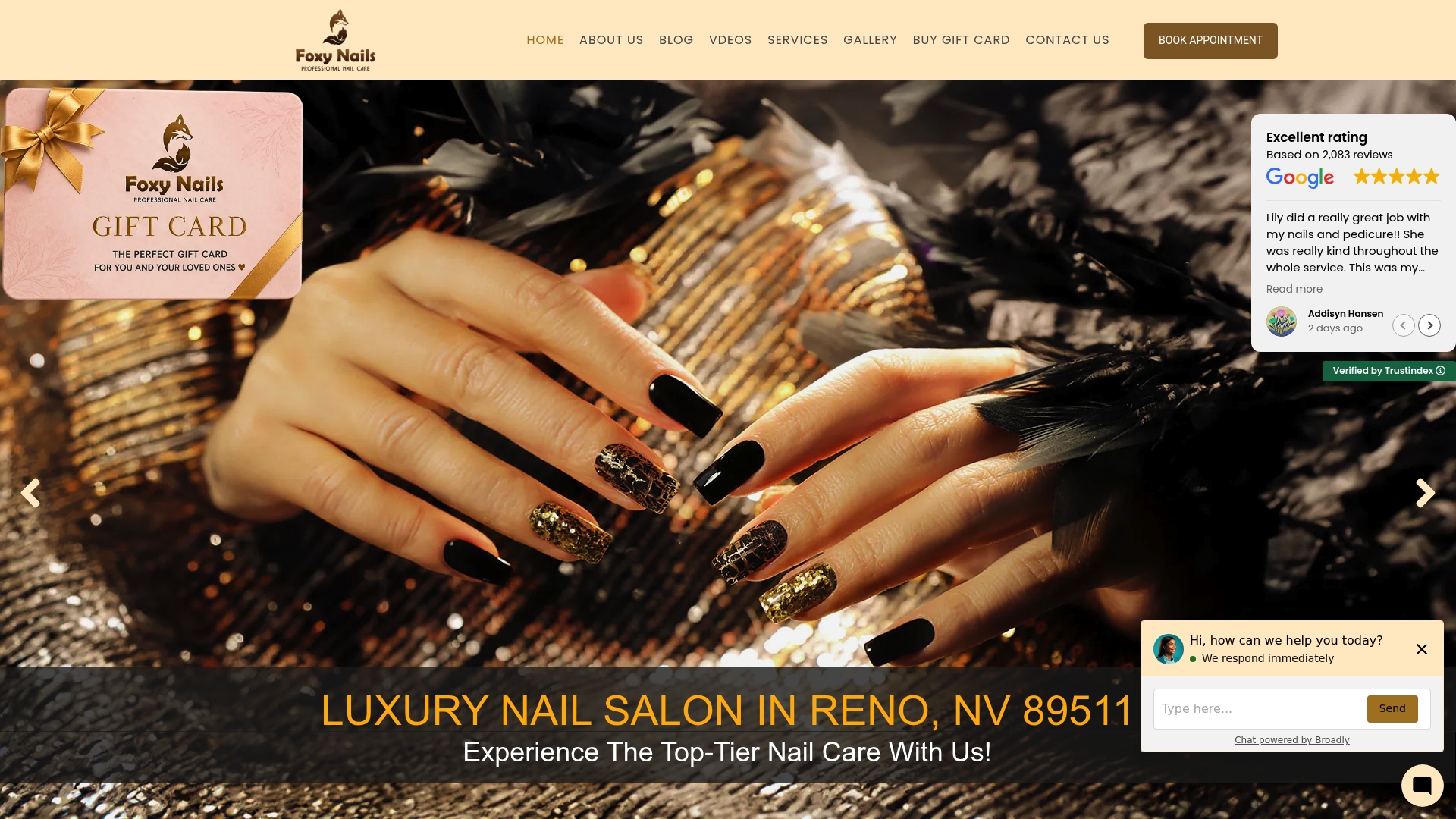
Our BIAB and hard gel services minimize filing on your natural nail so the strength comes from the product, not from thinning your nail plate. Our dip powder is handled with sanitized application methods, never a shared open jar. Our professional gel systems follow the same thin-coat, capped-edge approach that testers rely on to stretch wear past two weeks. If your nails run weak or brittle, our team will steer you toward the system that protects your nail bed instead of pushing whatever’s fastest for us.
When you book, mention that you want minimal buffing and a rubberized base coat, and we’ll build your service around that from the first step. Ready to see the difference proper technique makes? Book your manicure or pedicure appointment at Foxy Nails, or explore our long-lasting gel manicure services to find the option built for your lifestyle.
Where This Article’s Information Comes From
- Vogue’s guide to the 10 main types of manicures supplied wear-time ranges for gel, BIAB, dip, and acrylic.
- Allure’s tested long-lasting nail polish roundup provided editorial wear-time results and prep insights for at-home polish.
- Dazzle Dry’s chip-prevention guide grounded the core prep and application sequence used throughout this article.
- RealSimple’s manicure duration breakdown added wear-time context for gel, dip, and acrylic side by side.
- Research on nail and skin biology supported the removal and recovery guidance on filing and moisture.
- Byrdie’s at-home manicure longevity guide informed the DIY layering and topcoat-pairing tips.
- Glamsquad’s comparison of gel and dip powder clarified the durability tradeoffs between the two.
Frequently Asked Questions
Which manicure type lasts the longest?
BIAB and dip powder generally outlast standard gel polish, often reaching three to four weeks compared to gel’s roughly two weeks, though proper application and aftercare matter more than the category itself.
Is gel or dip powder better for long wear?
Dip powder tends to be more chip-resistant thanks to its dense layered structure, while gel offers a thinner, more natural feel and slightly easier soak-off removal. Choose dip for maximum durability and gel if nail feel matters more to you.
Which manicure type causes the least nail damage?
Traditional polish causes the least damage since it requires no filing or curing. Among long-wear options, BIAB tends to be gentler than acrylic or heavily filed gel because it relies less on thinning the natural nail.
Can I make an at-home manicure last two weeks?
Yes. Using an LED gel system or a long-wear polish like OPI Infinite Shine, combined with proper prep, thin capped coats, and a strong topcoat like Seche Vite, can realistically stretch a DIY manicure to 10 to 15 days.
How often should I get a fill versus a full new set?
Most gel, dip, and BIAB services need a fill every two to three weeks. A full soak-off and fresh application every third or fourth appointment gives nails a brief reset without losing your durability routine.
Sources
- Pmc
- The 10 Main Types of Manicures, Explained | Vogue
- 7 Best Long-Lasting Nail Polishes in 2025, Tested & Reviewed | Allure
- How to keep nail polish from chipping | Dazzle Dry