
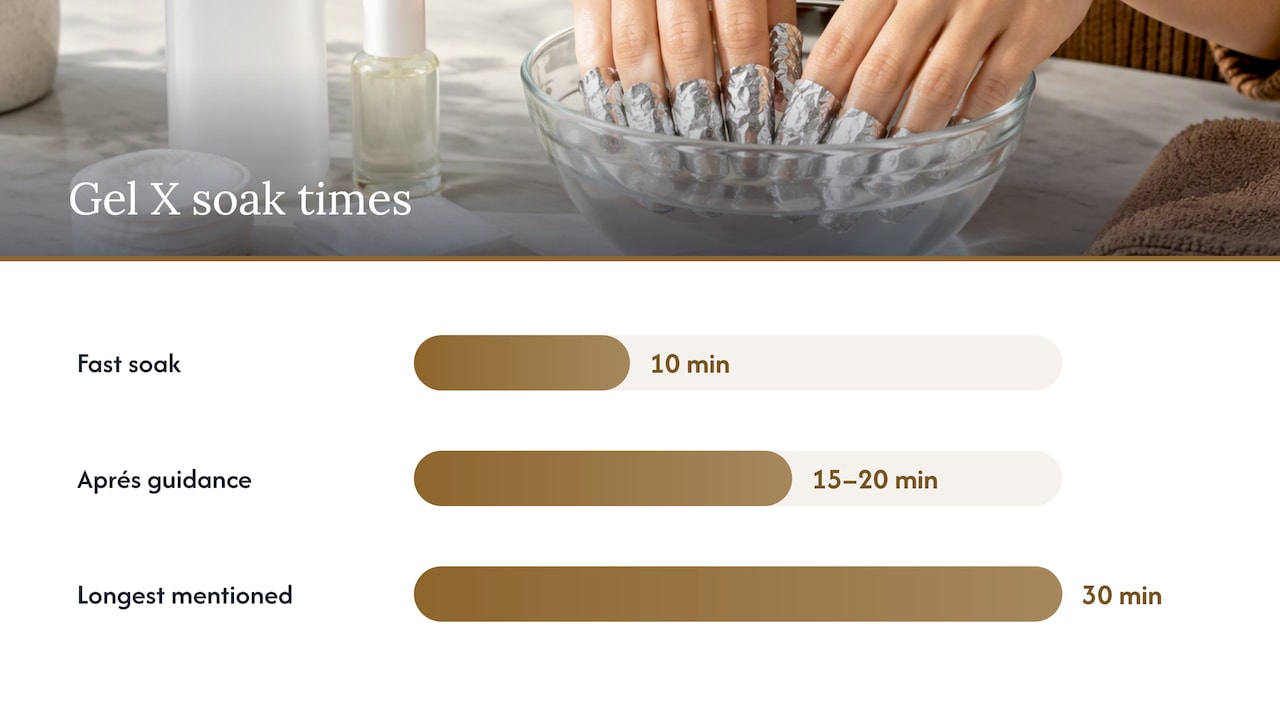
The safest way to handle Gel X removal is a controlled acetone soak-off after light prep on the top layer, giving the gel 10 to 30 minutes to loosen before you touch it. If your nails feel damaged, look brittle, or the product refuses to soften after a couple of tries, skip the DIY route and book a salon instead. Either way, never pry or peel a set off with your fingers or a metal tool.
TL;DR:
- Soak-off Gel X nails require 10 to 30 minutes of acetone wrap to soften, with longer times needed for thicker or older sets.
- If nails feel brittle, show damage, or gel remains unsoftened after multiple soaks, professional removal is the safest choice.
- Proper preparation includes trimming tips, lightly buffing the top coat, and working in a well-ventilated area to avoid acetone buildup.
- Avoid prying, peeling, or using metal tools at home, and consider seeing a dermatologist if skin reactions or nail damage occur.
- After removal, limit heavy buffing, use cuticle oil and moisturizer, and wait 3 to 4 weeks before reapplying enhancements to allow nails to recover.
Table of Contents
- What Gel X is and why soak-off matters
- At-home soak-off removal: supplies, prep, and step-by-step procedure
- Professional salon removal: what technicians do and when to book
- Safety, chemicals, and health risks to know before you start
- Aftercare and helping nails recover after Gel X removal
- How Foxy Nails handles Gel X removal
- Book Gel X removal at Foxy Nails: what to expect
- Sources
- FAQ
What Gel X is and why soak-off matters
Gel X is a full-coverage soft-gel tip glued on with extend gel and cured under an LED lamp, which is different from a traditional hard-gel or acrylic overlay built directly on the nail. Because it uses soft-gel product, a properly applied Gel X set is designed to soften in acetone rather than requiring an e-file to grind it off. That single fact decides your whole removal approach.
- Soak-off soft gel breaks down when it sits in acetone long enough.
- Hard gel and acrylic resist acetone and usually need filing to remove.
- If you are not sure which one you have, ask your nail technician next time you book, or watch how the surface reacts when a cotton pad with acetone sits on it for a few minutes.
At-home soak-off removal: supplies, prep, and step-by-step procedure
Before you start, gather everything so you are not hunting for a nail clipper mid-soak. Work somewhere with open windows or a fan running, since acetone fumes build up fast in a closed bathroom.
- Trim the free edge short with clippers if the tips are long.
- Lightly buff the glossy top coat with your file to break the seal so acetone can penetrate.
- Saturate a cotton pad with acetone and press it onto the nail.
- Wrap the fingertip in foil or secure the pad with a clip.
- Wait 10 to 30 minutes, checking around the 15-minute mark.
- Gently push the softened gel with an orangewood stick, never a metal tool.
- Rewrap any stubborn nails individually rather than soaking the whole hand again.
- Finish with a light buff and a generous coat of cuticle oil.
Soak time varies by how thick the gel is and how old the set is. Aprés, the brand behind the original Gel X system, outlines this same wrap-and-scrape sequence in its own removal instructions, noting roughly 15 to 20 minutes of soak time before the gel scrapes off cleanly. If a nail still will not budge after a couple of honest attempts, stop. Continuing to scrape or pry at that point just thins the nail plate or tears the surface. That is your signal to book a professional removal instead of forcing it.
Pro Tip: Work one finger at a time for reapplying acetone so the other nails aren’t sitting exposed and drying out while you focus elsewhere.
Professional salon removal: what technicians do and when to book
A salon visit for removal usually follows a similar arc to the at-home process, just with more control and better tools. A technician confirms whether the set is soak-off Gel X, uses an e-file or hand file to break the top coat, clips down length, wraps nails in acetone-soaked foil or clips, and gently pushes off the softened product once it lifts. The visit typically ends with a light finishing file and a conditioning treatment to counter any dryness.
Booking a professional makes sense in a few clear situations:
- Your nails feel thin, brittle, or already show damage underneath.
- You notice redness, itching, or swelling that could point to an allergic reaction.
- The gel has not softened after repeated safe soaking at home.
- You would simply rather not risk your natural nails with a DIY attempt.
When you call or walk in, mention how long you have worn the set, any past sensitivity to adhesives or acrylates, and the brand if you know it. That context helps the technician plan the right approach for your nails instead of guessing.
Safety, chemicals, and health risks to know before you start
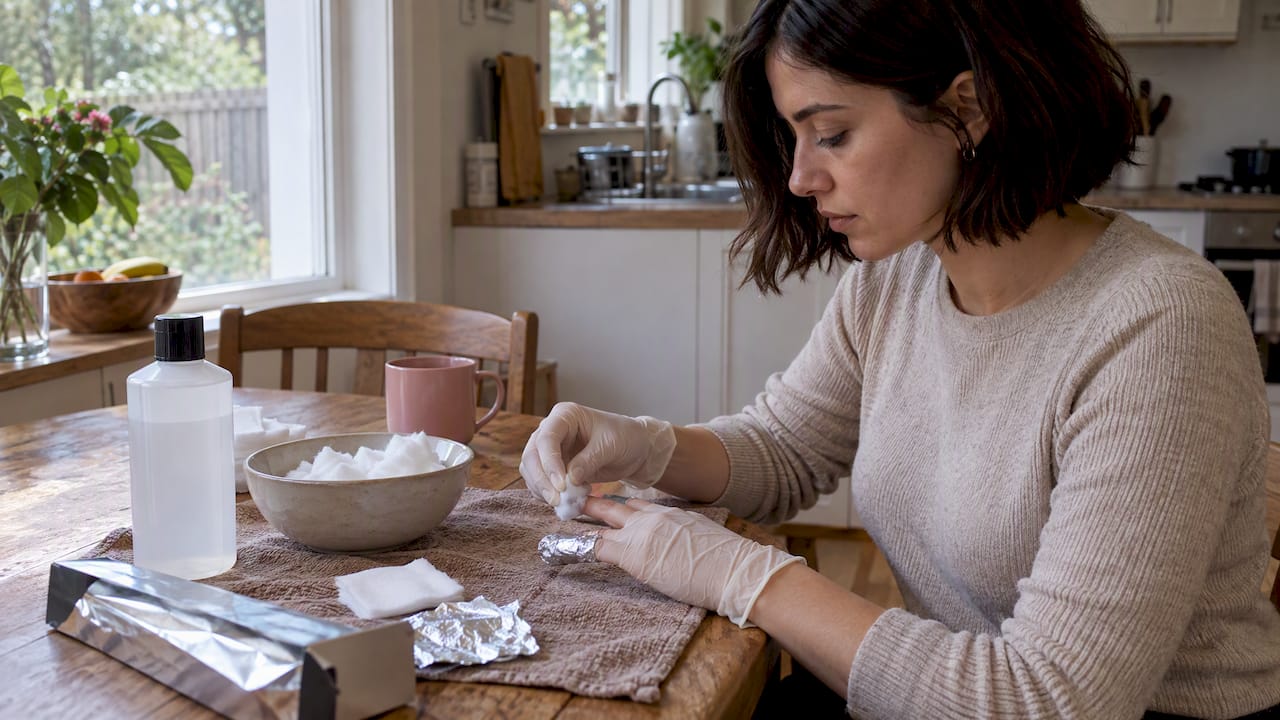
Acetone is effective, but it is still a chemical that deserves respect. OSHA’s guidance for nail salon workers recommends good ventilation, gloves, and keeping acetone away from heat or open flames, since the fumes can irritate your eyes, skin, and throat with prolonged exposure. That advice applies just as much at your kitchen table as it does in a salon.
Watch your skin, too. A systematic review in the Journal of Cosmetic Dermatology documents allergic contact dermatitis, onycholysis, and nail dystrophy as recurring problems tied to gel manicures, often from acrylate exposure. If you notice persistent redness, swelling, blistering, or a rash that spreads beyond your fingers, stop what you are doing and see a dermatologist rather than pushing through another soak. Never pick, pry, or use a metal tool or your teeth to force a set off, and resist the urge to over-file just to speed things along.
Aftercare and helping nails recover after Gel X removal
Once the gel is off, resist the urge to aggressively buff away every trace of residue. A light pass is enough. Follow it immediately with cuticle oil and a rich hand moisturizer, and hold off on heavy filing for at least a week while the nail bed settles.
- Skip another full set for about 3 to 4 weeks if your nails came out thin or damaged, based on Aprés guidance on resting nails after a rough removal.
- Reintroduce enhancements gradually, starting with a lighter overlay rather than jumping straight back to a full set.
- See a dermatologist if you notice ongoing nail changes, thickening, or signs of infection that don’t clear up on their own.
Pro Tip: If you plan to get another set soon, ask about a conditioning treatment or a strengthening overlay first to give your nails a head start.
How Foxy Nails handles Gel X removal
Removal starts with a quick check of what product is being worn, since soak-off Gel X and hard gel call for different handling. Technicians use gentle e-file prep only where needed, then move to the same acetone wrap or clip technique described above, finishing with a conditioning treatment rather than sending clients out the door with dry, bare nails.
Personal attention is a key focus of the salon visit. Technicians take time to explain what’s happening with your nails, which matters for those new to enhancements or bringing a child in for their first gentle service. When booking, clients are encouraged to share what brand or system they’re currently wearing and mention any past sensitivity to adhesives or acrylates to help plan care accordingly.
— Cuong
Book Gel X removal at Foxy Nails: what to expect
A removal that goes wrong at home usually costs more time and nail health than a salon visit would have. Booking a professional removal means a technician confirms your product type, handles the soak or e-file prep using booking & management tools for smooth service, and finishes with a conditioning treatment, all without you guessing whether you’ve soaked long enough or scraped too hard.

This is worth considering if:
- Your nails already feel thin, brittle, or damaged.
- You’ve noticed redness, itching, or swelling that might signal an allergic reaction.
- You’d rather hand the whole process to someone trained in it.
Before your appointment, note how long you’ve worn your current set and any known sensitivity to nail adhesives. You can see current removal and enhancement pricing on our services page and book a time that works for you.
Sources
This article draws on American Academy of Dermatology guidance on soak-off nails, OSHA chemical-safety recommendations, Aprés Nail’s removal instructions, and a dermatology systematic review on gel manicure risks.
- Stay Healthy and Safe While Giving Manicures and Pedicures: A Guide for Nail Salon Workers — OSHA
- How to Properly Remove your Gel‑X Tips — Apres Nail
- Dermatologic conditions associated with popular nail cosmetics: A systematic review — Journal of Cosmetic Dermatology
FAQ
Can you remove Gel X nails at home?
Yes, if your set is a soak-off system, you can remove it at home using acetone, foil or clips, and gentle scraping once the gel has softened. If your nails are damaged, showing signs of an allergic reaction, or the gel won’t lift after a couple of careful soaks, book a professional removal instead.
Why are Gel X nails so hard to remove?
Gel X tips are bonded with extend gel and cured under an LED lamp, which creates a strong seal that needs acetone and time, not force, to break down. Skipping the soak step or trying to pry the tips off usually just damages the natural nail underneath.
How do salons remove Gel X nails?
A technician typically confirms the product type, breaks the top seal with an e-file or hand file, clips down length, wraps the nail in acetone-soaked foil or a clip for roughly 15 to 20 minutes, then gently scrapes off the softened gel and finishes with a light file and conditioning oil.
Can I soak off Gel X nails without acetone?
Non-acetone removers only strip surface polish and won’t break down bonded Gel X tips, so there’s no reliable substitute for acetone soaking. The American Academy of Dermatology recommends acetone soaking specifically for soak-off gel systems rather than filing them off dry.