
A foot mask pedicure pairs a mask, which is a thick layer of product left on the skin for a few minutes, with the usual pedicure steps of soaking, shaping and polish. Which mask you use matters. A hydrating mask softens dry feet and is gentle enough to use often. An exfoliating peel is a chemical treatment that sheds skin over one to two weeks, and it needs more care and more spacing. This guide covers the difference, how to use each, when to book a pedicure around a peel, and who should skip peels altogether.
TL;DR
- Hydrating masks soften and smooth. Exfoliating peels use acids to lift dead skin, and the shedding shows up about five days to a week later.
- Do a peel no more than every six to eight weeks. Many people only need one every three or four months.
- Skip peels if you have diabetes, neuropathy, poor circulation, open wounds, a skin infection, eczema or psoriasis, and ask a doctor first if you are pregnant.
- Book your salon pedicure before the peel starts working, or wait until the shedding is finished. Never scrub the peeling skin.
- Large or deep calluses need a podiatrist, not a mask.
Table of Contents
- What a foot mask does in a pedicure
- Hydrating mask vs. exfoliating foot peel
- Who should not use a foot peel
- How to use a foot peel safely at home
- What happens after: timeline and aftercare
- Does a foot peel remove calluses?
- Can you make a foot peeling mask at home?
- Foot mask and pedicure: how to time them
- Perspective: why we favor a pedicure over a peel for most feet
- Pedicures at Foxy Nails in Reno
- Choosing a mask or a peel: a quick decision guide
- FAQ
- Sources
What a foot mask does in a pedicure
A mask is built to sit. According to a cosmetic chemist’s explanation in Nails Magazine, a foot mask coats the skin with a thicker layer of product for longer, usually three to five minutes, and the formulas are often occlusive or water-resistant so they hold moisture against the skin. That is why a mask feels different from a lotion. It is a treatment step, not a finishing touch.
In a pedicure the mask normally goes on after the soak and any exfoliation, then comes off before massage and polish. The result is skin that feels softer and looks smoother. It is a comfort and cosmetic step. It does not repair structural problems, treat fungus or fix a deep crack.
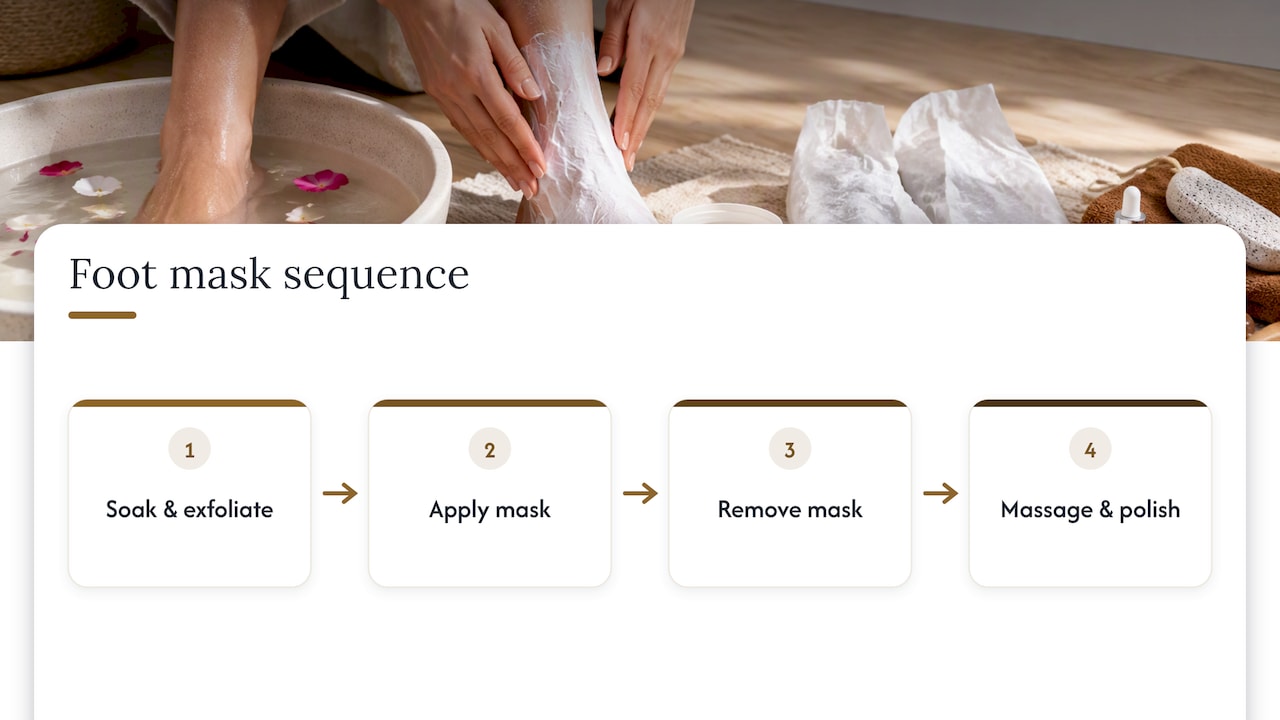
The word “mask” covers two quite different products, and mixing them up is where most mistakes start.
Hydrating mask vs. exfoliating foot peel
SELF’s dermatologist-sourced guide separates the two clearly: hydrating masks soften dry feet, while exfoliating masks use ingredients such as salicylic or lactic acid to lift dead skin. The Cleveland Clinic describes foot peels as a form of chemical exfoliation, usually built on alpha hydroxy acids such as glycolic or lactic acid.
| Hydrating foot mask | Exfoliating foot peel | |
|---|---|---|
| Main job | Moisture and softness | Shed dead skin chemically |
| Typical ingredients | Occlusive and moisturizing formulas | Alpha hydroxy acids (glycolic, lactic), sometimes salicylic acid |
| How it works | Works the day you use it | Visible peeling starts about five days to a week later |
| How often | Weekly, per one dermatologist quoted by SELF | About once a month at most per that same guidance; the Cleveland Clinic says no more than every six to eight weeks |
| Best for | Dry, tight, rough feet | Thickened, dull skin on otherwise healthy feet |
| Risk level | Low for most people | Higher: irritation, thin skin, and unsuitable for several health conditions |
The frequency figures come from different experts and they do differ. When in doubt, take the more cautious one. Dr. Joyce Park, quoted by SELF, puts exfoliating peels at about once a month, while the Cleveland Clinic’s ceiling is every six to eight weeks, with many people needing a peel only every three or four months.
Who should not use a foot peel
This is the part to read twice. Per Dr. Tom Biernacki, a podiatrist, foot peels should not be used by people with diabetes, peripheral neuropathy, poor circulation, active skin infections, open wounds, eczema or psoriasis. SELF’s dermatologists say people with poor circulation, diabetes or pregnancy should check with a doctor before using a peel, and UPMC HealthBeat says pregnant people should avoid them.
The reasoning is simple. If you cannot feel your feet well, or they heal slowly, a chemical irritation or a small break in the skin can become a serious problem before you notice it. If you have any of these conditions, talk to your podiatrist or doctor before trying a peel. The American Podiatric Medical Association also says people with diabetes or poor circulation should consult a podiatrist for a customized pedicure, which applies to salon visits too.
How to use a foot peel safely at home
Always follow the label on your specific product first. The steps below reflect what the guidance in the research agrees on.
- Remove nail polish. L’Oréal Paris’s directions start here so the product contacts skin evenly.
- Soak your feet. Podiatrist Biernacki suggests 10 to 15 minutes. L’Oréal says 10 to 20 minutes in lukewarm water. Either way, you want the skin soft.
- Apply the booties or mask and secure them. Socks over the booties help keep them in place if the product instructions allow it.
- Watch the clock. Biernacki gives 60 to 90 minutes as the range and says not to exceed it. People’s expert guidance says wear time is often 45 to 90 minutes, so follow the manufacturer’s stated time rather than guessing.
- Rinse thoroughly. Biernacki recommends two to three minutes with cool water to neutralize the acids, followed by a plain moisturizer. L’Oréal adds a gentle wash with soap and water.
Two cautions go with this. Do not treat a peel as a place to test products on broken skin, and do not leave it on longer because your feet are very rough. Dr. Dendy Engelman, quoted by People, warns that over-peeling can remove healthy skin, weaken the skin barrier, cause irritation and raise the risk of infection.
What happens after: timeline and aftercare
Peeling begins about five days to a week after treatment and can last one to two weeks, according to the Cleveland Clinic. Let it shed on its own. Do not pull, pick or scrub the skin that is coming off, even if a big sheet is hanging on.
A few practical habits help:
- Apply a plain moisturizer after the rinse. Biernacki also advises avoiding active ingredients such as retinol or AHA products for at least 48 hours.
- Wear sunscreen of SPF 30 or higher on exposed feet. UPMC points out the new skin is sensitive, which matters in sandal season and on a sunny Reno day.
- Some peel makers say daily soaks during the shedding phase encourage the process, per one manufacturer’s FAQ. Keep them gentle and skip anything abrasive.
The Cleveland Clinic’s Dr. Khetarpal notes that foot peels suit colder months, when feet are less exposed. That fits a Reno winter, when dry air makes heels crack anyway. If dryness is your main problem, our guide to a pedicure for dry feet in a Reno winter covers what works without a peel.
Does a foot peel remove calluses?
It can help with ordinary thickened skin, but it is not a complete answer. The Cleveland Clinic says foot peels can help with calluses and thickened skin. NBC Select reports that board-certified podiatrists see peels as a temporary softening step. A peel acts on the surrounding skin and may not reach deep thickened tissue, and it may not remove thick calluses or warts.
Where the callus comes from matters too. Biernacki notes that calluses caused by structural issues such as bunions or high arches will grow back after a peel. For those, the cause needs attention. Harvard Health warns that acids such as salicylic acid can damage healthy tissue unless directions are followed exactly, and that larger corns or calluses should be evaluated by a podiatrist.
Think of a peel as cosmetic maintenance for healthy feet between professional visits. If you want the full picture on salon rules and when to see a doctor, read our callus removal safety guide. For gentler physical exfoliation, the foot scrub benefits guide explains what dermatologists approve of.
Can you make a foot peeling mask at home?
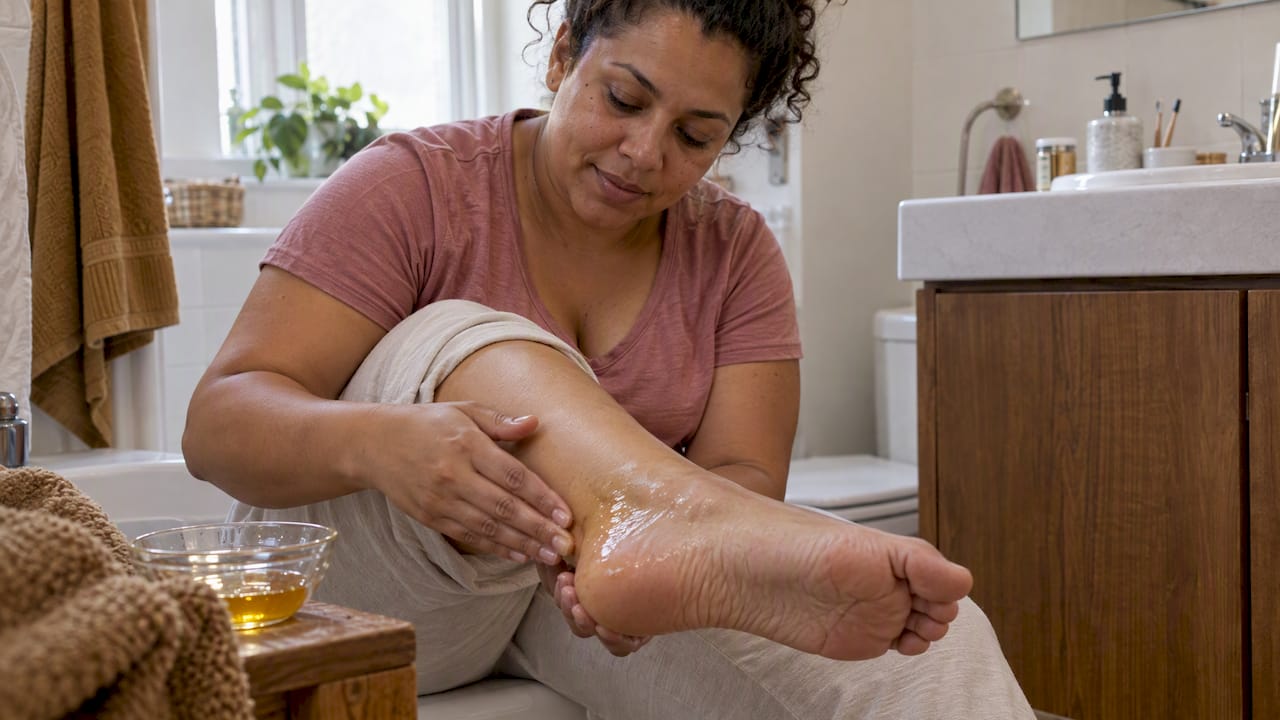
You can make a hydrating mask at home. Food-based recipes such as egg, banana, milk, honey and olive oil are popular for dry skin, though they are a soothing treat and not a clinical treatment. A homemade version will not give you the acid-driven shedding of a commercial peel, and you should not try to copy it with strong acids from the kitchen or bathroom shelf.
The American Academy of Dermatology explains that mechanical and chemical exfoliation each have a place, and the choice should be dictated by your skin type to avoid damage. If your skin reacts easily, choose the gentlest option. Stop if you feel burning or stinging.
Foot mask and pedicure: how to time them
This is the question we hear most. A peel makes the skin thin and sensitive while it sheds, and a pedicure involves soaking, filing and clippers. Those two do not mix well.
Here is a sensible plan:
- Pedicure first, peel later. Get your pedicure, then wait to peel until your polish is due for a change. Remove polish before the peel anyway.
- Pedicure before the peel kicks in. Peeling starts around day five, so a pedicure within a day or two of your peel is less likely to meet fragile shedding skin. Check this with your product’s instructions and your own skin.
- Or wait it out. If your feet are in full shedding mode, wait until it ends, usually one to two weeks, so no technician has to work over raw skin.
- Tell your technician. Say you recently used a peel. Ask them to skip heavy filing and any exfoliating scrub on those areas.
It also helps to know how a clean salon works. The AAD recommends checking that foot baths and filters are thoroughly disinfected, and considering your own tools if you visit often. We explain our process in the hot towel pedicure routine article.
Perspective: why we favor a pedicure over a peel for most feet
We see feet of every age at Foxy Nails, from kids getting their first gentle service to busy professionals who only have one hour. For most of them, a peel is not what they need. What they need is a clean soak, careful shaping, smoothing of the rough spots that can safely be smoothed, and moisture that lasts. A peel is something you do on your own schedule at home, once in a while, and we are happy to talk through how to time it around a visit.
Our view is simple. A foot peel is a chemical product, and chemicals deserve respect. If you are healthy and your feet are just dry or dull, a peel can be a fine seasonal extra. If your skin is sensitive, your feet are very dry, or anything is cracked, a regular pedicure and a good moisturizer are the safer choice. And if you have diabetes or circulation concerns, the right first call is your podiatrist. Personal service means telling you that, even when it means skipping an add-on.
— Cuong
Pedicures at Foxy Nails in Reno
If your goal is soft, smooth feet and fresh polish, our pedicure menu covers it. Prices as published on our services page:
| Service | Price |
|---|---|
| Pedicure | $25 |
| Spa Pedicure | $40 |
| Deluxe Pedicure | $45 |
| Foxy Deluxe Pedicure | $55 |
| Foxy Signature Pedicure | $65 |
| Gel Polish Take Off | $10 |
If you want to know how our higher tiers differ, our spa pedicure benefits article walks through what a fuller treatment feels like, and our exfoliation pedicure guide covers how professionals smooth skin safely and what it costs. Not sure which one fits your feet? Ask us when you book and we will help you choose.

Bring the kids if you like. We offer gentle services for children, so a family pedicure can be one appointment. See all services and book through our services page, or read about pedicures in Reno for more on professional foot care.
Choosing a mask or a peel: a quick decision guide
- Feet feel tight and dry, skin is intact: a hydrating mask, weekly if you like.
- Dull, thick skin, otherwise healthy feet, and you want a seasonal reset: an exfoliating peel, spaced at least six to eight weeks apart.
- Thick, painful or deep calluses, or calluses that return quickly: see a podiatrist.
- Diabetes, neuropathy, poor circulation, open wounds, eczema, psoriasis or infection: no peel. Ask your doctor or podiatrist about safe foot care.
- Pregnant: avoid peels, and ask your doctor about alternatives.
- You just want clean, polished feet for an event: book a pedicure and skip the peel.
One more point about product choice: read the ingredient list and the wear time, not only the marketing. Acid concentration and instructions vary between products, so the label is the authority for your specific peel.
FAQ
How often should you do a foot peel?
No more often than every six to eight weeks, according to the Cleveland Clinic, and many people only need one every three or four months. Overdoing it can thin the skin and lead to dryness and cracks. Hydrating masks are gentler and can be used more often, but follow the product’s label.
Does a foot peel mask remove calluses?
It can soften ordinary thickened skin, but it is not a cure for thick or deep calluses. Calluses from bunions or high arches tend to come back. For large or painful ones, see a podiatrist.
Can you get a pedicure after a foot peel?
It is best to wait until the peeling is finished, usually one to two weeks, so the new skin is not irritated by soaking, filing or scrubbing. If you must book sooner, tell your technician about the peel and ask them to avoid exfoliating the area. If you have diabetes or poor circulation, ask your podiatrist about a customized pedicure.
Can I make a foot peeling mask at home?
You can make a soothing, hydrating mask from kitchen ingredients, but it will not act like a chemical peel. Do not try to replicate acid peels at home. If your skin is sensitive, pick the gentlest exfoliation method and stop if it burns.
Sources
- Do Foot Peels Actually Work? | Cleveland Clinic
- The 5 Best Foot Masks, According to Dermatologists | SELF
- Chemist’s Corner: Foot Mask | Nails Magazine
- Foot Peel Mask Guide | Michigan Foot Doctors
- Are Foot Peels Safe? | UPMC HealthBeat
- We Tried the 12 Best Foot Masks and Peels | People
- How to Do a Foot Peel Mask | L’Oréal Paris
- The Best Foot Peels | NBC Select
- Finding relief from calluses and corns | Harvard Health
- Baby Foot FAQ
- How to safely exfoliate at home | American Academy of Dermatology
- Manicure and pedicure safety | American Academy of Dermatology
- Pedicure Pointers | American Podiatric Medical Association