Yes, an eco-friendly pedicure exists: it combines low-toxicity polish and treatment products with visible shop controls like ventilation, instrument sterilization, and safe footbath practices. You can check for it in under two minutes by looking for three signals: a polish line with clear ingredient disclosures, a ventilated workspace, and a posted or stated tool and footbath hygiene policy. Such eco-conscious pedicure services are available, so you have a vetted option if your own search comes up short.
TL;DR:
- Three free or five free labels cover only chemicals the brand excludes; request the safety data sheet and check for toluene, formaldehyde, DBP, and MMA.
- Choose a basin or ask for a documented whirlpool disinfection schedule; a CDC survey found mycobacteria in 97% of sampled whirlpool footbaths.
- Look for local exhaust or an air purifier at each station, autoclaved metal tools, and disposable kits for items that cannot be sterilized.
- Choose a waterless service or one limited to polish; if you have diabetes or neuropathy, avoid paraffin and tell your technician beforehand.
Table of Contents
- Which pedicure appointments can be eco-friendly
- What “natural” and “non-toxic” labels actually mean
- Salon practices that actually reduce exposure
- The checklist to use before you book
- How Foxy Nails applies these practices
- Why I think safety questions deserve more attention than polish color
- Book an eco-conscious pedicure with us
- FAQ
- Sources
Which pedicure appointments can be eco-friendly
Not every pedicure carries the same exposure risk, and the service tier you book changes what matters most. A basic pedicure focuses on soak, trim, and polish, so the soak solution and polish formula carry most of the environmental and chemical load. A spa or deluxe pedicure adds scrubs, masks, and sometimes paraffin dips, which means more products touching your skin and more packaging waste to consider.
A few practical adjustments make any tier greener:
- Ask for a polish-only or waterless option if you want to skip the footbath altogether.
- Request plant-based or unscented scrubs instead of fragrance, petroleum-based versions.
- Skip paraffin if you have a medical concern like diabetes or neuropathy, and mention it to your technician before the appointment starts.
Expect a standard appointment to run 30 to 60 minutes regardless of which option you choose. Eco-conscious products and extra sterilization steps sometimes add a small premium to the service price, which is a fair trade for lower chemical exposure.
What “natural” and “non-toxic” labels actually mean
Polish bottles marketed as “3-free” or “5-free” promise the absence of specific chemicals, usually toluene, formaldehyde, and dibutyl phthalate (DBP), but the claim only covers what the brand chose to test for and disclose. A “vegan” label addresses animal-derived ingredients, not chemical safety, and “non-toxic” has no regulated definition in cosmetics, so it functions more as marketing language than a guarantee. The OSHA factsheet on manicure and pedicure safety recommends treating these claims as a starting point and verifying further through the product’s safety data sheet (SDS).
Some products marketed as “non-toxic” have still tested positive for flagged chemicals, which is why label claims alone should not be the only thing you rely on.
When you want to check further, two things are worth doing:
- Ask the salon if SDSs are available for the polishes and treatment products they use.
- Scan the SDS for toluene, formaldehyde, DBP, and methyl methacrylate (MMA), all commonly flagged in nail products.
Water-based polishes and plant-based scrubs are the most common lower-exposure alternatives available at salons that prioritize this.
Salon practices that actually reduce exposure
Product choice matters, but the shop’s engineering and hygiene practices do more to limit your exposure than any single polish formula. The EPA’s Design for the Environment guide for nail salons recommends local exhaust ventilation at each workstation, ventilated tables, or portable air purifiers as effective ways to clear chemical vapors from the air you breathe during a service.
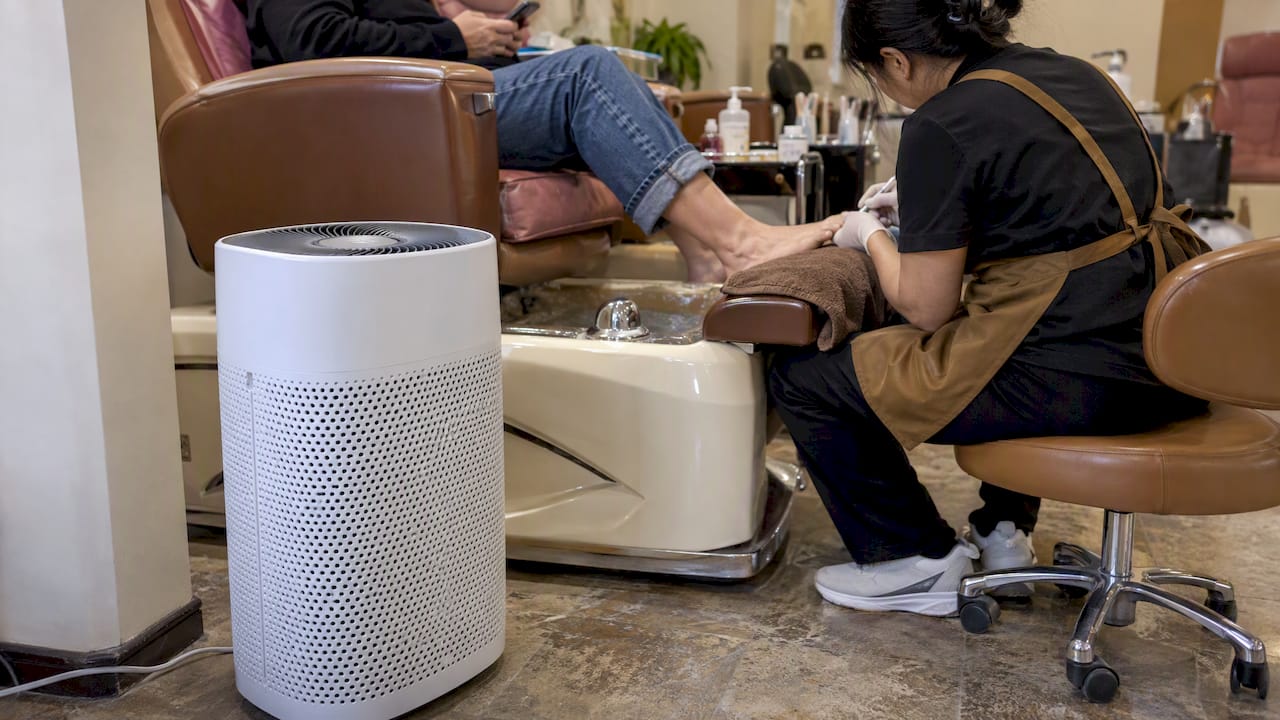
Footbaths deserve particular attention. A CDC investigation found mycobacteria in 97% of whirlpool footbaths sampled in a California survey, a finding tied to past outbreaks of skin infections traced back to improperly cleaned recirculating footbaths. Salons that use non-whirlpool basins or follow a strict disinfection schedule reduce that risk substantially.
A salon serious about this should be able to walk you through:
- How often footbaths are disinfected and whether they use a whirlpool or basin system.
- Whether metal tools are sterilized in an autoclave or similar method between clients.
- How chemical-soaked disposables (cotton, wipes) are sealed and discarded.
- Whether aggressive callus tools banned in several states are avoided in favor of safer alternatives.
Pro Tip: Ask to see the footbath between clients, since a quick rinse and a full disinfection cycle look very different and only one of them actually protects you.
The checklist to use before you book
Six questions cover almost everything you need to knowwhether you ask them over the phone or at check-in. They work because they force a specific answer rather than a marketing line.
- What ventilation system do you use at pedicure stations?
- Is your footbath a whirlpool or a basin, and how often is it disinfected?
- Can I see or request an SDS for the polish or treatment products?
- Do you offer single-use kits for items that are hard to sterilize?
- How are metal tools cleaned between clients?
- Have staff had training on product safety or ventilation practices?
A responsible salon answers these without hesitation and often has the information posted or readily available. A salon that deflects, gets defensive, or can’t describe its sterilization routine is a signal to look elsewhere.
| What to check | What a good answer looks like |
|---|---|
| Ventilation | Local exhaust or air purifier at each station |
| Footbath type | Basin system or a documented whirlpool disinfection schedule |
| Product transparency | SDS available on request |
| Tool sterilization | Autoclave or single-use kits for metal tools |
Expect eco-conscious appointments to run a similar length to standard ones, with a modest cost increase tied to specialty products or extra sterilization time.
How Foxy Nails applies these practices
These standards are built into every pedicure appointment rather than treated as an upsell. The focus is on personal service and a welcoming atmosphere, extending to handling sanitation and product choices for every client, including kids.
What you can expect and ask about when you visit:
- A spa pedicure built around clear service steps, so you know exactly what products and treatments are involved before you sit down.
- Tool and footbath hygiene practices can be asked about directly at check-in.
- Guidance tailored to specific needs, including our notes for runners and active clients who need particular trim and timing considerations.
Why I think safety questions deserve more attention than polish color
Most people choosing a pedicure spend more time picking a polish shade than asking how the footbath gets cleaned, and that ordering feels backward to me. A salon that answers hygiene questions clearly, without hedging, tends to get the aesthetic details right too, because the same attention to process shows up everywhere. Safer practices and good results are not a trade-off. A clear answer at check-in is worth more than any label on the shelf.
— Cuong
Book an eco-conscious pedicure with us
We built our pedicure menu around the same questions this guide asks you to bring to any salon: clear product choices, visible hygiene practices, and a team that can explain exactly what happens during your appointment. Our Spa Pedicure starts at $40, with the Deluxe Pedicure at $45, the Foxy Deluxe Pedicure at $55, and the Foxy Signature Pedicure at $65.

- Browse the full services menu to compare pedicure tiers and add-ons.
- Book a family visit through our manicure and pedicure packages for grouped appointments.
- Send a Foxy Nails gift card if you’re booking for someone else.
FAQ
What is the healthiest pedicure to get?
The healthiest option is a polish-only or waterless pedicure using water-based, low-toxicity products at a salon with visible ventilation and a documented footbath disinfection routine. Skipping the whirlpool soak in favor of a basin system also lowers your exposure to the mycobacteria risks CDC researchers documented in whirlpool footbaths.
What is the least toxic way to get your nails done?
Choosing water-based or multi-free polishes and asking to see the product’s safety data sheet is the most reliable way to limit chemical exposure, since label claims like “3-free” vary by brand. Pairing that with a salon that uses proper ventilation, per OSHA’s salon safety guidance, reduces airborne exposure as well.
Will nail salons do toenails with fungus?
Many salons decline pedicures on visibly infected nails and will refer you to a podiatrist or dermatologist instead, since treating fungal infections falls outside standard nail services. Always disclose any nail concern before your appointment so your technician can recommend the right next step.
How much do you tip for a $40 pedicure?
Standard tipping guidance for nail services is 15 to 20% of the service price, which on a $40 pedicure works out to roughly 15 to 20 percent of the service price. Many clients round up or tip more generously when a technician accommodates specific hygiene requests or takes extra care with sterilization.
Sources
- Stay healthy and safe while giving manicures and pedicures (OSHA)
- Mycobacteria in Nail Salon Whirlpool Footbaths, California (CDC/EID)