
Yes, you can swim with acrylic nails, as long as it’s occasional and you’re not fresh out of the salon chair. A new set needs time to cure before it meets a pool, and repeated or long swims chip away at the bond faster than almost anything else. One dip is rarely the problem. Daily laps without any prep are.
TL;DR:
- Repeated or prolonged swimming tips the balance toward lifting and chipping acrylic nails, especially without proper prep and aftercare.
- Short, occasional swims with correct precautions generally won’t damage acrylics, but frequent exposure can accelerate wear and reduce their lifespan.
- Proper preparation, such as waiting 12 to 24 hours after your acrylic appointment and applying a topcoat, significantly improves water resistance.
- After swimming, rinsing and thoroughly drying nails, then applying cuticle oil and moisturizer, helps maintain adhesion and prevent damage.
- Those who swim many hours weekly or value durability should consider gel overlays or shorter, rounded shapes for better water resistance.
Table of Contents
- How Chlorine and Water Affect Your Acrylics
- Prep Checklist Before You Get In the Water
- What to Do and Avoid While You’re Swimming
- Aftercare Steps to Protect Acrylics Post-Swim
- How Swimming Speeds Up Fill Time
- Who Should Skip Acrylics or Choose a Different Option
- Salon-Backed Best Practices From Foxy Nails
- Balancing Nail Care and an Active Life
- Ready for a Swim-Friendly Set? Here’s How Foxy Nails Helps
- Sources
- FAQ
How Chlorine and Water Affect Your Acrylics
Water doesn’t dissolve acrylic, but it does work on the weak points: the seal at your cuticle and any spot where the product is thin or uneven. Chlorinated pool water is mildly alkaline and drying, and it strips natural oils from the skin around your nail bed faster than tap water does. That dryness makes the cuticle area shrink and pull slightly away from the acrylic, creating tiny gaps.
Occasional, short swims generally won’t ruin acrylic nails, but repeated or prolonged exposure to chlorinated water raises the odds of lifting and chipping considerably. Saltwater behaves similarly, drying out skin and nail plate with extended contact. The damage is rarely instant. It builds, swim after swim, at the same vulnerable edge.
Prep Checklist Before You Get In the Water
A few minutes of prep before you swim does more for your set than anything you do afterward. Get in the habit of checking these before every pool trip:
- Inspect your nails for lifting, cracks, or a fill that’s overdue. Skip the swim if you see any lifting at the cuticle.
- If you just got a fresh set, wait at least 12 to 24 hours before exposing acrylics to pools, hot tubs, or saunas. That window lets the adhesive fully harden.
- Add a durable topcoat, or a fresh thin layer of gel topcoat, right before you head to the pool.
- Massage cuticle oil into the skin around each nail. It creates a light barrier that helps repel water at the exact spot where lifting starts.
- Pack a small towel or microfiber cloth poolside so you can dry your hands between sets of laps instead of letting water sit on your cuticles.
Pro Tip: Skip the oil-then-topcoat order. Apply topcoat first, let it set for a minute, then oil the cuticles. Oil on top of wet polish can leave a slightly tacky finish that attracts pool debris.
What to Do and Avoid While You’re Swimming
Once you’re in the water, a few small habits make a real difference in how your set holds up.
- Keep underwater time short. The longer your nails stay submerged, the more water works its way toward the cuticle seal.
- Don’t use your nails as tools while they’re wet. Popping open a sunscreen cap or scratching an itch with a wet acrylic tip is a common way sets crack.
- Stay out of hot tubs and saunas right after a fresh application. Heat combined with moisture softens the adhesive bond before it’s fully set, and industry guidance is consistent on avoiding both for the first 24 hours.
- If you’re a regular swimmer, ask for shorter lengths and rounder, more conservative shapes. Long tips and sharp stiletto shapes give water and impact more leverage to catch and lift.
Aftercare Steps to Protect Acrylics Post-Swim
What you do in the ten minutes after you climb out of the pool matters almost as much as the prep. Chlorine that’s left to dry on the nail keeps working on that cuticle seal long after you’ve toweled off.
- Rinse your hands under fresh, plain water for 30 to 60 seconds to flush out chlorine or salt residue.
- Pat nails and cuticles completely dry with a clean towel. Air-drying alone leaves moisture trapped right at the seam where lifting starts.
- Apply cuticle oil immediately, followed by a hand moisturizer, to replace what the pool water stripped away.
- Run a finger along the cuticle line and check the edges for any lifting. If you find it, book a salon visit rather than trying to glue or push it back down yourself.
How Swimming Speeds Up Fill Time
A one-off pool day, done right, won’t wreck a set. The real wear comes from the cycle of swelling and drying that happens every time you swim regularly. Water gets into microscopic gaps at the cuticle, the nail bed swells slightly, then dries and contracts once you’re out. Repeat that daily and the adhesive bond weakens faster than normal wear alone would cause.
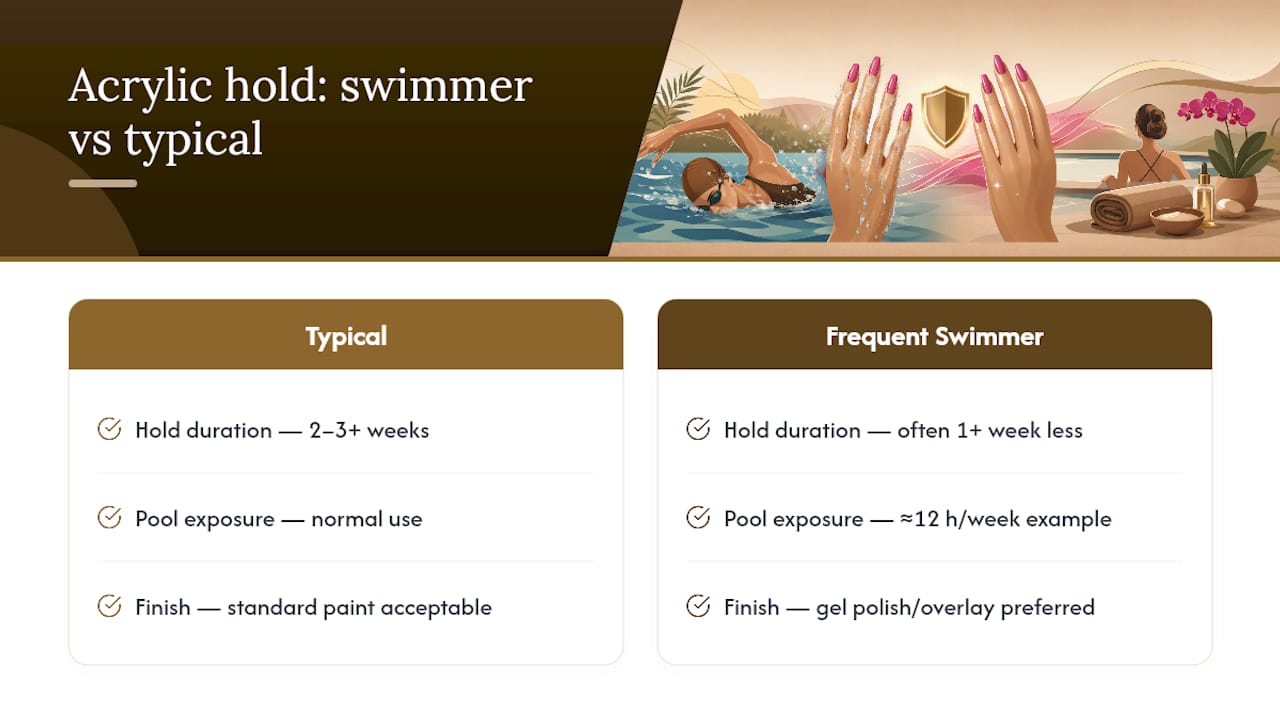
A typical acrylic set holds up well for two to three or more weeks under normal conditions. Swimmers who train regularly often need fills sooner, sometimes shaving a week or more off that window. One frequent swimmer logging roughly 12 hours a week in the pool found that constant chlorine exposure led to noticeably faster lifting, prompting a switch to a more water-resistant option. Gel polish and gel overlays tend to hold up better against repeated water exposure than a standard painted finish, making either a smarter pick if you’re at the pool several times a week — as explained in Protect Your Nail Health: Gel vs Acrylic Nails.
Who Should Skip Acrylics or Choose a Different Option
Acrylics work great for most people who swim now and then, but a few situations call for a different approach:
- Competitive swimmers or anyone doing long-distance training most days should skip acrylic extensions entirely. The exposure is simply too constant for any adhesive bond to keep up.
- If you already deal with chronic lifting, brittle natural nails, or recurring nail infections, talk to your tech before your next appointment. Acrylics may not be the right fit until those issues are addressed.
- If durability matters more than length, gel overlays, dip powder, or a well-maintained short natural nail often outlast acrylics in the water.
Salon-Backed Best Practices From Foxy Nails
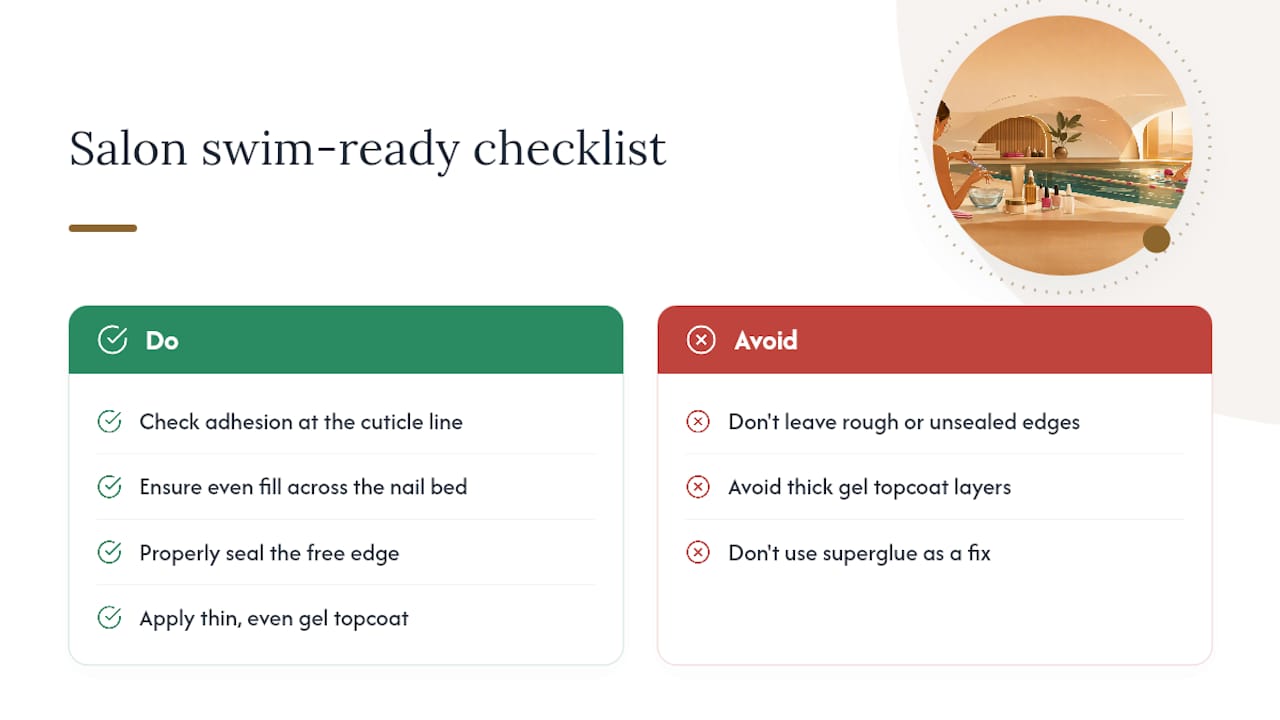
Technicians run through a specific checklist before calling a set “swim ready,” and it’s worth knowing what they’re looking for. A tech checks adhesion right at the cuticle line first, since that’s where lifting almost always starts. Then comes an even fill across the whole nail bed and a properly sealed free edge, since a rough or unsealed edge is an open door for water.
A thin, even layer of quality gel topcoat does more for water resistance than a thick coat ever will. Thick layers dry unevenly and are more prone to peeling right where they meet the cuticle.
After exposure, the fix for early lifting isn’t superglue from a drawer. It’s a proper soak-off and rebalance at the nail bed, done by someone trained to see what’s actually happening under the surface.
Pro Tip: If you swim two or more times a week, mention it when you book your fill. A nail technician can adjust your topcoat and edge sealing specifically for water exposure instead of applying the standard finish.
Balancing Nail Care and an Active Life
Nail care advice works best when it matches how you actually live, not some ideal routine nobody follows. If you swim a few times a month, a good set with basic prep will treat you fine. If you’re in the water constantly, pretending acrylics will behave like they do for someone who swims twice a summer sets you up for disappointment. Come in and talk through your routine before your next fill. It changes what we recommend.
— Cuong
Ready for a Swim-Friendly Set? Here’s How Foxy Nails Helps
Foxynailsreno is the practical middle ground between skipping acrylics altogether and swimming with a set that’s not built for water. If you swim regularly, ask about a durable gel topcoat finish, an overlay that trades length for strength, or a fill schedule timed to your pool routine instead of a generic three week default.

When you book, tell your tech how often you swim and when your last fill was. That one detail changes how we seal the edges and finish the topcoat. Browse manicure and fill options and get a set built around your actual routine, not a hypothetical one.
Sources
- Can You Swim With Acrylic Nails? – You Have Style
- Can you go swimming with acrylic nails? (or fake nails) | House of Nails
- Acrylic nails – what you need to know for your next manicure | Elle
FAQ
Is It Okay to Swim With Acrylic Nails?
Yes, occasional swimming is fine for acrylics as long as the set is fully cured and you’re not doing it daily. Prolonged or frequent exposure is what actually causes problems.
Can I Swim With Acrylic Nails in Chlorine Water?
You can, but chlorine dries out the skin around your cuticle faster than plain water, which can lead to lifting over repeated exposure. Rinsing and moisturizing right after your swim helps offset that effect.
Will Chlorine Take Off Acrylic Nails?
Chlorine won’t dissolve acrylic outright, but it weakens the adhesive bond at the cuticle over time with repeated exposure. That’s why frequent swimmers often need fills sooner than occasional ones.
Does Swimming Loosen Acrylic Nails?
Swimming can loosen acrylics if it happens often or for long stretches, since water works its way into small gaps near the cuticle. A single short swim on a well-applied, fully cured set typically won’t cause noticeable loosening.