Acrylic nails are durable, sculpted nail extensions built from a liquid monomer and polymer powder mixture that air-cures into a hard, shapeable surface. They are the best choice when you want serious length, a strong canvas for complex nail art, or nails that survive daily wear without chipping. That said, they come with real trade-offs worth knowing before you book.
Quick pros:
- Unmatched durability for long lengths and heavy wear
- The best surface for advanced nail art, chrome, and 3D designs
- Long-lasting wear with proper fills every 2–3 weeks
Quick cons:
- Incorrect application or DIY removal can thin and damage the natural nail
- Chemical exposure during application requires good ventilation
- Maintenance is a commitment — skipping fills causes lifting and nail stress
Table of Contents
- What acrylic nails actually are
- How a salon acrylic appointment works
- How long acrylics last and what they cost
- Acrylics vs. gel, dip powder, Gel X, and hard gel
- Health risks and how to avoid them
- Daily care that actually extends your wear
- 2026 design trends and shape guide
- How to pick a salon and what to ask
- What to expect at Foxynailsreno
- Key Takeaways
- Beauty and nail health are not opposites
- Book your acrylic set at Foxynailsreno in Reno
- Useful sources
What acrylic nails actually are
A technician mixes a liquid monomer with a polymer powder to create a pliable bead that bonds to your natural nail and air-cures within seconds. No UV lamp needed. The result is a hard, durable extension that can be shaped, filed, and finished like a natural nail.
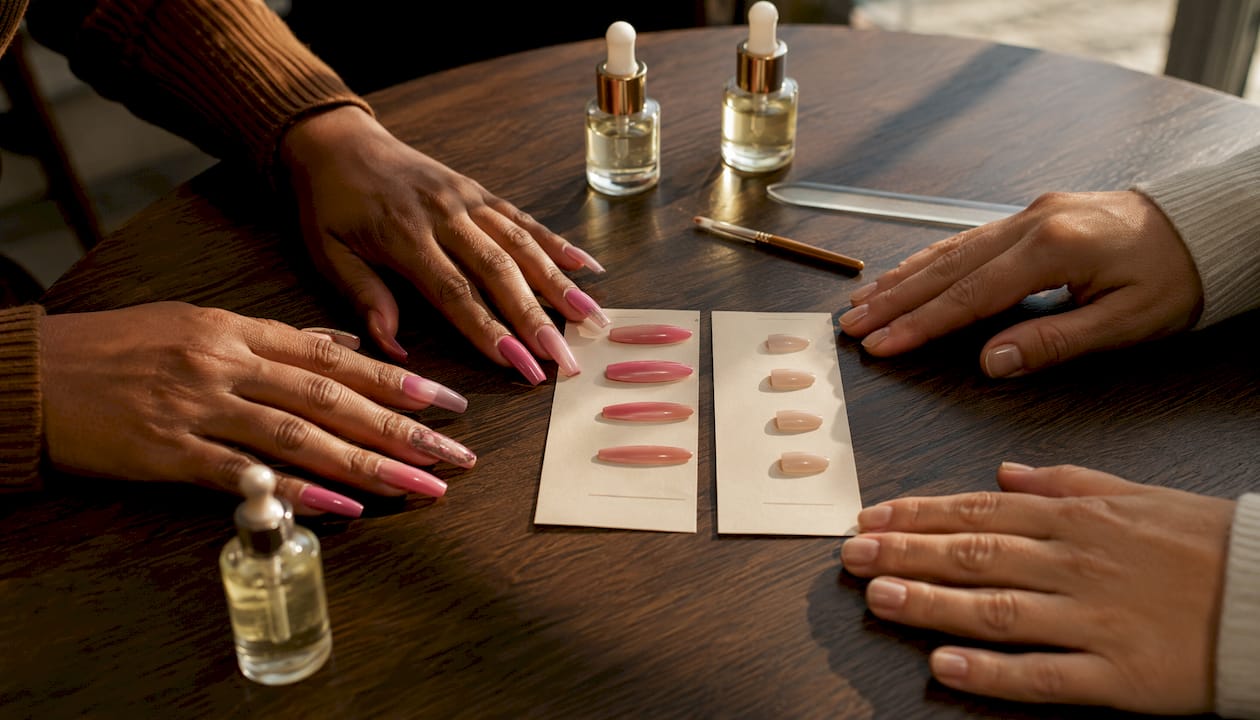
There are two ways to build the extension. With nail tips, a pre-shaped plastic tip is glued to the free edge and then covered with acrylic to blend and strengthen. With nail forms, a paper or foil template is slipped under the free edge and the technician sculpts the extension from scratch. Forms give more shape control and are preferred for longer, more dramatic lengths.
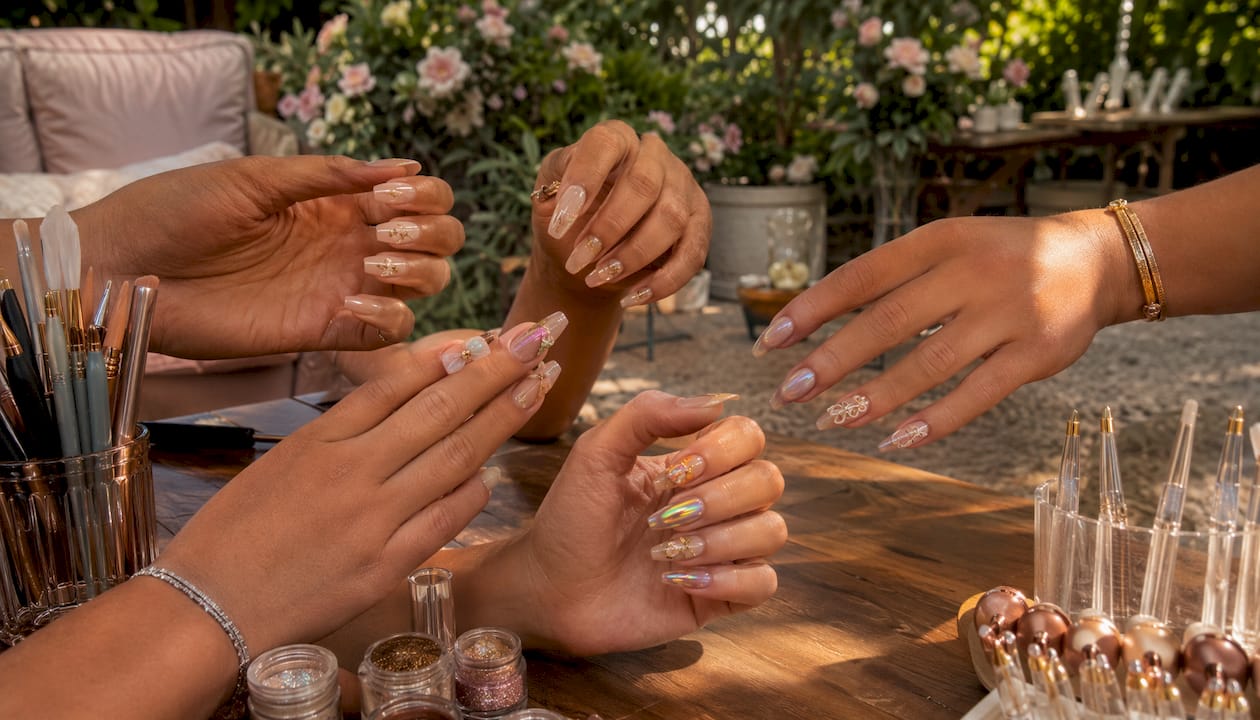
Modern finishes go well beyond a basic pink-and-white set. Chrome powders, encapsulated glitter, dried florals, and 3D sculpted embellishments are all standard salon offerings in 2026. Complex nail art like chrome, encapsulation, and 3D work is especially suited to the acrylic surface because of its rigidity and thickness.
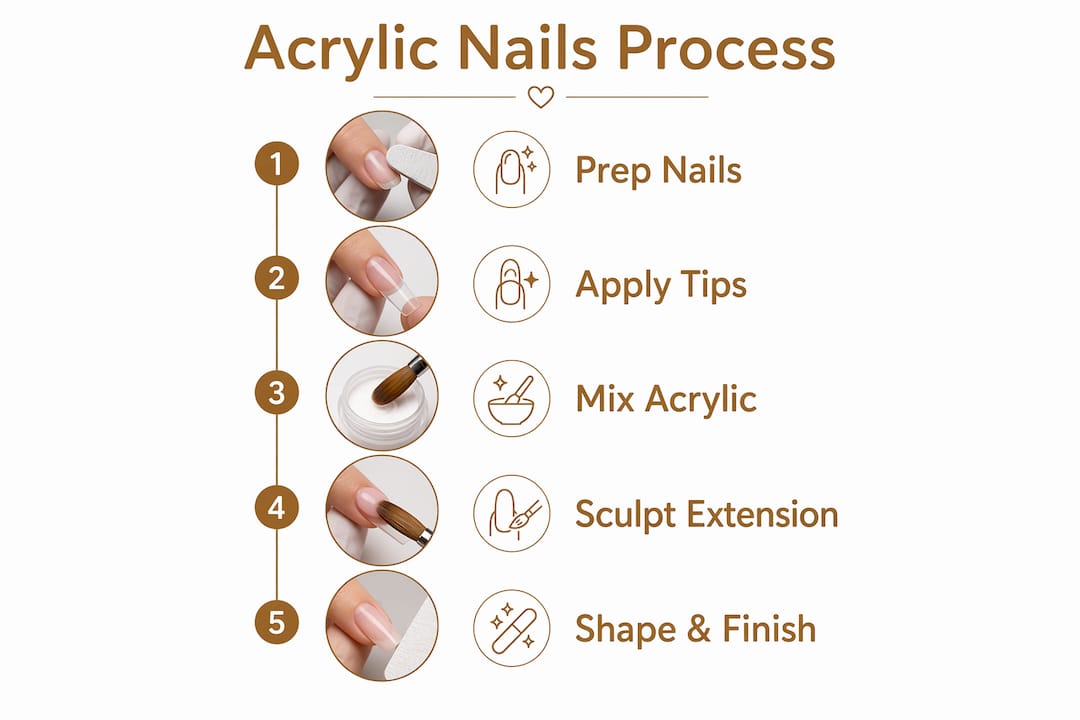
How a salon acrylic appointment works
- Consultation. Your technician asks about nail shape, length, prior enhancements, and any known sensitivities to acrylics or adhesives.
- Nail prep. Natural nails are lightly buffed, cuticles pushed back (not cut aggressively), and a dehydrator or primer is applied to improve adhesion.
- Tip or form placement. Tips are sized and glued, or forms are fitted under the free edge for sculpted extensions.
- Mixing and applying acrylic. The technician dips a brush into monomer, picks up a bead of powder, and places it on the nail in zones: the stress area, the apex, and the free edge.
- Building the apex. The apex is the highest structural point, sitting roughly over the nail’s stress zone. A poorly built apex is the leading mechanical failure point on long sets, causing snapping under pressure.
- Shaping and filing. Once cured, the extension is filed into the chosen shape and surface-smoothed.
- Polish or gel topcoat. Color, nail art, or a clear topcoat is applied and finished.
A full set typically takes 90–120 minutes. A fill appointment runs 45–75 minutes. Price drivers include nail length, design complexity, technician experience level, and your location within the U.S.
How long acrylics last and what they cost
A well-applied set holds up for two to three weeks before the grown-out gap at the cuticle becomes noticeable and structurally risky. Fills every 2–3 weeks keep the balance point safe and reduce the risk of lifting and onycholysis (nail-bed separation).
In the U.S., a full acrylic set typically runs $45–$85 at a mid-range salon, with high-end or art-heavy sets reaching $100 or more. Fills generally cost $30–$55. Removal adds $15–$25 when done professionally. Periodic full removal and a short recovery break are worth budgeting for every few months.
Acrylics vs. gel, dip powder, Gel X, and hard gel
Acrylics are generally stronger and more durable than gel, making them the better pick for long lengths and heavy-wear manicures. Here is how the main options compare:
| Feature | Acrylic | Gel | Dip Powder | Gel X / Hard Gel |
|---|---|---|---|---|
| Durability | Highest | Moderate | Moderate–High | High |
| Flexibility/Feel | Rigid | Flexible, natural | Semi-rigid | Flexible |
| Damage risk | Moderate (skill-dependent) | Low–Moderate | Low | Low–Moderate |
| Cost (full set) | $45–$100+ | — | — | — |
| Fill schedule | Every 2–3 weeks | Every 3–4 weeks | Every 3–4 weeks | Every 3–4 weeks |
| Best for | Long art, durability | Natural look, flexibility | Strength without length | Lightweight extensions |
For a deeper look at how gel and acrylic compare day-to-day, Foxynailsreno’s gel vs. acrylic guide breaks down the practical differences.
Who should pick what:
- Nail-biters or short-nail clients: Acrylics or Gel X for instant length.
- Active hands (sports, manual work): Shorter acrylics or hard gel for strength without excessive leverage.
- Natural-look seekers: Gel or dip powder.
- Nail art collectors: Acrylics, every time.
Health risks and how to avoid them
Dermatologists note that acrylics act as a rigid covering that can mask underlying nail brittleness. The top guidance is to avoid over-filing the natural nail, schedule regular fills, and take periodic recovery breaks between sets. DIY removal is a leading cause of thinning and nail-bed damage. — Cleveland Clinic
The main risks are real but largely preventable:
- Allergic contact dermatitis: Acrylates can trigger reactions, sometimes first appearing on thin skin like the eyelids rather than the fingers. If you notice itching, redness, or swelling, see a dermatologist before your next appointment.
- Onycholysis: Nail-bed separation caused by lifting, trauma, or skipped fills. Waiting longer than 2–3 weeks between rebalance appointments shifts the balance point and materially increases this risk.
- Fungal or bacterial infection: Moisture trapped under a lifted acrylic creates the ideal environment for infection. Keep nails dry and address lifting immediately.
- Thinning: Usually the result of aggressive buffing during prep or forceful DIY removal, not the acrylic itself.
Do not do these:
- Peel or force off acrylics at home
- Let a technician over-file your natural nail during prep
- Skip fills beyond three weeks
- Ignore lifting or discoloration under the extension
Pro Tip: Apply cuticle oil daily around the perimeter of each nail. It keeps the skin supple, reduces the chance of lifting at the edges, and is the single easiest thing you can do to extend wear.
Daily care that actually extends your wear
Good acrylic nail maintenance between appointments is straightforward but consistent:
- Cuticle oil, daily. A jojoba-based or vitamin E cuticle oil (brands like CND SolarOil or OPI ProSpa are widely available in the U.S.) keeps the nail-skin junction hydrated and reduces lifting.
- Hand moisturizer, especially after washing. A non-acidic lotion or a rich hand cream keeps the skin around the nail flexible. For a luxurious option, a scented body butter works well on hands after chores.
- Gloves for cleaning and dishes. Prolonged hot water and chemical exposure weaken the acrylic bond.
- No picking or peeling. If a nail lifts, file the edge gently or book an early fill — never force it.
- Schedule your fill before you need it. Book the appointment at the two-week mark, not when you notice a problem.
If lifting occurs between appointments, clean the area gently, keep it dry, and get to the salon within a day or two.
2026 design trends and shape guide
2026 salon trends favor luxury upgrades: chrome-dipped coatings, 3D sculpted embellishments, and jewelry manicures are the dominant requests. Textured surfaces, encapsulated elements (dried flowers, glitter, foils), and high-gloss finishes are everywhere. Acrylics are the go-to medium for all of it because the rigid surface holds 3D elements without flexing them loose.
Shape and lifestyle fit:
- Coffin/ballerina: Long, dramatic, flat tip. Best for art-heavy sets. Adds appointment time.
- Almond: Tapered, elegant, wearable at medium length. Suits most lifestyles.
- Stiletto: Sharp point, maximum drama. Not practical for active hands.
- Squoval: Square with soft corners. The most durable shape for everyday wear and a great first-timer choice.
Complex designs like 3D sculpture or full chrome add 20–40 minutes to an appointment and increase cost accordingly. First-timers should start with almond or squoval at a medium length, then go longer once they know how acrylics feel on their hands. You can browse real design examples to get a feel for what’s possible before booking.
How to pick a salon and what to ask
Checklist before you book:
- Visible ventilation (fans, air purifiers, or dedicated extraction systems at each station)
- Clean, sanitized tools — autoclaved metal tools or single-use files
- No overwhelming chemical smell in the waiting area (a sign of poor ventilation or MMA use)
- Technicians wearing masks during application
Questions to ask your technician:
- “What monomer do you use — EMA or MMA?” A reputable salon uses EMA (ethyl methacrylate). MMA-containing acrylics create a rigid, non-flexing bond that can cause severe nail-plate tearing and should be avoided.
- “How do you remove acrylics?” The correct answer involves acetone soaking, foil wrapping, and gentle mechanical removal over 20–60 minutes. Aggressive filing or forceful peeling is a red flag.
- “What fill schedule do you recommend?” The right answer is every 2–3 weeks.
Red flags: Unusually low prices (under $25 for a full set), refusal to name the products used, and a strong solvent smell throughout the salon.
What to expect at Foxynailsreno
Foxynailsreno is a luxury nail salon in Reno, NV, specializing in acrylic sets, fills, hard gel, Gel X, dipping powder, and custom nail art. The salon uses EMA-based products, maintains proper ventilation at every station, and builds a consultation into every appointment to confirm shape, length, and any sensitivities before work begins.
Clients receive aftercare guidance at checkout, including fill scheduling and at-home care instructions. The salon’s acrylic nail services cover everything from a clean, natural-looking set to full 3D sculptural designs. Families are welcome, with kid-friendly options alongside adult services. The salon’s consistently strong client reviews reflect a focus on results that hold up, not just look good on the day.
Key Takeaways
Acrylics done right, with EMA products, proper fills every 2–3 weeks, and professional removal, carry far less risk than their reputation suggests.
| Point | Details |
|---|---|
| Fill every 2–3 weeks | Skipping fills shifts the balance point and raises onycholysis and lifting risk. |
| Never remove at home | DIY removal is the leading cause of nail thinning and bed damage; always soak off professionally. |
| Ask about the monomer | EMA is safe; MMA causes rigid bonding and potential nail-plate tearing. |
| Shape affects durability | Squoval and almond shapes wear better daily than stiletto; match shape to your lifestyle. |
| Foxynailsreno in Reno | Offers full acrylic services with EMA products, consultation-first booking, and aftercare guidance. |
Beauty and nail health are not opposites
The conversation around acrylics tends to land in one of two camps: people who swear by them and people who are convinced they destroy your nails. Both positions miss the point. The real variable is not the material. It is the technician’s skill, the products used, and whether the client maintains a consistent fill schedule.
What I see most often is damage that comes from neglect, not from acrylics themselves. A client who waits five weeks between fills, then peels the set off at home, and blames the acrylic for thin nails is not wrong to be frustrated. But the acrylic did not cause that. The gap in care did. At Foxynailsreno, the consultation is not a formality. It is where we figure out whether acrylics are actually the right choice for that person’s nails, lifestyle, and expectations. Sometimes the answer is hard gel or Gel X instead. That conversation is part of the service.
Book your acrylic set at Foxynailsreno in Reno
Foxynailsreno offers full acrylic sets, fills, safe professional removal, and custom nail art at its Reno, NV salon. Whether you want a clean, everyday squoval set or a full 3D chrome design, the team builds every appointment around a consultation first.

Ready to book? Visit the manicure and pedicure services page to see current offerings and schedule your appointment. For clients who want to see design work before committing to a style, the nail art gallery shows the full range of what the salon produces. Reno locals and visitors are welcome, and gift cards are available for anyone who wants to share the experience.
Useful sources
- Cleveland Clinic: Are Acrylic Nails Bad for You? — Dermatologist-reviewed guidance on health risks, allergic reactions, and removal safety.
- Glamour: Acrylic Nails — Everything to Know — Expert nail technician insights on application, apex construction, and design trends.
- InStyle: What to Know About Getting Acrylic Nails — Practical guidance on fill schedules, durability, and maintenance.
- Harper’s Bazaar: Acrylic Nails Guide — Step-by-step removal process and appointment expectations.
- Wikipedia: Acrylic Nails — Background on MMA vs. EMA chemistry and product safety.
- TonesProducts: Acrylic Nail Designs 2026 — 2026 trend summary covering chrome, 3D, and jewelry manicure directions.
This article is general information, not medical or dermatological advice. If you suspect an allergic reaction or nail infection, consult a licensed dermatologist or healthcare provider for your specific situation.