
Prevent hangnails by keeping the skin around your nails hydrated, avoiding cuticle cutting and picking, and protecting your hands during wet work. Dermatologists at the American Academy of Dermatology treat the cuticle as a protective seal, not excess skin to trim away. Skip the scissors, moisturize daily, and you remove most of the triggers that cause hangnails in the first place.
TL;DR:
- Keeping nails moisturized and avoiding cuticle cutting or picking prevents most hangnails and reduces infection risk.
- Proper removal involves soaking, sterilizing tools, trimming carefully, and applying an emollient or antibiotic ointment if needed.
- Daily hydration, moisturization, and glove use during wet work significantly cut down on habit-driven or environment-related hangnails.
- Individuals with signs of infection or higher risk factors like diabetes should seek medical attention promptly to avoid complications.
- Professional manicures with sterile tools and careful cuticle care can be effective for persistent or problematic hangnails.
Table of Contents
- What a hangnail actually is and why it matters
- Everyday causes and triggers you can fix
- Safe step-by-step removal and immediate aftercare
- A repeatable daily and weekly prevention routine
- When to see a doctor and who is at higher risk
- Why salons treat your cuticles differently than you might
- If home care isn’t cutting it, a professional manicure can help
- Sources
- FAQ
What a hangnail actually is and why it matters
A hangnail is a small strip of torn, dead skin that lifts away from the side of the nail fold, usually where the skin has dried out or been nicked. The cuticle sits at that same junction and works as a seal, keeping bacteria and fungi from getting under the skin. When a hangnail tears that seal, it opens a path for infection.
The most common result is acute paronychia, a painful infection of the skin around the nail that often involves the bacteria Staphylococcus aureus. A few things raise the stakes:
- Paronychia is one of the most frequent hand infections seen in clinics, and it can progress to a pus-filled abscess if ignored.
- The nail fold has a dense concentration of nerve endings, which is why even a small tear feels disproportionately painful.
- People who pick at hangnails repeatedly keep reopening that same entry point, making infection more likely over time.
Everyday causes and triggers you can fix
Most hangnails trace back to a handful of repeatable habits rather than bad luck. Repeated wet and dry cycles from handwashing, dishwashing, or frequent hand sanitizer use strip natural oils faster than skin can replace them, leaving the nail fold brittle and prone to splitting.
Mechanical trauma adds to the problem: picking at loose skin, biting, using nails to open packages, or trimming cuticles with scissors all create fresh tears. Harsh soaps and acetone-based polish removers dry the skin further, and nail-biting, known clinically as onychophagia, creates a repetitive cycle that is driven by habit rather than hygiene.
- Wet work like dishwashing or frequent handwashing dries out the nail fold.
- Cutting or aggressively pushing back cuticles removes the protective barrier.
- Acetone removers and harsh soaps strip oils that keep skin flexible.
- Nail biting and picking reopen tears faster than they can heal.
Pro Tip: Keep a small bottle of cuticle oil at your sink or desk. Reapplying right after you wash your hands catches the dryness before it turns into a tear.
Safe step-by-step removal and immediate aftercare
Once a hangnail forms, resist the urge to rip it off or bite it away. Both actions tear healthy skin along with the loose piece, widening the wound and raising infection risk. The Cleveland Clinic recommends a careful, low-drama approach instead.
- Wash your hands with mild soap and warm water.
- Soak the affected finger for a few minutes to soften the skin.
- Sterilize a small clipper or cuticle nipper with rubbing alcohol.
- Trim the hangnail close to its base in one clean cut, without pulling.
- Apply petroleum jelly or a similar emollient to seal the area.
- Use antibiotic ointment if the skin is broken, and cover with a bandage if it is in a spot that gets bumped or dirty often.
One of the most common hand infections starts this way: acute paronychia frequently follows exactly this kind of nail-fold trauma, which is why sterilized tools and gentle trimming matter more than speed.
Home care works for a simple hangnail with no signs of infection. If the area is already red, swollen, or oozing before you even start, skip the DIY step and see a clinician instead of trimming into inflamed tissue.
A repeatable daily and weekly prevention routine
Prevention comes down to consistency more than any single product. A simple daily habit does more than an occasional deep-conditioning treatment.
Each day, moisturize your hands right after washing them, apply a drop of cuticle oil at night, and keep nails trimmed short and filed smooth so there is less loose skin to catch on fabric or furniture. Weekly, give your cuticles a gentle once-over: smooth any rough edges, and if you want them pushed back, do it after soaking, never with a cutting tool. A detailed daily routine built around consistent hydration tends to outperform sporadic effort, especially in dry climates.
For chores and work, wear gloves during dishwashing, cleaning, and gardening, and choose non-acetone polish removers along with mild, fragrance-free soaps. Every one of these swaps reduces the dry-then-crack cycle that produces most hangnails.
- Moisturize hands immediately after every wash, not just before bed.
- Apply cuticle oil nightly to keep the nail fold flexible.
- Keep nails short and filed to reduce snagging and tearing.
- Wear gloves for dishwashing, cleaning, and gardening.
- Switch to non-acetone remover and a gentle, unscented soap.
If nail biting or picking is part of your pattern, behavioral tools help more than willpower alone. Bitter-tasting nail coatings, fidget objects, and simply keeping nails well-groomed so there is nothing to pick at have all been used as part of habit-reversal strategies for onychophagia. Stress often drives the habit, so pairing a physical barrier (a bandage, gloves, or gel polish) with a stress outlet tends to work better than either alone.
Pro Tip: If you bite your nails when you are anxious or bored, keep your hands occupied with something else, gum, a stress ball, anything, during the specific moments you know trigger the habit.
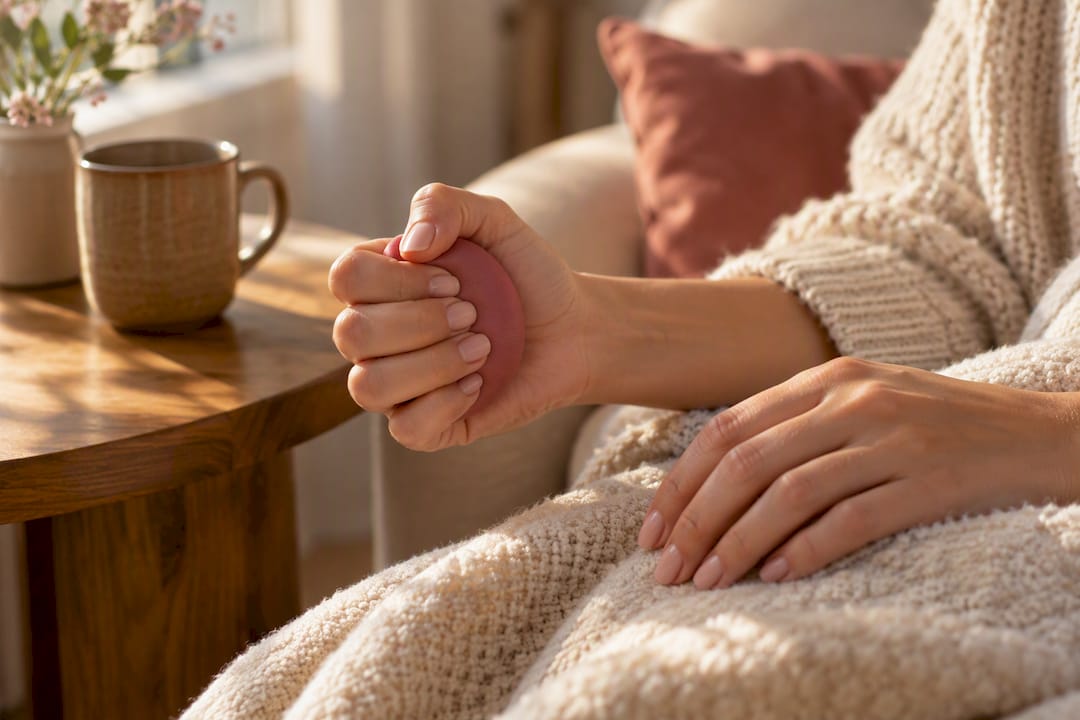
For product-level guidance on which oils and emollients actually hold moisture in nail tissue, Kiki London Benelux covers the basics of nail hydration in more depth.
When to see a doctor and who is at higher risk
Most hangnails heal on their own with basic care, but a few signs mean it is time to stop treating it at home. Watch for redness that spreads beyond the nail fold, swelling, visible pus, fever, or pain that gets worse instead of better after a day or two.
People with diabetes, poor circulation, or a weakened immune system should get medical attention sooner rather than later, since minor nail-fold infections in these groups can progress more quickly to deeper tissue involvement.
- Spreading redness, swelling, or visible pus around the nail fold.
- Fever or pain that worsens rather than improves within a day or two.
- A diagnosis of diabetes, circulation problems, or immune suppression.
A clinician may prescribe oral antibiotics for a developing infection, or perform a small incision and drainage if an abscess has formed. Guidance from StatPearls notes that severe or recurrent cases sometimes need surgical intervention, though most infections resolve well before reaching that point when caught early.
Why salons treat your cuticles differently than you might
Salons that follow safe practice avoid cutting cuticles for the same reason dermatologists advise against it: removing that barrier creates an entry point for bacteria. Instead, a trained technician will soak the nail fold to soften the skin, then gently push the cuticle back rather than trim it away.
If you are choosing a salon, a few questions tell you a lot: how do they sterilize metal tools between clients, do they use single-use files and buffers, and how is the technician trained in cuticle care specifically. Regular, safe manicures also tend to reduce picking and biting simply because well-groomed nails give you less loose skin to fixate on. A closer look at salon safety controls worth checking before booking covers this in more detail.
- Ask how metal tools are sterilized between clients.
- Confirm whether files and buffers are single-use.
- Ask how the technician was trained in cuticle care.
— Cuong
If home care isn’t cutting it, a professional manicure can help
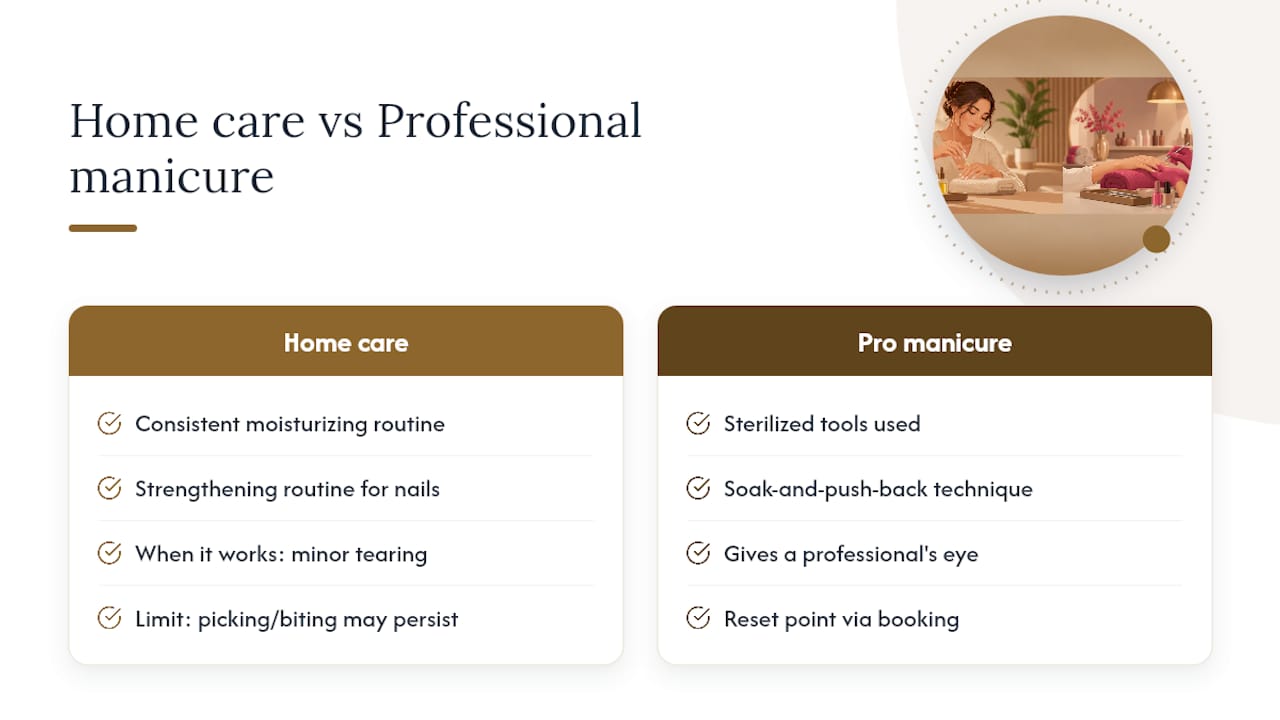
Some hangnail patterns do not respond well to a home routine alone, especially when picking or biting is hard to stop, or when cuticles keep tearing no matter how consistently you moisturize. That is usually the point where a professional appointment makes more sense than another trip to the drugstore.

At Foxy Nails in Reno, technicians use sterilized tools and a soak-and-push-back technique instead of cutting, paired with a moisturizing plan suited to your skin. A regular manicure keeps nails groomed enough that there is less to pick at between visits, and it gives you a chance to ask directly about the cuticle care questions covered above. If nail biting has damaged your natural nails over time, a routine built to strengthen them again can help rebuild resilience alongside better daily habits.
A Regular Manicure at Foxy Nails starts at $15, and a Gel Manicure runs $40, both available through the full services menu. Booking one gives you a reset point and a professional’s eye on whether your current routine is actually working.
Sources
The prevention steps in this article draw on clinical and dermatologist guidance rather than general habit advice. MedlinePlus covers the basics of paronychia and its common causes. StatPearls offers a clinical review of paronychia management, including when surgical care becomes necessary. The American Academy of Dermatology provides everyday nail-care guidance dermatologists recommend to patients. A PMC review on nail biting outlines behavioral approaches for breaking the onychophagia cycle.
This article is general information, not a substitute for advice from a qualified doctor. Consult a qualified healthcare professional about your own circumstances before acting on anything here.
- Paronychia – MedlinePlus
- Healthy nail tips – American Academy of Dermatology (AAD)
- Paronychia – StatPearls / NCBI Bookshelf
- Art of Prevention: The importance of tackling the nail biting habit – PMC
- How to get rid of a hangnail – Cleveland Clinic
FAQ
Why do I keep getting hangnails over and over?
Recurring hangnails usually point to a habit or environmental cause that has not been addressed, most often repeated wet and dry cycles from handwashing or dishwashing, cuticle cutting, or nail biting. Fixing the underlying trigger, rather than just trimming each hangnail as it appears, is what breaks the cycle.
Does a vitamin deficiency cause hangnails?
Hangnails are more commonly linked to dry skin, mechanical trauma, and habits like nail biting than to a specific vitamin deficiency. There is no established clinical link tying hangnails to a particular nutrient shortfall, so focus on hydration and gentle nail care first.
How do I stop my nails from splitting and developing ridges?
Splitting and ridging are usually related to dryness, physical trauma, or aging rather than the same cause as hangnails, though the same protective habits help both. Keeping nails moisturized, trimmed short, and protected from harsh chemicals reduces splitting over time.
Do hangnails go away on their own?
A simple hangnail can heal on its own within a few days if you leave it alone and keep the area moisturized. If it becomes red, swollen, or painful instead of improving, that signals infection, and it is worth seeking care rather than waiting it out, as outlined by MedlinePlus.