
Glazed donut nails are a milky, sheer manicure finished with a pearlescent or chrome powder that catches the light like a frosted glaze. The fastest route to the look is a professional gel base topped with chrome powder at a salon, though a layered polish method at home gets you close. Expect the salon version to look glossier and last longer, while the DIY version trades some shine for convenience and cost.
TL;DR:
- Professional salon application provides a glossier, longer-lasting finish with a specific sequence of steps including buffing, layering, and curing under UV or LED light.
- DIY versions using regular polish and mica powders can approximate the look but typically chip faster, lasting around 5 to 7 days versus weeks with gel.
- Variations include soft pink or nude bases, metallic finishes, chocolate or strawberry hues, and glazed French styles for different seasons and preferences.
- Proper application timing and product handling are crucial to avoid streaky, sticky, or dull finishes, with quick fixes like buffing and reapplying top coats.
- Safety of gel manicures is supported by limited UV exposure, with precautions such as sunscreen and choosing formulas free of common irritants.
Table of Contents
- What you need before you start
- How salons create the chrome glazed nails look
- Can you get glazed donut nails at home?
- Glazed donut nail designs worth trying
- Fixing streaky or sticky glazed nails
- Is a glazed gel manicure safe?
- How to ask for glazed donut nails at your appointment
- A salon’s take on the glazed donut trend
- Book a glazed donut manicure that lasts
- FAQ
- Sources
What you need before you start
Before you book an appointment or open your polish drawer, it helps to know exactly what the look requires. Salon technicians rely on a short list of professional products, while home manicurists can get a similar effect with drugstore basics.
For a salon application, your technician typically reaches for:
- A stay-strong gel base coat and a sheer milky or nude gel color
- Professional-grade chrome powder (sold in salon-only lines)
- A no-wipe top coat designed to hold powder pigment
- A UV or LED lamp for curing each layer
- Lint-free wipes and cleanser for prepping the nail plate
For an at-home version, swap in:
- A milky or sheer white polish as your base
- A pearlescent topper or finely milled mica powder
- A glossy, fast-dry top coat to seal everything in
- An optional at-home lamp if you’re using gel polish rather than regular lacquer
A full salon set with chrome powder usually takes about an hour. The at-home polish method is quicker, often done in under 30 minutes once your base coat has dried.
How salons create the chrome glazed nails look
Getting the glazed finish right in a salon follows a specific sequence, and skipping a step is usually why the shine looks flat instead of mirror-like. Here’s the typical workflow:
- Prep the nail plate. Your tech shapes the nail, pushes back cuticles, and lightly buffs the surface so the gel has something to grip.
- Apply the base coat. A stay-strong gel base goes on thin and gets a full cure under the lamp.
- Layer the sheer color. One or two thin coats of a milky or nude gel polish build the signature translucent look, each one soft-cured before the next.
- Apply the no-wipe top coat. This is the layer that holds the chrome powder, and it gets only a brief soft cure rather than a full one.
- Dust on the chrome powder. While the top coat is still slightly tacky, the tech rubs the powder across the nail in small circular motions until the shine is even.
- Seal with a final top coat. One more layer locks in the chrome and gets a full cure.
Celebrity manicurist Zola Ganzorigt, who helped popularize the technique, explains the sheer-base-plus-chrome-powder method as the foundation of the original look worn by Hailey Bieber, noting that small tweaks to the base shade and powder amount created newer variations without changing the core steps.
Pro Tip: Soft-cure the no-wipe top coat for only a short burst under the lamp before dusting the powder; curing it too long seals the surface and the chrome won’t stick evenly.
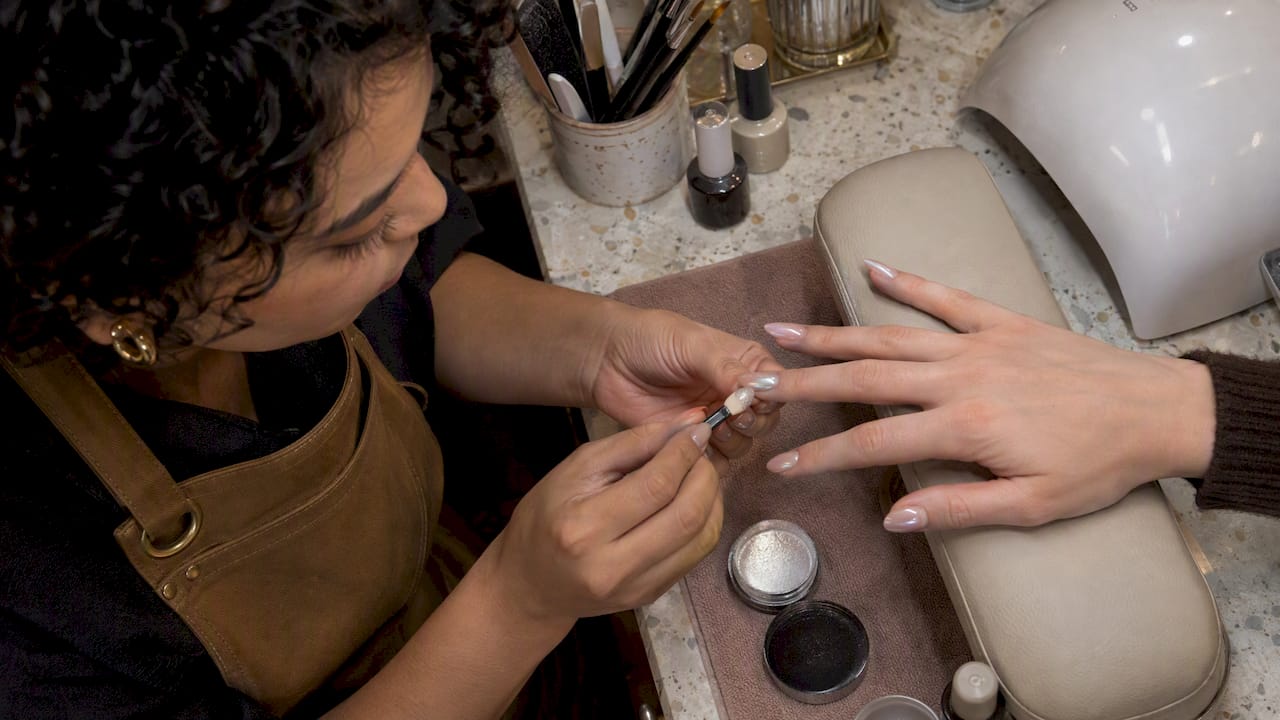
The biggest technical risk is overworking the powder once it’s on the nail. Technicians generally apply it in one pass and avoid going back over the same spot repeatedly, since friction can dull the pigment instead of smoothing it.
Can you get glazed donut nails at home?
Yes, and the trade-off is mostly about durability rather than appearance. A simple three-step layering method, sometimes called the sandwich technique, gets surprisingly close to the salon finish using regular polish.
- Start with a milky white or sheer nude polish as your base, applying two thin coats so it doesn’t look chalky.
- Once dry, add a pearlescent topcoat or a very fine mica powder dusted on with a soft brush.
- Finish with a glossy top coat to seal the shimmer and smooth out any texture from the powder.
DIY guides from beauty editors confirm that polish-layering can approximate the glazed effect well enough for everyday wear and photos, even though it won’t have the same mirror-like density as a professional chrome application.
If you’re substituting mica or eyeshadow for proper chrome powder, stick to finely milled products. Guides on glazed nail ideas warn that coarse glitter or chunky eyeshadow particles create a gritty, uneven texture instead of a smooth sheen.
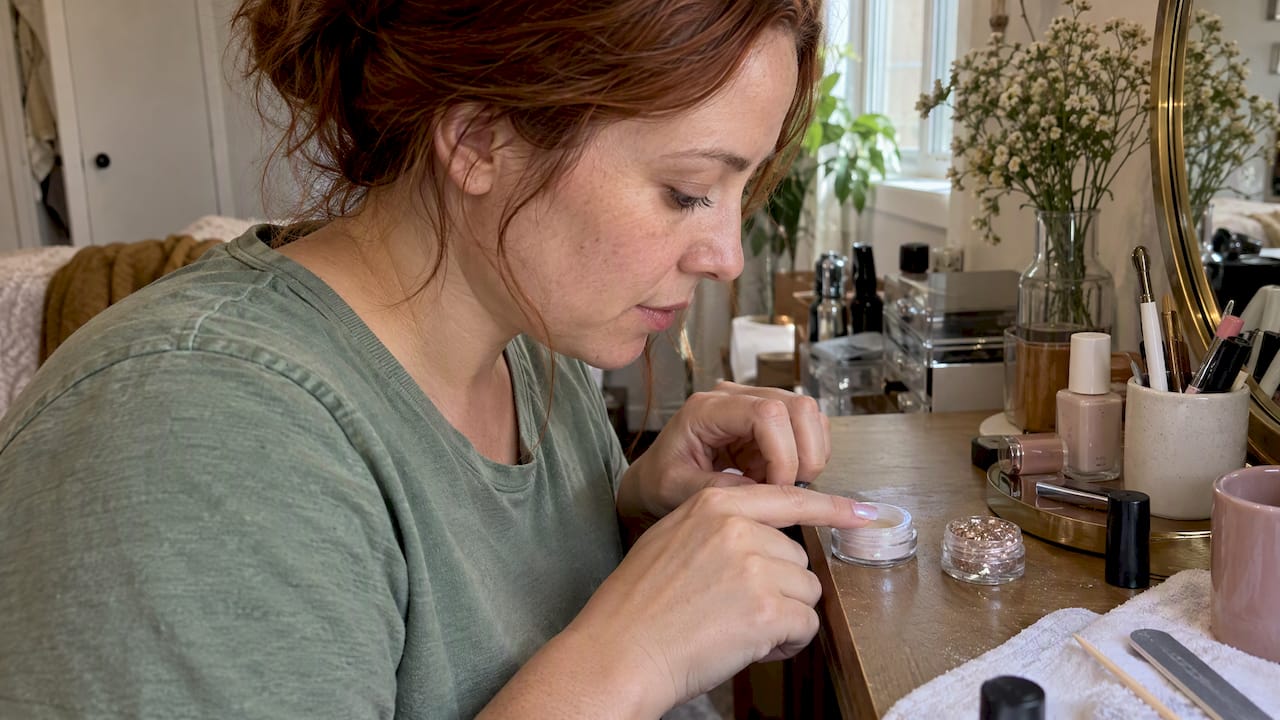
Skip an at-home UV lamp unless you’re confident in gel application, since regular polish doesn’t need curing and layering gel incorrectly can lead to a tacky, unfinished surface. Expect the DIY version to last closer to 5 to 7 days before chipping, compared to the two to three weeks typical of a full gel set.
Glazed donut nail designs worth trying
The glazed effect works on nearly any sheer base, which is part of why it has stayed popular through so many variations.
- Classic milky white with silver chrome is the original Hailey Bieber look and the easiest to request by name.
- Glazed Donut 2.0 swaps the stark white for a sheer pink or nude base with a lighter dusting of chrome, a softer update manicurists developed as the trend matured.
- Mirror glaze and metallic iterations push the chrome more heavily for a fully reflective finish rather than a subtle sheen.
- Chocolate and strawberry versions use the same technique over a brown or pink-red base for a seasonal twist, documented in coverage of the look’s evolution.
- Glazed-French hybrids pair a sheer glazed base with a soft chrome tip line instead of a solid white tip.
Shape matters here too. Short, rounded or squoval nails tend to show off the glaze evenly because the sheen catches the light across a flatter surface, while longer almond shapes can highlight the shimmer along the curve. If you’re not sure which shape suits your hands, a nail shape guide can help you decide before your appointment. For color inspiration beyond the classic white, a rundown of milky and jelly finishes for the season is worth a look, and if you want something more subdued for work, professional nail design ideas show how to tone down the shimmer.
Fixing streaky or sticky glazed nails
Most problems with the glazed finish come down to timing or product handling rather than skill.
- Patchy or streaky chrome usually means the no-wipe top coat cured too long before the powder went on. The fix is to buff the area lightly, reapply a thin no-wipe layer, soft-cure briefly, and dust the powder again.
- A sticky surface after the final top coat often means the cure time was too short for the lamp wattage. Wiping with isopropyl alcohol and running a short additional cure usually resolves it.
- Hazy or dull spots can appear if the top coat was applied unevenly. Buffing the dull area and adding a fresh top coat layer fixes it without removing the whole manicure.
- Clumping chrome powder is a storage issue more than an application one. Keeping powder in an airtight container prevents moisture from making it cakey.
Pro Tip: If chrome powder looks splotchy no matter how you apply it, check whether your no-wipe top coat has thickened in the bottle. A gel that’s past its ideal consistency won’t hold powder evenly no matter how careful the application.
For more on troubleshooting chrome specifically, salon tips on chrome nail application cover similar fixes in more detail.
Is a glazed gel manicure safe?
The main safety question people ask about glazed donut nails has nothing to do with the chrome powder itself and everything to do with the UV or LED lamp used to cure gel layers.
- The FDA oversees curing lamps as medical devices, and dermatology modeling it cites suggests. Typical gel-manicure lamp exposure every couple of weeks is unlikely to meaningfully raise skin cancer risk when sessions are limited and hands are protected.
- Applying broad-spectrum sunscreen to your hands before a lamp session is a simple extra precaution the FDA recommends.
- If you have sensitive skin, ask for HEMA-free or TPO-free gel formulas, since these ingredients are more common irritants than the powder or polish itself.
- Watch for redness, itching, or swelling around the cuticle after a gel set, which can signal a sensitivity worth discussing with a dermatologist or patch-testing before your next appointment.
One widely cited modeling estimate suggests it would take roughly 250 years of weekly gel sessions to equal the radiation exposure of a single UV treatment used for psoriasis, which gives some context for why occasional lamp use is considered low risk when exposure is limited and hands are protected. For a deeper look at lamp safety specifically, this breakdown of UV nail lamp research covers the data in more depth.
How to ask for glazed donut nails at your appointment
Walking in with the right words and a couple of reference photos makes the appointment faster and gets you closer to the exact finish you want.
- Say you want a “glazed donut manicure” or “chrome glaze,” and specify whether you want the classic milky white or a sheer nude base.
- Mention that you’d like professional chrome powder rather than a glitter topper, since the texture and finish are different.
- Bring a close-up photo taken in natural light so your tech can see how reflective you want the chrome to look.
- Ask what top coat they use and how long the full appointment typically takes, since chrome applications can add 15 to 20 minutes to a standard gel manicure.
Most salons treat the chrome powder step as an add-on to a gel manicure or gel-x set rather than a separate service, so confirming pricing upfront avoids surprises.
A salon’s take on the glazed donut trend
We’ve found that glazed donut nails work well as an add-on to several of our core services, including gel manicures, Gel X, and dipping powder sets, since the sheer base and chrome finish can be layered onto almost any of these foundations. What makes the look worth doing in person is consistency: a technician can control how heavy or subtle the chrome sits, something that’s harder to judge on your own hands.
If you want to see the finish before committing, our video gallery shows the technique applied in real time, which gives a better sense of the sheen than photos alone. We tend to ask clients what base shade they’re drawn to first, then adjust the chrome intensity from there.
— Cuong
Book a glazed donut manicure that lasts
If you’d rather skip the trial and error of layering polish at home, a gel manicure or Gel X set with chrome powder gets you the salon-level mirror sheen in one visit. Both options are commonly offered as part of regular service menus, along with dipping powder available for a sturdier base underneath the glaze.
When booking, mention the glazed donut look by name and let us know whether you’re drawn to the classic milky white or a softer nude variation.
- Browse our full services menu to see pricing for gel manicures, Gel X, and dipping powder.
- Check out our approach to long-lasting gel sets if durability matters most to you.
- If you’re set on doing it yourself first, at-home mobile nail services are another option worth knowing about, though a salon visit still gives you the most control over how the chrome is applied.
FAQ
What are donut glaze nails?
Donut glaze nails, often called glazed donut nails, are a manicure built from a sheer milky or nude base topped with a pearlescent or chrome powder for a glossy, frosted look. The style is named for its resemblance to the shiny glaze on a donut and became widely known after Hailey Bieber wore a version of it.
Are glazed donut nails still in style in 2026?
Yes, the look has stayed popular and continued evolving with softer, nude-based variations sometimes called Glazed Donut 2.0. Coverage of the 2026 trend cycle notes that subtle tweaks to the base color and powder amount have kept the style current rather than dated.
How do you ask for glazed donut nails?
Tell your nail technician you want a “glazed donut manicure” using professional chrome powder over a sheer or milky base, and specify whether you prefer the classic white or a nude variation. Bringing a close-up reference photo in natural light helps your tech match the exact level of shine you’re after.
What are glazed donut French nails?
Glazed donut French nails combine the sheer, chrome-dusted base of a classic glazed manicure with a soft chrome tip line instead of a traditional solid white tip. It’s a hybrid style that keeps the glossy sheen while adding a subtle nod to the French manicure shape.
Sources
- Glazed-Donut Nails Are Still Very Much In—With This Simple Twist | Glamour
- Hailey Bieber’s Glazed Donut Nails Are All Over TikTok — Here’s How to Get Them | Allure