Chrome is not fading into 2026, it’s splitting into distinct styles worth knowing before your next appointment. Expect three main directions: glass chrome (a sheer, glassy mirror shine), soft or glazed chrome (pearly, glazed-donut effects), and color-shifting aurora powders (bold, iridescent statements). Whether you go salon or DIY, Cuong and the team at Foxy Nails have watched this finish evolve from a novelty into a mainstay, and this guide covers the styles, the technique, and the upkeep.
TL;DR:
- Achieving a mirror chrome finish requires a cured gel surface and no-wipe topcoat to ensure proper pigment bonding.
- Gel base color influences the chrome’s overall look, with black creating dramatic contrast and sheer pink a softer effect.
- Proper curing timing is critical; over-curing dulls the finish while under-curing results in a cloudy appearance.
- The safest application involves salon procedures, including prep, gel curing, and powder application, to ensure durability and shine.
- Advanced finishes like holographic or multichrome require specific techniques and experience, often better handled by professionals.
Table of Contents
- Chrome Nails Trend Ideas Worth Screenshotting
- What Actually Makes a Chrome Finish Work
- Salon Appointment or DIY: What Each Actually Requires
- Best Color and Shape Pairings for Chrome
- How to Keep Chrome Looking Fresh
- Where the Chrome Nail Look Actually Came From
- Is Chrome Nail Powder Safe for Your Nails?
- Beyond Basic Chrome: Holographic and Multichrome Finishes
- Chrome vs. Matte, Glitter, and Ombré: Which Trend Fits You
- When Chrome Is the Right Call, According to Cuong
- Book a Chrome Manicure at Foxy Nails in Reno
- Sources
Chrome Nails Trend Ideas Worth Screenshotting
The chrome nails trend isn’t one look anymore. It’s a menu of finishes, and picking the right one comes down to how much shine you actually want to wear.
- Glass chrome. A sheer pink or neutral base gets a glassy, mirror-like top layer that reads more “polished glass” than “disco ball.” It’s singled out as one of the defining looks of 2026 precisely because it reads as elevated rather than flashy.
- Soft or glazed chrome. This is the glazed-donut effect, minus the harsh metallic glare. Sheer pigment gives nails a satin, pearly sheen instead of a hard mirror finish.
- Strawberry glaze and vanilla French. Pink-toned and cream-toned variations of the glazed effect. These remain highly requested going into 2026, and both work on natural-length nails as easily as on extensions.
- Mirror metallics. The classic, high-shine chrome look in silver, gold, or gunmeal. This is the version most people picture when they hear “chrome nails,” and it still delivers the strongest visual punch.
- Color-shifting aurora chrome. Duochrome and holographic powders that shift between two or three tones depending on the light and angle. These iridescent, multi-tonal powders are the boldest option on this list and look completely different indoors versus outdoors.
- Chrome French tips. A sheer or nude base with chrome powder applied only to the tip, giving a modern spin on a classic shape.
- Ombré chrome. Chrome powder fades from the cuticle or gradually intensifies toward the tip, often over a two-tone gel base.
- Sea-glass or mermaid chrome. Aurora powder layered over a translucent teal, lavender, or seafoam base, mimicking sea glass under sunlight.
Three prompts to bring to your appointment: “sheer pink base with glass chrome topcoat,” “vanilla glaze French on almond nails,” and “aurora chrome over a black base for maximum shift.”
What Actually Makes a Chrome Finish Work
Chrome is a finish, not a color, and that distinction changes how you should think about picking one. Ultra-fine metallic or pearl pigment gets buffed into a cured gel or no-wipe topcoat surface, and it’s that pigment-to-surface bond that creates the reflective effect, not the polish underneath it.
- Mirror chrome uses the finest, most reflective metallic powder for a true mirror look.
- Pearlescent or glazed chrome uses a softer, more diffused pigment that scatters light instead of bouncing it directly, which is why glazed looks read as “glowy” rather than “shiny.”
- Aurora or color-shifting chrome uses layered pigment particles that reflect different wavelengths at different angles, producing the shift effect.
Base color changes everything here. A sheer pink base under glass chrome looks soft and quiet; the same powder over black looks dramatic and high-contrast. Nail shape matters too: a wide almond or coffin shape gives mirror chrome more surface area to catch light, while shorter rounded nails suit the subtler glazed effect better.
Curing timing is where a lot of finishes go wrong. Cure too long and the tacky inhibition layer chrome pigment needs to bond disappears, leaving a dull or patchy result. Cure too little, and the finish turns cloudy. That balance is part of why chrome outcomes vary so much between salons and at-home attempts.
Salon Appointment or DIY: What Each Actually Requires
Chrome looks simple in photos. Getting the mirror or glaze effect to actually show up requires a specific sequence, and skipping a step is usually why a home attempt turns out streaky.
A typical salon appointment runs through this order:
- Consultation. Your tech talks through base color, finish (mirror, glazed, or aurora), and nail shape.
- Nail prep. Cuticle work, shaping, and buffing to create a smooth surface.
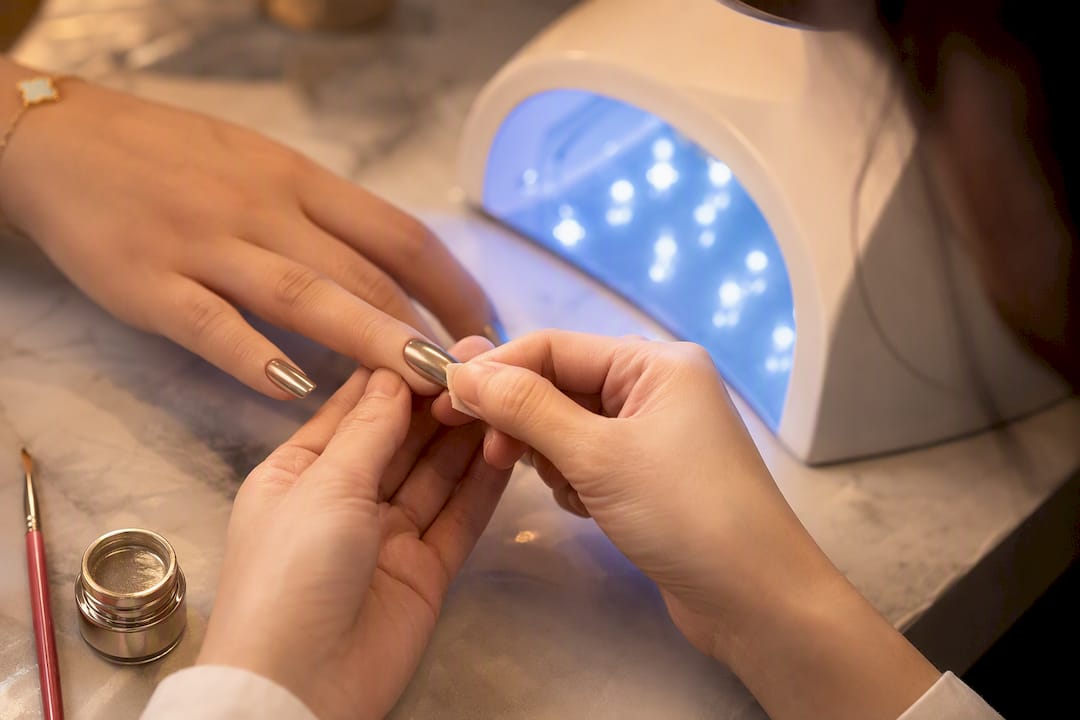
- Gel base application. A colored or sheer gel is applied and cured under an LED or UV lamp.
- No-wipe topcoat. This layer stays slightly tacky after curing, which is what lets the chrome powder grip.
- Chrome powder application. A silicone applicator or brush rubs the powder directly into the tacky topcoat.
- Seal. A final protective topcoat locks the chrome in and reduces smudging.
A full chrome gel service typically runs longer than a standard gel manicure because of the extra curing and buffing steps, though the actual painting time is short since there’s no hand-detail work involved.
True chrome needs a cured gel surface and a no-wipe topcoat. Regular polish alone won’t hold the powder the same way, which is why some at-home kits use a workaround adhesive base for people without a gel lamp. Those results tend to be less durable and less mirror-like than salon chrome.
Pro Tip: If you’re trying chrome at home without a lamp, don’t expect mirror-level shine. Rub-on kits built for non-gel systems get you closer to the glazed effect than the full metallic mirror look, and that’s a fair trade if you don’t own UV equipment.
Best Color and Shape Pairings for Chrome
The base color you choose changes the entire personality of a chrome manicure, and shape decides how much of that effect actually shows.
- Sheer pink or nude bases suit glazed and glass chrome looks aimed at a quiet, polished effect.
- Black or deep espresso bases push mirror chrome into its most dramatic, high-contrast version.
- Jewel tones like emerald or sapphire under aurora powder create the boldest color-shift.
- Rose gold or warm-toned chrome flatters warmer skin undertones better than silver.
- Short rounded or squoval shapes work well for everyday glazed chrome that needs to look office-appropriate.
- Almond or coffin shapes give mirror and aurora chrome more surface to catch and shift light.
If you’re not sure which base fits your skin tone, a quick look at current seasonal color trends is a faster starting point than guessing.
How to Keep Chrome Looking Fresh
Sealed chrome gel manicures generally hold their shine for a few weeks before dulling starts to show at the tips, though how you treat your hands day to day shortens or extends that window. Frequent hand washing, hot water, and skipping gloves during cleaning all wear down the topcoat faster.
- Use gloves for dishes and cleaning products to protect the seal.
- Apply cuticle oil daily to keep the surrounding skin from drying and peeling near the edges.
- Avoid picking at lifting edges, which speeds up chipping.
- Book a topcoat refresh around the two-week mark if you want the mirror effect to stay sharp.
Cloudiness usually traces back to curing time, either too long or too short. Streaks often mean the chrome powder was applied before the topcoat reached the right tacky stage. Dull patches can mean uneven buffing before the gel base went on.
Pro Tip: Ask your salon whether they keep a dedicated chrome-only topcoat bottle. Reusing a shared bottle after contact with chrome dust can contaminate the entire bottle, ruining the finish on unrelated services down the line. It’s a small detail that separates a careful salon from a rushed one.
Where the Chrome Nail Look Actually Came From
Chrome powder didn’t start in nail salons. Metallic pigment powders were originally used in automotive and craft applications long before anyone thought to rub them onto a cured gel manicure. Nail artists adapted the technique sometime in the mid 2010s, when chrome powder kits started showing up in professional supply catalogs as a novelty finish.
The look exploded into mainstream visibility around 2017 and 2018, largely through Instagram, where the mirror effect photographed dramatically under studio lighting. That first wave was almost entirely metallic silver and gold, aimed at maximum shine rather than subtlety.
The shift toward softer, glazed versions came later and owes a lot to celebrity styling. Hailey Bieber’s glazed-donut manicure, created by nail artist Zola Ganzorigt, reframed chrome as something quiet and skin-flattering instead of loud. That single look is widely credited with pushing chrome into softer, more wearable territory, spawning the strawberry glaze, chocolate glaze, and vanilla French variations that now dominate the trend.
By 2026, the pendulum has swung to cover both ends: full mirror metallics for people who want a statement, and glazed or glass chrome for people who want the sheen without the shout.
Is Chrome Nail Powder Safe for Your Nails?
Chrome nail products are generally considered safe when applied correctly, but there are a few things worth knowing before you book or buy a kit. The pigment powders themselves are typically mica or synthetic mica-based, similar to what’s used in cosmetics like eyeshadow, and allergic reactions to the powder itself are uncommon.
The bigger safety consideration is what the powder sits on top of. Chrome requires a cured gel base and a no-wipe topcoat, both of which contain acrylate compounds. Acrylate allergies are a real and growing issue in the nail industry, and someone with a known sensitivity to gel or acrylic products should mention that during consultation, regardless of the finish they’re choosing.
LED and UV curing lamps also carry a small, well-documented amount of UV exposure. It’s minor compared to sun exposure, but people with certain skin conditions or a history of skin cancer sometimes prefer to ask about LED-specific lamps with shorter cure cycles, since some LED units cure faster with less overall exposure time than older UV lamps.
Inhaling loose pigment dust during application isn’t a major hazard in a well-ventilated salon, but it’s part of why many nail techs work over a small dust catcher or apply powder with a controlled sponge or brush rather than shaking it loose over the hand. If you’re trying chrome at home, working over a paper towel and avoiding a heavy-handed application keeps loose powder to a minimum.
Beyond Basic Chrome: Holographic and Multichrome Finishes
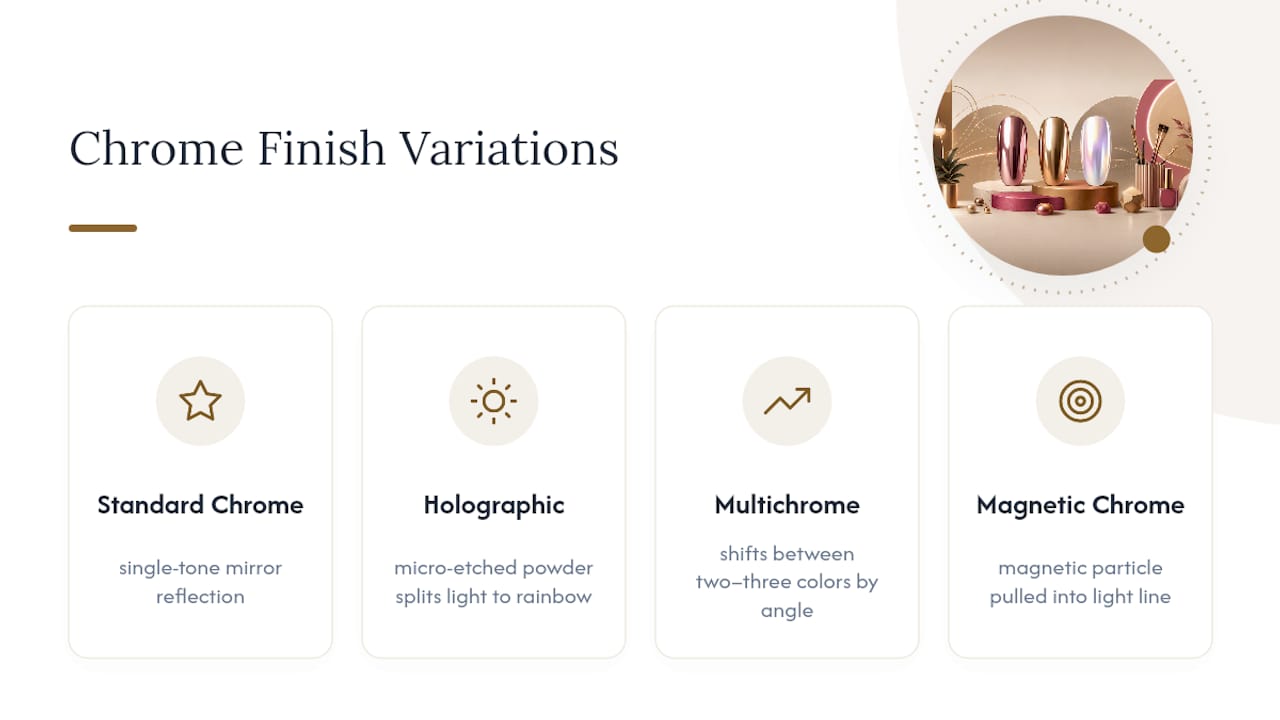
Standard chrome, whether mirror or glazed, reflects light in a single consistent tone. The newer variations built on top of that technique reflect light differently depending on the viewing angle, which is where things get more interesting.
Holographic chrome uses a powder ground with a micro-etched texture that splits light into a rainbow-like scatter, similar to the surface of a CD. Instead of a clean mirror image, you get a diffused sparkle that shifts across the spectrum as your hand moves.
Multichrome or duochrome powders shift between two or three distinct colors depending on the angle and light source, rather than scattering into a rainbow. A single application might look teal head-on and shift to purple or copper at an angle. These color-shifting aurora powders are currently one of the more requested advanced finishes, especially over darker bases where the shift reads more dramatically.
Magnetic chrome, sometimes called “cat eye chrome,” uses a magnetic component in the powder or gel that gets pulled into a directional pattern with a magnet before curing, creating a moving light line rather than an even sheen across the whole nail.
These variations generally take more technical skill than a standard chrome application, since layering or angling the powder correctly affects the final shift. If you’re requesting one of these at a salon, it’s worth asking whether the tech has direct experience with multichrome specifically, since it behaves differently from single-tone mirror powder.
Chrome vs. Matte, Glitter, and Ombré: Which Trend Fits You
Chrome isn’t competing with these other trends so much as solving a different problem. Each finish serves a different mood, and picking between them comes down to how much attention you want your hands to draw.
Chrome vs. matte is really a shine question. Matte absorbs light and reads understated and modern, while chrome reflects it and reads polished or bold depending on the powder. Some clients now combine the two: a matte base with a chrome French tip, giving contrast without going fully metallic.
Chrome vs. glitter comes down to texture. Glitter has visible particles and a sparkly, textured feel, while chrome is smooth to the touch and reflects as a single continuous sheen. Chrome tends to photograph more cleanly for that reason. Glitter can also shed slightly over time, while a properly sealed chrome finish stays smooth until it starts to wear at the tips.
Chrome vs. ombré isn’t really a competition at all, since ombré chrome is one of the eight styles covered earlier. Traditional polish ombré blends two polish colors; chrome ombré blends powder intensity across the nail, and the two effects can technically be combined for a hybrid look.
If you’re deciding between finishes for a single set, mirror chrome and full glitter are the two boldest options, matte sits at the calm end, and glazed chrome lands right in the middle, shiny enough to notice, subtle enough for daily wear.
When Chrome Is the Right Call, According to Cuong
Glazed and soft chrome suit clients who want a “quiet luxury” look for everyday wear, while mirror metallics fit special occasions or anyone who wants nails to be the focal point. Chrome bonds best over a gel manicure or hard gel overlay, and clients who maintain regular fill appointments tend to keep the mirror effect looking sharp the longest.
— Cuong
Book a Chrome Manicure at Foxy Nails in Reno
Foxy Nails is the shortcut to salon-grade chrome without the trial and error of a home kit and a UV lamp you’ll use twice. A gel manicure or hard gel overlay gives chrome powder the cured surface it actually needs to bond correctly, something no amount of careful polishing at your kitchen table replicates.
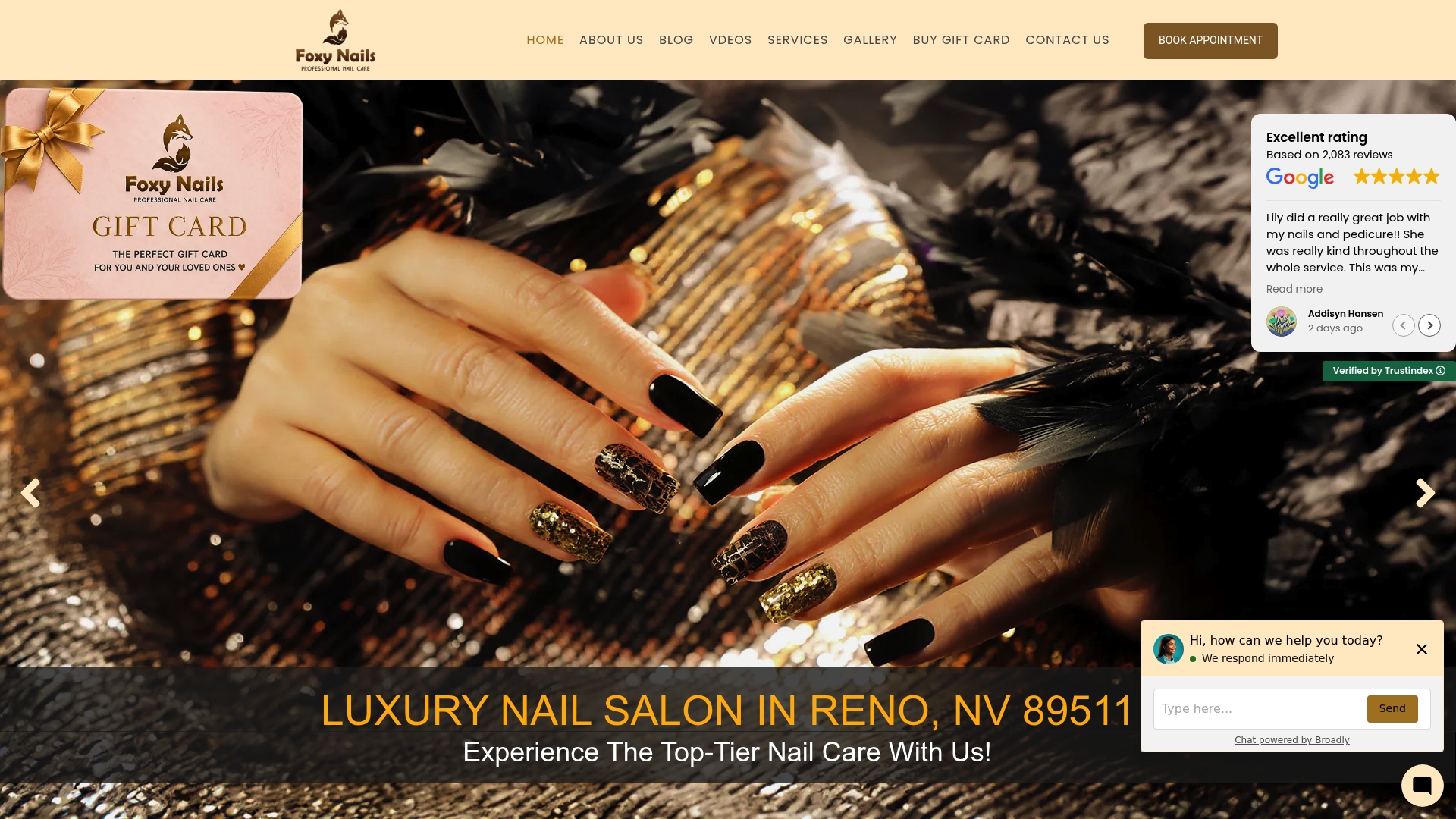
When you book, mention your base color preference, whether you want mirror, glazed, or aurora chrome, and any interest in add-ons like a chrome French tip or gem accents. If your natural nails need extra strength before a chrome set, ask about nail overlays during your consultation, since a stronger base holds the finish longer between fills. Book your appointment online and tell your tech exactly which chrome look from this guide you want to bring in.
Sources
- Hailey Bieber’s Glazed-Donut Nails Have Never Been Easier to DIY | Glamour
- Glass Chrome Manicures Are the Chicest Nail Trend for 2026 | Who What Wear
- Chrome Nails: The Complete Guide To Every Finish (2026) | Nailosmetic
- Chrome application troubleshooting guide | Scratch Magazine
- How to use chrome nail powder | Maniology