
A first manicure is a short, technician-led treatment: consultation, polish removal, shaping, cuticle care, a quick massage, and polish or buff, usually in that order. You do not need to prep your nails beforehand. Clean hands and a rough idea of length, shape, and color are enough. Expect about 30 to 45 minutes and a standard 15 to 20% tip.
TL;DR:
- A first manicure typically lasts 30 to 45 minutes, with longer appointments needed for gel, spa, or nail art services.
- Hydration, avoiding heavy lotions beforehand, and mentioning sensitivities during consultation improve the experience and results.
- Sanitization involves visible tools cleaning and proper hand hygiene; salons should openly show their sterilization processes.
- Tipping 15 to 20 percent of the total cost is standard, with cash preferred directly to the technician for first visits.
- The most important step is the initial consultation, where clients can specify preferences, sensitivities, and desired nail shapes to guide the service.
Table of Contents
- First Manicure What to Expect: A Step-By-Step Walkthrough
- Which Type of Manicure Should a First-Timer Choose?
- How Should You Prepare for Your First Manicure?
- How Long Does a First Manicure Take, and What Does It Cost?
- How Do You Keep Your Manicure Looking Fresh Afterward?
- What Hygiene and Safety Standards Should You Expect?
- A Technician’s View on What Actually Puts First-Timers at Ease
- Ready to Book Your First Manicure at Foxy Nails?
- Where to Read More on Manicure Steps and Etiquette
- Sources
- FAQ
First Manicure What to Expect: A Step-By-Step Walkthrough
Nothing about this process is a mystery once you see it laid out. Here’s the order most salons follow, based on industry-standard manicure steps, and what you can say or do at each stage to steer the outcome toward what you actually want.
- Greeting and consultation. This two-minute conversation is the most useful part of the whole visit for a first-timer, according to nail technician training guidance. Say something like, “I’d like short, round nails, this color, and I have sensitive cuticles” or “I’d rather sit quietly today.” Bring a photo on your phone if you’re picturing a specific shade or shape. Mention any allergies or skin sensitivities now, not after the polish is on.
- Polish removal and sanitizing. If you’re wearing old polish, removing it is part of the service, not an extra chore you owe the technician. Tools get sanitized in front of you or come from sealed packaging.
- Shaping and filing. Technicians typically file in one direction to avoid weakening the nail edge. Common shapes are round, square, oval, and squoval. If you’re unsure what “squoval” even looks like, just ask to see examples on the tip chart most salons keep at the desk.
- Cuticle care. Your fingers soak briefly, then the technician gently pushes back cuticles and trims only what’s necessary. This step should feel like light pressure, never pain.
- Massage and hydration. A hand and lower-arm massage isn’t filler time. It boosts circulation and works lotion into skin that’s often drier than people realize.
- Polish or buff. Base coat, color, top coat, or a buffed natural finish if you skip polish. Gel needs a UV or LED lamp to cure between coats; regular polish needs a stretch of air-dry time before you touch anything.
Pro Tip: If filing or cuticle work stings, say so the moment it happens. Technicians expect this feedback and will adjust pressure immediately rather than push through, according to client communication guidance from working nail professionals.
Which Type of Manicure Should a First-Timer Choose?
Not every manicure is the same commitment. Picking the right one changes your appointment length, your aftercare, and how long the result lasts.
- Classic or regular manicure: the fastest option, needs air-dry time before you leave, and is the lowest-commitment way to try a salon for the first time.
- Gel manicure: cured under a lamp, so nails are fully hard and dry the moment you walk out. It also tends to outlast regular polish by weeks, not days.
- Spa manicure with exfoliation or a mask: more pampering, more time on the clock, and a nice option if you want the visit to feel like a small event rather than a quick errand.
- Dip powder, acrylic, or overlays: worth considering if you want serious durability or extra strength on nails prone to breaking, but they add both time and cost to the appointment.
If your hands are in water constantly or you type all day, gel or dip generally holds up better than regular polish. If you just want a taste of the salon experience without a longer-term commitment, a regular manicure is the easier entry point.
How Should You Prepare for Your First Manicure?
The short answer: barely at all. Salons build in the time to handle almost everything, and over-preparing can actually work against you.
- Arrive with clean hands. No lotion or heavy oil right before your appointment, since it can interfere with polish adhesion.
- Skip the DIY trim or reshape job. Let the technician remove old polish and shape from scratch.
- Bring a reference photo or the actual polish bottle if you have a specific color in mind.
- Have payment ready, and check whether the salon prefers cash for tips.
- Mention allergies, sensitivities, or a skin condition during the consultation, not after the first product touches your skin.
Tipping runs 15 to 20% of the pre-tax total, according to salon guidance on first-visit etiquette, and cash often goes directly to the technician rather than through a payment system. Practitioner advice generally agrees on one point: don’t file, buff, or peel anything at home before you go. Arrive with a rough idea of what you want and let the professional start from a natural base. For more on what to bring and how to communicate preferences, the complete first-visit FAQ covers the specifics salon by salon.
How Long Does a First Manicure Take, and What Does It Cost?
Set your expectations by service type, not by a single number that applies to everything.
- A classic manicure runs about 30 to 40 minutes for most first-time clients, per industry timing benchmarks.
- Spa manicures, gel applications, and anything with nail art or extensions push the appointment toward 45 to 75 minutes or more.
- Add-ons like nail art, a French tip design, or fixing a broken nail from a previous visit will stretch the clock and the bill.
- If you have an event the same day, book with a buffer. Rushing the drying stage is how smudges happen.
If you’re short on time, ask specifically about a quick manicure option rather than assuming every service fits a lunch break.
How Do You Keep Your Manicure Looking Fresh Afterward?
The manicure’s lifespan depends more on what you do in the first 24 hours than anything the technician did. Wet polish and even cured gel are more vulnerable right after your appointment than they’ll ever be again.
Avoid submerging your hands in hot water, dishwashing liquid, or cleaning products for a few hours after you leave. Heat and harsh soap soften polish and speed up chipping. Wear gloves for cleaning or gardening once you’re back to normal routines. A cuticle oil applied nightly keeps the skin around your nails from drying out and cracking, which is often what causes polish to lift at the edges before the color itself fades. General hand care principles, like the kind covered in simple skin care routines, apply just as well to nail longevity as they do to skin.
Gel holds up longer than regular polish simply because it’s cured rather than air-dried, but neither is scratch-proof. If a nail chips within a day or two of your visit, call the salon before you try to fix it yourself. Many salons will touch up a fresh manicure at no charge or a reduced fee within a short window, though policies vary, so ask directly when you book.
What Hygiene and Safety Standards Should You Expect?
A professional salon sanitizes or uses single-use tools for every client, and you should be able to see that happen, not just be told about it. Metal tools typically go through an autoclave or a hospital-grade disinfectant soak between uses; files and buffers are either single-use or clearly labeled as sanitized.
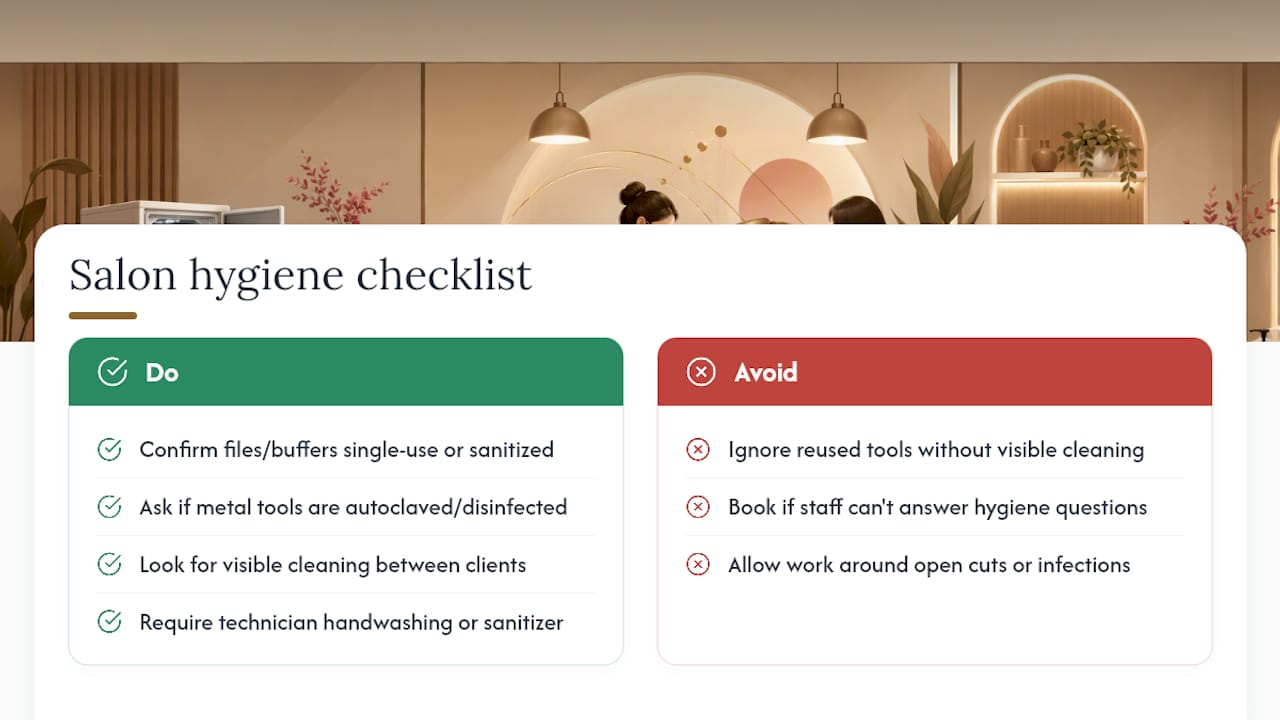
Ask how tools are cleaned if you don’t see the process happening. A salon that hesitates to answer, or one where you notice reused files without any visible sanitizing step, is worth reconsidering. Technicians should also wash their hands or use sanitizer before starting your service, and workstations should look clean between clients, not just at opening. If you have a nail infection, an open cut, or a skin condition near the nail bed, mention it before the appointment starts. A responsible technician will adjust the service or skip a step rather than work around damaged skin. For a quick way to vet a salon before booking, a short list like questions to ask before choosing a salon can save you an uncomfortable first visit.
A Technician’s View on What Actually Puts First-Timers at Ease
The consultation matters more than most clients assume walking in. A good technician isn’t just asking what color you want. They’re listening for nail health issues, how your hands get used day to day, and whether you’re the type who wants quiet or conversation. That two-minute window shapes everything that happens next.
Comfort is not something you have to hope for. It’s something you can ask for directly. If pressure feels too firm during cuticle work, say so. If you’d rather not chat, say that too. No technician worth returning to takes that as an insult.
First visits don’t need to be complicated. A regular manicure, a gel manicure, or even a Mommy-and-Me appointment for a parent and child are all reasonable starting points, and each one follows the same basic structure with small variations in time and finish.
— Cuong
Ready to Book Your First Manicure at Foxy Nails?
Foxy Nails keeps first visits simple: no upsell pressure, no assumption that you already know salon etiquette, just a technician who walks you through each step. If you’re not sure where to start, a regular manicure at $15 or a gel manicure at $40 are both solid entry points, and parents can ask about Mommy-and-Me appointments to bring a child along comfortably.

When you book, mention in the notes that it’s your first visit and whether you’d prefer a quieter station. That one line helps the front desk match you with a technician who’s used to walking newcomers through each step without rushing. Check current appointment openings and the full services menu to pick the option that fits your schedule and budget, then reach out with any questions about allergies or sensitivities before your appointment.
Where to Read More on Manicure Steps and Etiquette
- Nail Care Academy’s consultation guide explains why that first two-minute conversation shapes the whole appointment.
- L.A. Nails’ first-visit guide covers timing and tipping norms in plain terms.
Sources
- Importance of client consultations | Nail Care Academy
- What to Expect at Your First Manicure | L.A. Nails (Bradenton)
- Client communication guidance post | Miss Daizy Beauty Studio
FAQ
Is $10 a Good Tip for a $40 Manicure?
A 15 to 20% tip is standard in the United States, which puts $10 right at 25%, slightly above the typical range for a $40 service. It’s generous, not excessive, and technicians won’t think twice about it.
Should I Shower Before or After My Nail Appointment?
Shower before your appointment, not after. Fresh polish and gel need time to fully set, and hot water or steam right afterward can soften the finish and cause smudging or lifting.
Is Getting Your Feet Done Considered a Manicure?
No. Nail care for feet is called a pedicure, while a manicure refers specifically to hands and fingernails. Foxy Nails offers both, including a Spa Pedicure starting at $40 for anyone wanting the foot equivalent of the hand treatment.
What Are the Basic Steps in a Manicure?
A typical manicure includes consultation, polish removal, nail shaping, cuticle care, a hand massage, and finally polish or a buffed finish, according to standard salon service breakdowns. Spa or gel services add extra steps like exfoliation or lamp curing on top of that base sequence.
How Long Should I Budget for My First Manicure?
Plan for 30 to 45 minutes for a classic manicure, and closer to 45 to 75 minutes if you’re adding gel, spa treatments, or nail art. Booking a little extra buffer time helps if it’s your first visit and you want to ask questions along the way.