Micro French, milky/vanilla bases, baby boomer ombré, and glazed chrome micro lines are the four French manicure styles dominating 2026, and each one fits a different hand and occasion. Pick by proportion first: micro tips (0.5–1mm) suit short or mature nails, baby boomer flatters almost anyone because it has no hard line, and glazed chrome reads best on longer beds for an editorial finish. A salon like Foxy Nails can execute any of these, and Vogue confirms proportion, not formula, is what makes a French mani look current.
TL;DR:
- Micro French lines are best on short to medium nails, with a width of 0.5 to 1 millimeter, and look most editorial when paired with chrome or pearl finishes.
- The baby boomer ombré style is highly recommended for mature or short hands, as it avoids sharp contrast and elongates the nail visually.
- Salon-quality finishes like glazed chrome or gel baby boomer require specific techniques, tools, and often need extra time for precise blending and sealing.
- To achieve the desired look, specify measurements like tip width in millimeters and translucency level when discussing options with your nail technician.
- Trendy styles must be proportioned to your nail shape and length; overly wide tips or sharp contrasts can make shorter or older hands appear busier or shorter.
Table of Contents
- Which French Manicure Styles Are Trending Right Now
- How to Ask Your Nail Tech for the Look You Want
- The Best French Styles for Short or Mature Hands
- DIY Tools, Techniques, and When to Book a Pro
- What a Professional Salon Does Differently
- Choosing a Style That Actually Fits Your Life
- Book the French Manicure Style That Fits Your Hands
- Sources
- FAQ
Which French Manicure Styles Are Trending Right Now
The classic French tip never fully left, but it got a proportion overhaul. Ten variations now define the category, and knowing their names helps you ask for exactly what you want.
- Classic French (modern proportions): A slightly thinner white band than the 1990s version, worn on an oval or almond shape. It reads polished rather than dated when the tip stays narrow and the nail bed is longer. Great for weddings and interviews. Fully salon or DIY friendly.
- Micro French: An ultra-thin tip line, roughly 0.5 to 1 millimeter, that looks more like jewelry than a traditional tip. It’s 2026’s most editorial version, especially paired with a glazed or pearl finish. Best on short to medium almond or squoval shapes. Doable at home with a fine brush, but a salon gets a cleaner line.
- Milky/vanilla French: Swaps stark white tips and an opaque base for sheer, creamy tones, so the whole nail looks like a healthier, glossier version of your own. Who What Wear calls this a 2026 staple for the “your nails but better” look, and it’s become the default bridal choice. Works on every shape and length. Easy for DIY since there’s no hard line to perfect.
- Baby boomer (ombré): A blended gradient from soft pink to milky white with no defined smile line at all. This is what practitioners recommend most for mature hands, since there’s no sharp contrast to draw attention to nail bed length or width. Salon-only, since it’s usually built by wet-blending gel shades before curing.
- Colored tips: Muted terracotta, sage, or soft lilac swapped in for white. Start with pastel or nude tones before going bold. Great for everyday wear on almond or coffin shapes. Vinyl guides make this DIY-approachable.
- Glazed/chrome micro line: A micro-width tip dusted with chrome or pearl powder and sealed under a no-wipe top coat. This is the look fashion editors keep pointing to for a modern twist on a classic mani. Best on medium to long nails. Salon-only, since chrome pigment needs a tacky top coat to grip.
- Reverse French (cuticle line): The color sits at the base of the nail instead of the tip, like an inverted smile line. Striking on square or squoval shapes with medium length. Doable at home with practice, tricky to keep symmetrical.
- Double micro lines / double-stripe: Two thin parallel lines near the tip, often in contrasting colors. Fun for statement nails or a single accent finger. Best left to a salon or a very steady DIY hand.
- Glitter or metallic free-edge accents: A classic or milky base with glitter only on the free edge or one accent nail. Works on any shape, especially for holidays. Easy DIY hack with striping tape.
- Micro French with hand-painted accents: A tiny painted detail (a dot, a heart, a thin swirl) layered onto a micro line. Best on longer nails with room for detail. Salon technique, since freehand precision at that scale takes a steady brush and practice.
How to Ask Your Nail Tech for the Look You Want
Vague descriptions are the biggest reason a French manicure doesn’t turn out the way you pictured it. Terms like “micro” or “milky” mean different things to different people, so practitioners recommend getting specific about width and translucency instead of just naming a style.
- Say the width in millimeters, not adjectives: “micro French on a milky base, 1mm tip.”
- For a gradient look, specify the technique: “baby boomer ombré, gel blend with a soft smile line, no hard edge.”
- For a metallic finish, name the sealant: “glazed pearl chrome micro line, no-wipe top coat.”
- Point at your reference photo and name three things: how deep the smile line curves, how sheer or opaque the base looks, and whether the finish is matte, glossy, or chrome.
- If you’re after gel blending or chrome glazing, ask upfront whether that’s a service they book separately, since both take extra time.
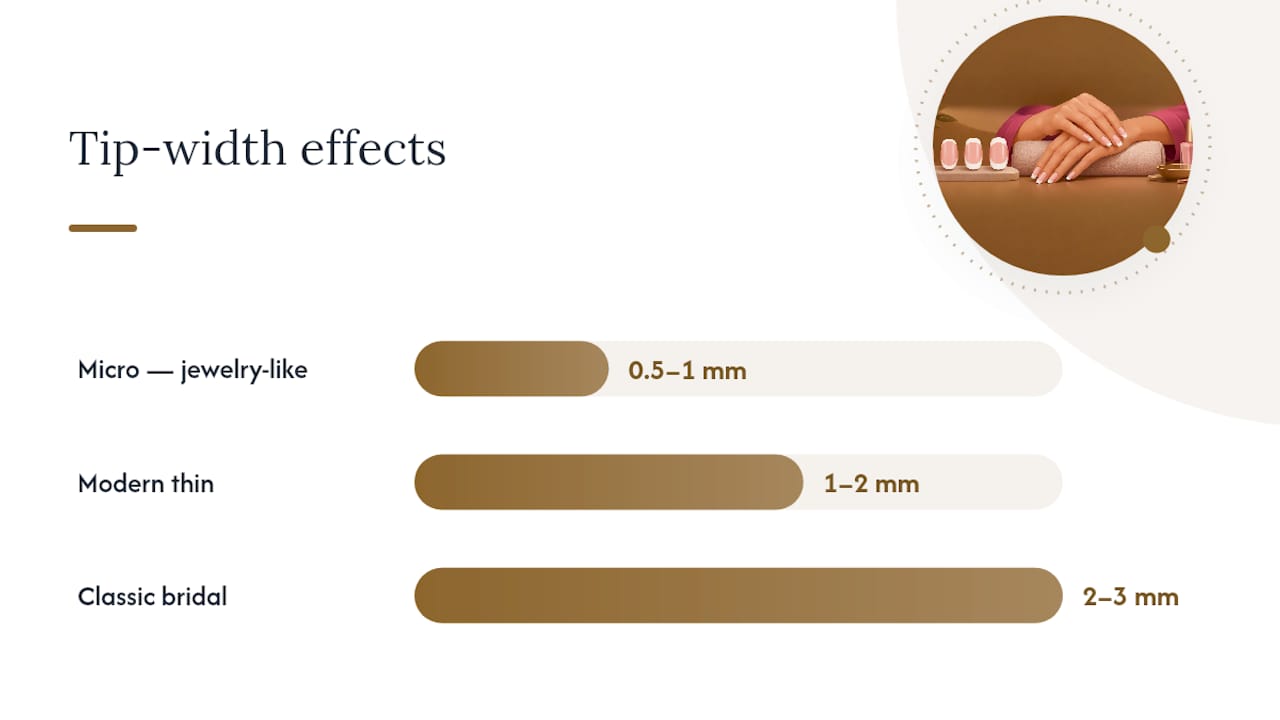
As a rule of thumb: 0.5 to 1mm reads as micro and jewelry-like, 1 to 2mm reads as a modern thin line, and 2 to 3mm is the classic bridal or long-nail width.
Pro Tip: Bring two or three reference photos, not one. Describe the translucency you see (“this looks almost see-through” versus “this looks solid white”) rather than relying on color names, since lighting changes how white or milky a tip photographs.
The Best French Styles for Short or Mature Hands
Proportion matters more than trend here. On short nails, a tip that covers more than about 15% of the visible nail tends to shorten the whole look, so the goal is to keep that white or colored band narrow.
- Stick to a 1 to 2mm tip width on shorter beds, and go with micro French or a sheer colored tip rather than a wide classic band.
- Choose oval, almond, or soft squoval shapes, since tapered edges add the illusion of length that a squared tip cancels out.
- Baby boomer works especially well on mature hands because it removes the hard smile line entirely, trading contrast for a soft blend.
- Skip wide, bright white bands and very dark tip colors. Both create a hard stop that visually chops the nail in half and draws attention to length rather than shape.
- At the salon, ask for a “thin smile line,” a “sheer base,” or a “gel blend for baby boomer.” All three phrases tell your tech you want proportion prioritized over a bold statement.
DIY Tools, Techniques, and When to Book a Pro
A few tools make DIY French tips look salon-close: a 00 striper brush for freehand micro lines, fine vinyl guides for clean colored tips, and a no-wipe top coat if you’re experimenting with pearl or chrome powder at home.
- Clean and prep nails, then apply your base color or leave nails bare for a natural milky base.
- For micro French, load a 00 brush with thin polish and draw the line freehand in one motion, or use a small custom-cut vinyl guide since standard adhesive guides often don’t fit short nail curves.
- For colored tips, apply a fine vinyl guide, paint the tip, then peel before the polish fully sets.
- Seal with top coat, and stop there if you’re using regular polish.
Baby boomer gradients and glazed chrome finishes are genuinely salon-only. The ombré blend is built with wet gel colors before curing, and chrome pigment needs a tacky no-wipe top coat that home polish systems don’t replicate. Patch test any chrome powder for sensitivity first, and let a licensed tech handle anything that involves gel curing lamps.
What a Professional Salon Does Differently
A trained tech blends baby boomer gradients while the gel is still wet, so the color transition sits inside the layer instead of sitting on top of it, which is why the effect looks smoother than anything built with regular polish. Micro French lines get a steadier hand and finer brushes than most home kits include, and glazed chrome needs that no-wipe top coat sealed at exactly the right tack level or the pigment won’t grip evenly.
Ask your tech three things before you book: how long the service will take, whether they’ve done that specific technique before, and how to maintain the finish between fills. A five-minute conversation prevents most of the “this isn’t what I asked for” moments.
Choosing a Style That Actually Fits Your Life
Chasing a celebrity’s exact micro French photo usually backfires if your nail bed is a different length or shape. Match proportion and translucency to your own hands first, and the trend will look intentional instead of borrowed.
— Cuong
Book the French Manicure Style That Fits Your Hands
Foxy Nails gives you what a photo screenshot can’t: a technician who measures your actual tip width and translucency before touching a brush, so the micro French or baby boomer you leave with matches your hands, not someone else’s Instagram.
A Gel Manicure at $40 holds a crisp micro French line far longer than regular polish, since gel doesn’t chip at the smile line the way polish does. For baby boomer ombré, ask for the gel blend so the gradient cures smoothly instead of separating into visible bands. If you’re after length to get the proportion right for a classic or double micro-line look, a Gel X Full Set starting at $60 gives you the extra nail bed those styles need. Bring two or three reference photos to your appointment, mention your target tip width in millimeters, and build in extra time if you’re requesting a glazed chrome finish, since that no-wipe top coat step takes longer than a standard polish change. Book through the Foxy Nails services page and pick the service that matches the style you settled on above.
Sources
- Micro French Glazed Nails: 12 Tiny Tip Designs + DIY Tutorial – NailsAmi
- What to Know About Milky Nail Art – Who What Wear
- French Manicure for Women Over 50: 9 Styles That Flatter – Mirellé Inspo
- 30 French Tip Nail Designs That Elevate the Classic Style – Vogue
FAQ
What is the new trend in French manicures?
Micro French lines paired with glazed pearl or chrome finishes are the biggest shift, trading the traditional wide white tip for a barely-there 0.5 to 1mm line with a metallic sheen. Milky and vanilla bases are running alongside it as the softer, everyday alternative.
What are the different types of French manicures?
The main styles are classic, micro, milky/vanilla, baby boomer ombré, colored tips, glazed chrome, reverse French, double micro lines, and glitter accent versions. Each one changes the tip width, the base translucency, or the line placement to shift the overall effect.
What nail shape is most flattering for older hands?
Oval, almond, and soft squoval shapes work best, paired with a thin tip width and a sheer base rather than a wide, opaque one. Practitioners point to baby boomer ombré specifically because it removes the hard smile line that can make hands look busier than they are.
What is the trendy French manicure style for 2026?
Micro French on a milky base, often finished with glazed chrome or pearl powder, is the style editors and salons keep coming back to this year. Baby boomer ombré remains close behind it as the go-to for anyone who wants a softer, low-contrast look.