
An e-file manicure is safe when a trained technician uses the right bit, a controlled speed, and light pressure on properly sterilized tools. It becomes risky quickly when any of those pieces slip, most often in the form of infection from unsterilized instruments or thinning and burns from too much heat on the nail plate. Dermatology guidance and salon-education standards agree on this: the tool isn’t the danger, the technique and the sanitation behind it are.
TL;DR:
- Proper sterilization of reusable tools and single-use bits is essential to prevent infections during e-file manicures.
- Techniques such as low RPM near the cuticle and light, moving pressure reduce the risk of nail thinning, burns, and onycholysis.
- Patients with preexisting nail issues or compromised immunity should avoid aggressive e-file sessions and opt for manual treatments instead.
- Asking for specific sterilization methods and observing workstation cleanliness before the service can help identify a safe salon.
- The risks arise mainly from technician technique and hygiene, not the e-file device itself, emphasizing the importance of trained professionals.
Table of Contents
- What Is an E-File and How Is It Different From a “Russian” Manicure?
- What Are the Real Risks of E-File Manicures?
- How Do Trained Technicians Prevent E-File Damage?
- When Should You Skip the E-File, and How Do You Recover If It Goes Wrong?
- How Do You Choose a Salon That Does This Safely?
- What Salon-Level Safety Actually Looks Like
- A Working Nail Tech’s Take on E-File Safety
- Book an E-File Manicure Done the Safe Way
- Sources
- FAQ
What Is an E-File and How Is It Different From a “Russian” Manicure?
An e-file, short for electric file, is a handheld rotary tool used in salons to remove old gel or acrylic, shape the free edge, and smooth the nail surface faster than a manual file can. In trained hands, it’s a precision instrument, not a shortcut. Salons use it for enhancement removal, buffing ridges, and prepping the nail bed for new product.
A “Russian” manicure is something different, and the distinction matters more than most people realize. It uses the e-file to dig under and lift the cuticle in a dry, invasive process that strips away the natural seal between the cuticle and the nail plate. Reporting from The Guardian on the rise of Russian e-file manicures notes that this barrier removal is exactly why infection risk climbs. Social media has blurred these terms together, calling almost any e-file service “Russian,” so when you book, ask specifically what the technician plans to do near your cuticle, not just what machine they’re using.
What Are the Real Risks of E-File Manicures?
Four risks show up again and again in dermatology reporting and salon-safety literature, and each one traces back to a specific technique failure.
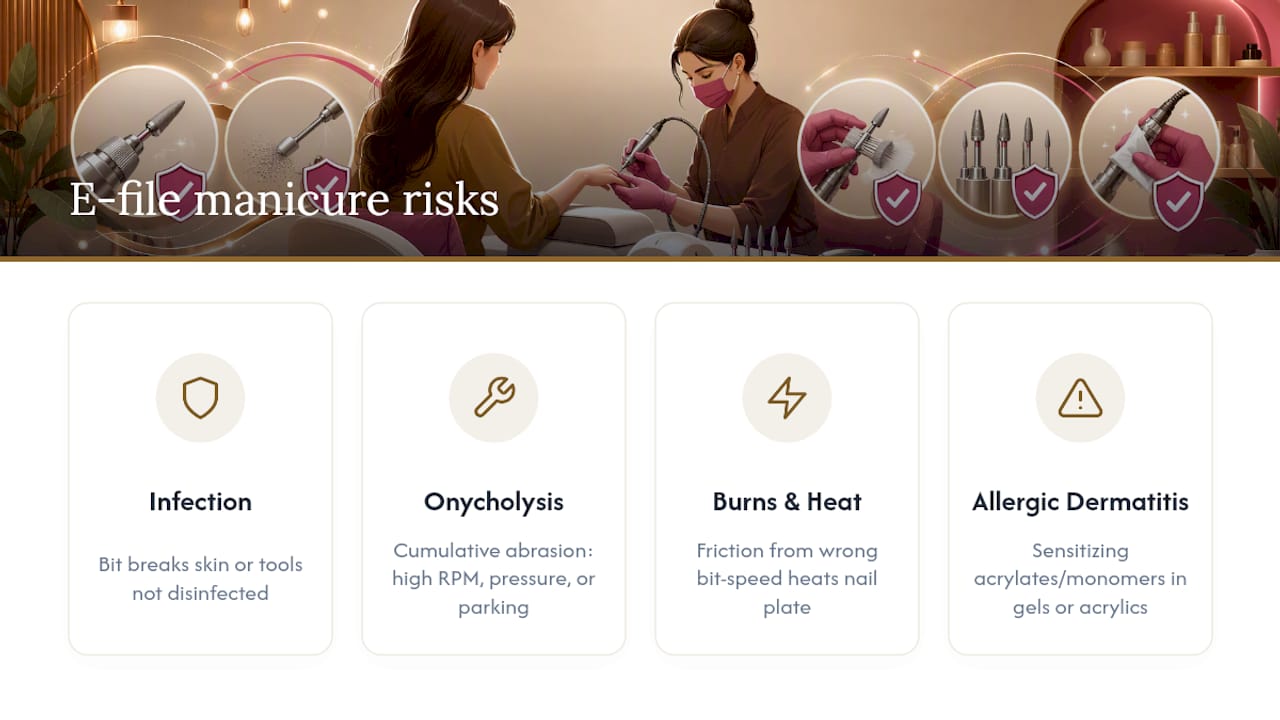
Infection happens when the bit breaks skin, or when tools aren’t properly disinfected between clients. Outbreaks tied to salon equipment have involved bacteria like Mycobacterium species and fungi like Candida, usually linked to inadequately cleaned instruments or footbaths, according to reporting on manicure and pedicure infection risk. A broader scoping review of nail cosmetic practices backs this up, tying salon procedures to documented infection outbreaks and dermatitis cases.
Onycholysis, or nail lifting, comes from cumulative abrasion: too high an RPM, a bit pressed too hard, or a technician “parking” the bit in one spot instead of keeping it moving.
Burns and heat damage build up before you ever see a mark. Friction from the wrong bit-speed combination heats the nail plate gradually, and by the time it stings, some thinning has likely already happened.
Allergic contact dermatitis can develop from acrylates and other sensitizing monomers in gel and acrylic products, something dermatology-backed nail health guidance flags as a reason plain polish stays the lowest-risk option long term.
Watch for redness that spreads, pus, warmth around the nail fold, or pain that persists more than a day or two. Any of those warrants a call to a doctor, not a wait-and-see approach.
How Do Trained Technicians Prevent E-File Damage?
The difference between a safe e-file service and a damaging one usually comes down to five controllable factors, and you can actually watch for most of them from the chair.
- Bit selection. Safety bits, which have a smooth, non-cutting tip, and fine-grit diamond bits belong near skin and cuticle areas. Coarser sanding bands are for product removal only and should be single-use or clearly sanitized between clients.
- Speed matched to task. Cuticle work and near-skin passes call for low RPM. Product removal can run higher, but never on bare natural nail. Pro-education sources on e-file bit choice and speed control note that a stable, low-vibration handpiece running slower is safer than a high-speed tool with weak torque control.
- Light, moving pressure. A trained tech keeps the bit gliding at a low angle and never lets it sit still. If you feel heat or pain, that’s the signal to stop immediately, not push through.
- Sterilization protocol. Reusable metal bits need steam sterilization or an autoclave. Disposable sanding bands should be tossed after one use. UV boxes and chemical dips alone don’t meet the same standard.
- Ventilation and PPE. Dust extraction at the table, along with gloves and eye protection for the technician, keeps filings out of the air both of you breathe.
Pro Tip: Ask your technician what RPM they’re running before they touch the file to your nail. A confident answer with a specific number is a good sign; a shrug is not. Standards referenced in e-file safety training for nail techs emphasize that natural-nail e-file work often requires extra certification depending on the state, so training level genuinely varies by technician, not just by salon.
When Should You Skip the E-File, and How Do You Recover If It Goes Wrong?
Certain conditions raise the stakes considerably. If you have diabetes, a compromised immune system, an active skin or nail infection, or nails that are already thin, cracked, or lifting, an aggressive e-file session is the wrong call that day. Ask for a gentler manual service instead, or reschedule until the nail is healthier.
If something feels wrong mid-service, speak up immediately:
- Stop the service the moment you feel burning, stinging, or see broken skin.
- Photograph any redness, swelling, or discoloration so you have a record if symptoms progress.
- See a doctor promptly if you notice spreading redness, pus, fever, or pain that worsens over 24 to 48 hours.
Recovery matters as much as the appointment itself. Dermatology-aligned advice on service spacing suggests giving the nail plate real rest between aggressive filing sessions, since repeated thinning without recovery time compounds damage rather than resetting it. At home, a nightly cuticle oil and avoiding harsh acetone soaks helps the nail bed rebuild strength. If your nails are already showing damage from past enhancement removal, a salon-backed recovery plan for damaged nails walks through a realistic timeline for bouncing back.
How Do You Choose a Salon That Does This Safely?
You can verify most of what matters before the file ever touches your hand, just by asking direct questions and watching the workstation for a minute.
Ask the technician plainly: what sterilization method do you use for metal bits, do you use single-use disposable bands, and are you certified for e-file work on natural nails? A tech who answers specifically, naming steam sterilization or an autoclave rather than “we clean everything,” is telling you something real.
Look at the station itself:
- Bits and tools stored in sealed, labeled sterilization pouches, not loose in a drawer.
- Visible dust extraction or a ventilated table, not just a fan pushing filings into the room.
- Handwashing and glove changes between clients, without exception.
Walk away if you get vague answers, spot visibly dirty equipment, or notice the same disposable band reused across clients. For a faster version of this evaluation, Foxynailsreno’s guide to picking a safe nail salon in two minutes breaks it into four quick questions you can ask at the front desk. If you want a deeper primer on what separates disinfection from true sterilization, this comparison of cleaning, disinfection, and sterilization standards explains where UV boxes and chemical dips fall short of steam.
What Salon-Level Safety Actually Looks Like
Some salons treat sterilization and technician training as a baseline, not an upsell. Proper sterilization of reusable metal implements between clients and matching bit and speed to the specific task rather than defaulting to high-speed settings helps maintain safety during e-file services.
If you want to see technique before you book, Foxynailsreno’s videos page shows real e-file handling, including bit changes and pressure control, so you can compare it against what you observe in the chair. During a consultation, it’s fair to ask a technician to walk you through their approach on a test nail before starting the full service. A salon confident in its process will welcome that request rather than rush past it.
A Working Nail Tech’s Take on E-File Safety
The e-file itself never deserves the blame it gets online. Training and hygiene decide the outcome, full stop, and that’s the part client-side conversations about “Russian manicures” tend to skip. If you’re booking a service, ask the sterilization question out loud, watch for the answer to be specific, and don’t feel awkward requesting it. Clients who ask questions get better service, not worse.
— Cuong
Book an E-File Manicure Done the Safe Way
Skipping the e-file altogether isn’t the only path to healthy nails, but for most people who want gel or acrylic removed cleanly without over-filing, a salon that treats sterilization and technique as non-negotiable is the safer route than guessing at a DIY kit or an unfamiliar walk-in. A salon that approaches every e-file service with trained technicians who match bit and speed to your actual nail condition rather than using a one-size-fits-all setting provides safer treatment.
If you’re ready to see the difference proper technique makes, book your manicure or pedicure in Reno and mention any nail sensitivity or past damage when you check in. Prefer to strengthen your natural nails without added length first? The nail overlay service is a gentler starting point worth asking about.
Sources
- ‘Russian’ manicures are on the rise – but experts say a lot can go wrong
- Assessing the Health Implications of Nail Cosmetic Practices: scoping/systematic review (2026)
- What’s the risk of infection from manicures and pedicures? (The Conversation)
FAQ
Is an E-File Manicure Safe?
Yes, when a trained technician uses the correct bit, a controlled speed, and proper sterilization. The risk comes from misuse, not the tool itself.
Is an E-File Manicure the Same as a Russian Manicure?
No. An e-file manicure typically covers product removal and shaping, while a “Russian” manicure specifically uses the e-file to dry-remove the cuticle, which strips a natural protective barrier and raises infection risk.
What Is the Least Toxic Way to Get Nails Done?
Plain polish carries the lowest risk of allergic reaction, since it avoids the acrylate monomers found in gel and acrylic enhancements. If you want enhancements, ask about ingredient sensitivity and confirm the salon follows steam sterilization protocols.
Why Does the Electric Nail File Burn?
Heat builds from friction when the RPM is too high, the pressure is too heavy, or the bit stays in one spot too long, sometimes called “dwell time.” A trained technician keeps the bit moving and stops at the first sign of warmth, before it becomes a visible burn.