
If your feet feel tight, flaky or rough, the best pedicure is one that removes dead skin gently and then seals in moisture right away. That usually means a spa pedicure with careful callus work and a rich cream or urea-based treatment, not a long soak and a quick coat of polish. Below is how to choose the service, what to ask for, and how to keep the results going between visits.
TL;DR
- Dry feet need two things from a salon visit: gentle removal of thick, dead skin and a heavy moisturizer applied right after.
- Ask for a treatment with a urea-based cream. Low strengths moisturize, mid-range strengths soften hard skin, and very high strengths are for severe cases.
- Skip aggressive blades and chemical callus removers if you have diabetes or poor circulation, and talk to a podiatrist first.
- At home, moisturize within five minutes of bathing and use petroleum jelly with cotton socks overnight.
- At Foxy Nails in Reno, pedicures run from $25 to $65, so you can match the treatment to how dry your feet really are.
Table of Contents
- Why feet get so dry, especially in Reno
- What a good pedicure for dry feet includes
- Wet or dry pedicure: which is better for dry skin?
- Which pedicure to book at Foxy Nails
- Who should be careful
- The aftercare that makes a pedicure last
- Winter care for hands and feet together
- A word from our team
- Book your pedicure at Foxy Nails
- FAQ
- Sources
Why feet get so dry, especially in Reno
Heels depend heavily on the skin barrier and on what you put on top of it. Open-back shoes, hot showers, and long days on hard floors all strip that barrier. Add cold, low-humidity air and indoor heating, and the skin thickens as a defense. Local dermatologists note that the cold, dry air of the Reno-Tahoe fall strips moisture from skin, and feet are no exception.
Thickened skin is not the same as a callus caused by friction, though the two overlap. The American Podiatric Medical Association explains that corns and calluses are areas of thickened skin that form to protect a spot that rubs repeatedly. Dry skin around the heel rim is more diffuse: it looks flaky, feels tight, and can split into painful cracks.
A quick way to sort out what you have:
| What you see | Likely cause | Best first step |
|---|---|---|
| Tight, flaky, dull skin | Mild dryness, winter air | Spa pedicure plus daily cream |
| Rough, thick patches on heels or ball of foot | Dryness plus pressure | Pedicure with callus smoothing and a urea cream |
| Deep cracks, bleeding or stinging | Severe dryness | Treatment focused on heels, then see a doctor if it persists |
| Red, itchy, peeling between toes | Possible fungal infection | See a doctor before any pedicure |
What a good pedicure for dry feet includes
Not every pedicure is built for dry skin. The ones that help share a few steps.
Gentle exfoliation, not scraping
The goal is to take down the dead top layer, not to shave the heel flat. Over-filing makes the skin thicken back faster. A technician should work with a fine file or buffer and stop when the skin feels smooth, not when it looks thin or pink.
A moisturizer that does real work
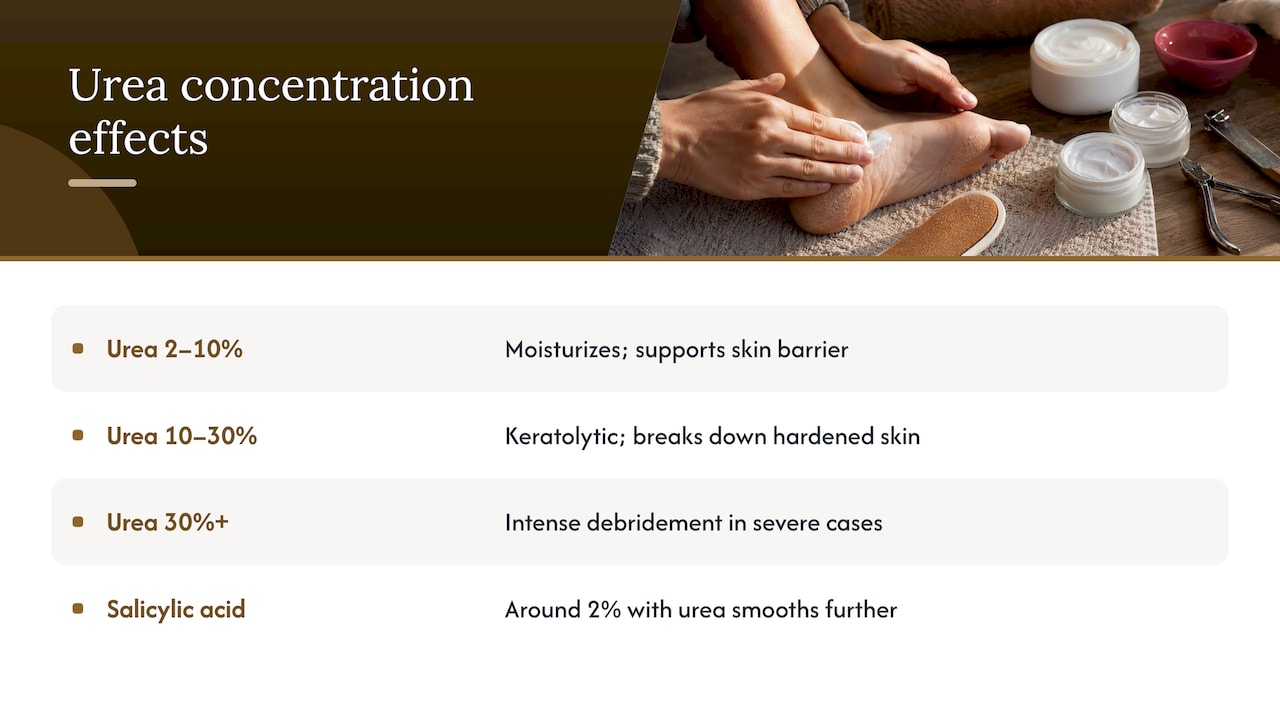
Plain lotion is mostly water and evaporates fast. For deep dryness, thick, occlusive products matter. A review of urea in dermatology describes how concentration changes what urea does: roughly 2 to 10% moisturizes and supports the skin barrier, 10 to 30% acts as a keratolytic that breaks down hardened skin, and 30% and above is used for intense debridement in severe cases. Pairing urea with salicylic acid, often around 2%, helps smooth rough skin further.
That is why the strength of the cream matters more than the scent. If you want to see what a regenerating hand and foot cream looks like, this Thuya cream is one example of the kind of everyday product people use between visits.
Thorough drying between the toes
This is the step people forget. The APMA’s pedicure pointers stress drying carefully between the toes, since trapped moisture raises the risk of athlete’s foot and other fungal infections. The CDC adds that athlete’s foot thrives in warm, dark and moist environments, which is exactly what a damp toe web is.
Massage and sealing
Massage helps the cream work in and, honestly, is the part you remember. A good finish ends with a layer of cream or balm on clean, dry skin, before polish or after, depending on the technician’s routine.
Wet or dry pedicure: which is better for dry skin?
People searching for this often ask whether a dry pedicure beats the classic soak. Here is a fair look.
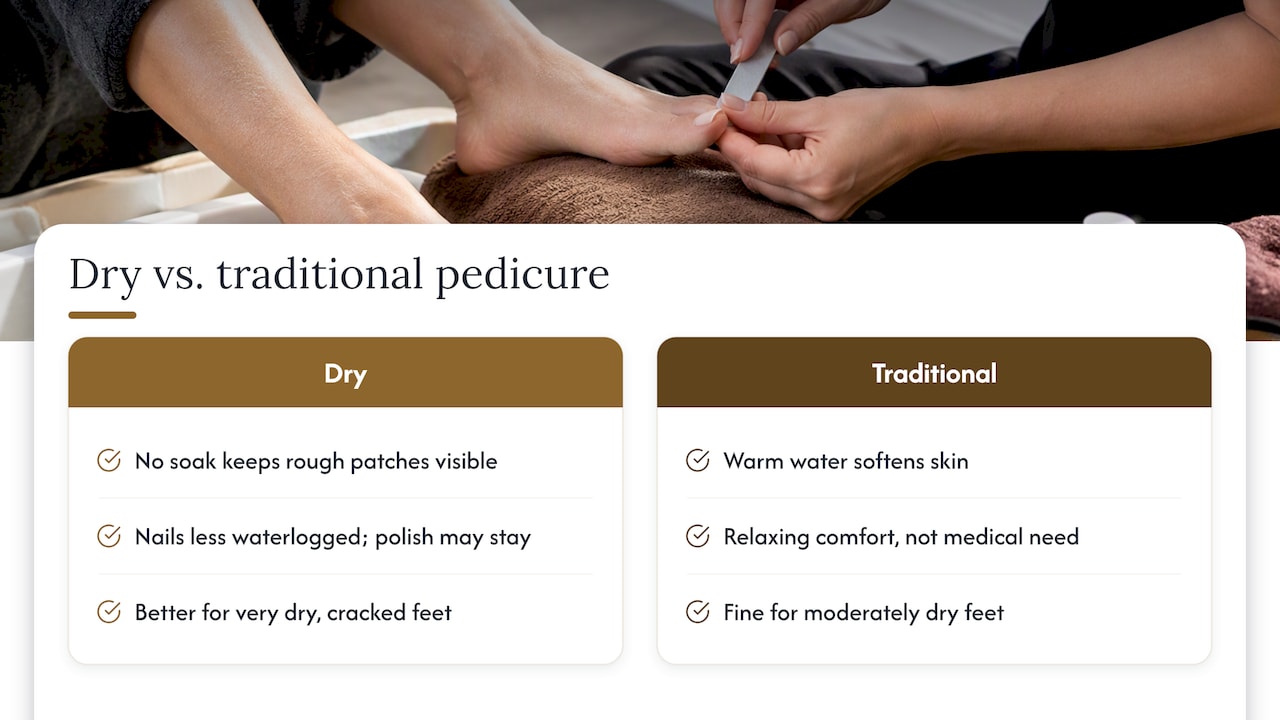
The case for dry (waterless). According to Bustle, skipping the soak lets a technician see where the rough patches really are, because water swells the skin and blurs the line between callus and healthy tissue. The same piece points out that nails are less waterlogged, which can help polish stay put.
The case for the traditional pedicure. Warm water softens skin and is deeply relaxing. The soak is often about comfort more than medical need, and for moderately dry feet that comfort is a fine reason to choose it. A short warm soak at home is a common way to soften skin before you moisturize.
The hygiene question. Shared footbaths need rigorous cleaning. A California study published by the CDC found mycobacteria in 29 of 30 salon whirlpool footbaths swabbed across 18 salons, and the work followed an outbreak of skin infections linked to a salon footbath. That does not mean every salon is unsafe. It means you should choose a place that is open about how it cleans, and you should not get a pedicure if you have open cuts or sores on your legs or feet.
Our practical rule: very dry, cracked or callused feet do well with minimal soaking and more time on skin work and moisturizer. Mildly dry feet are fine with a classic spa pedicure.
Which pedicure to book at Foxy Nails
At Foxy Nails in Reno we offer several levels, so you are not paying for more than your feet need. Prices are as published on our services page.
| Service | Price | Good for |
|---|---|---|
| Pedicure | $25 | Quick maintenance, tidy nails |
| Spa Pedicure | $40 | Mild dryness, tired feet |
| Deluxe Pedicure | $45 | Dry feet that want extra care |
| Foxy Deluxe Pedicure | $55 | Rough heels and a longer treatment |
| Foxy Signature Pedicure | $65 | Our most complete experience |
If your heels are cracked, read our guide to healing cracked heels with a Reno pedicure using urea. For the safety details behind how we work, see our hot towel pedicure routine and why professional foot care matters in Reno.
When you book, tell the technician three things: your feet are dry, whether you have cracks or sore spots, and any health conditions. That lets them choose pressure, tools and cream accordingly.
Who should be careful
Some feet need a medical plan before a salon visit.
- Diabetes or poor circulation. The APMA advises against over-the-counter chemical callus removers for people with diabetes, because they can cause chemical burns or ulcers in compromised skin. See your podiatrist for a foot care plan, and ask whether a gentler salon service is appropriate for you.
- Open cracks that bleed or look infected. Redness, warmth, pus or fever means a doctor, not a pedicure.
- Itchy, scaly, peeling skin between the toes. That can be athlete’s foot. Treat it first.
- Recent shaving or cuts on the lower legs. Wait until they heal.
The aftercare that makes a pedicure last
A pedicure can reset your feet, but daily habits keep them soft. Here is a routine that matches what dermatologists advise.
- Moisturize within five minutes of bathing. The American Academy of Dermatology recommends applying a cream with 10 to 25% urea, an alpha hydroxy acid or salicylic acid right after bathing while skin is still damp.
- Seal it overnight. For very dry heels, the AAD suggests petroleum jelly followed by cotton socks. If you prefer a plant-based option, this five-step shea butter night mask for cracked heels walks through a similar overnight routine.
- Go thick, not light. Heavy, occlusive products such as petroleum jelly or shea-based creams hold water in, while thin lotions evaporate quickly.
- Keep showers lukewarm. Very hot water pulls oil from the skin.
- Dry between your toes every time.
- Wear cushioned, closed shoes and clean cotton socks in the coldest months.
Do not use a razor-style blade on your own heels. If skin is thick enough that you feel tempted, that is what the professional visit is for.
Winter care for hands and feet together
Cold months are hard on cuticles and heels at the same time. If your hands are cracking, a manicure and pedicure on the same visit makes it easy to keep up. Our manicure and pedicure guide covers pairing services, and a Manicure is $15, a Regular Manicure is $30 and a Gel Manicure is $40.
How often should you go? For stubborn dryness, regular visits through winter, with a daily cream in between, keep buildup from returning. Your own skin sets the pace: if heels are smooth and you are moisturizing daily, you can stretch the visits out.
A word from our team
We see the same pattern every autumn in Reno: someone comes in with heels that feel like sandpaper and says they have tried every lotion. Most of the time, the problem is not the product, it is the order and the consistency. Skin work first, then a rich cream, then a daily habit. Our view is that a pedicure should feel pampering and also leave your feet healthier than it found them, which is why we explain what we are doing and ask about your skin before we start. Clients who book for children or bring the family get the same careful approach, just gentler.
— Cuong
Book your pedicure at Foxy Nails
If your feet are dry, we will match you to the right level, from the $40 Spa Pedicure to the $65 Foxy Signature Pedicure, and add a nail service if you want one. See every service and price on our services page, or head to the Foxy Nails home page to get started. Gift cards are available too, which makes a pedicure an easy present.
FAQ
What is the best pedicure for very dry feet?
Choose a spa-style pedicure that includes careful callus smoothing and a thick urea-based cream or occlusive balm, with limited soaking. The more cracked the heels, the more time the technician should spend on skin rather than polish. Mention cracks and any medical conditions when you book.
Is a dry pedicure better than a wet one?
It depends on your priorities. Dry pedicures let technicians see rough patches clearly and avoid shared footbath water, while a classic pedicure adds comfort and relaxation. For severe dryness, less soaking and more moisturizing is a sensible choice.
What is the best remedy for extremely dry feet?
Moisturize right after bathing with a cream containing urea, an alpha hydroxy acid or salicylic acid, then seal it with petroleum jelly and cotton socks at night. If cracks bleed, look infected or do not improve, see a dermatologist or podiatrist.
Is a pedicure good for your feet?
A clean, careful pedicure can remove dead skin, keep nails tidy and help you spot problems early. A poorly sanitized one, or one with aggressive cutting, can do harm. Pick a salon that explains its cleaning process and tell the technician about diabetes or circulation issues.
How much does a pedicure cost at Foxy Nails?
Our pedicures range from $25 for a Pedicure to $65 for the Foxy Signature Pedicure, with the Spa Pedicure at $40, Deluxe at $45 and Foxy Deluxe at $55. Current prices are on our services page.
Sources
- Cold-weather skin tips for the Reno-Tahoe fall, Reno Tahoe Dermatology
- Corns and calluses, APMA
- Urea in dermatology review, PMC
- Pedicure pointers, APMA
- Foot hygiene, CDC
- Dry pedicures, Bustle
- Mycobacteria in nail salon whirlpool footbaths, CDC Emerging Infectious Diseases
- Dry heels, American Academy of Dermatology