
Most early gel polish peeling comes down to prep or curing mistakes, not a bad batch of polish. If you catch a small edge lift, stop picking at it and protect the nail with a bandage or light tape until you can address it. For anything larger than a tiny chip, skip the DIY fix and book professional removal. This guide covers causes, safe repair, prevention, and when peeling signals something you should get checked.
TL;DR:
- Peeling primarily results from improper preparation or curing errors, such as oils on nails or under-powered lamps, rather than bad polish batches.
- Manually peeling lifted gel damages the nail plate, causing thinning and increasing long-term risks, so professional removal is highly recommended for larger lifts.
- Proper application techniques, including thin coats, capping edges, and correct curing, significantly extend gel polish wear time and prevent early lifting.
- Repeated exposure to improper removal or contact with uncured gel can lead to allergic reactions and long-term nail damage.
- A flexible base coat and avoiding aggressive DIY repairs are key for nails prone to chronic lifting and damage.
Table of Contents
- Why does gel polish peel? Common causes explained
- How to repair peeled or lifting gel polish safely right now
- How to prevent gel polish peeling next time
- Safety, allergies, and long-term nail health: when to stop gel services
- Salon perspective: what technicians actually do to stop peeling
- Foxy Nails: book professional removal or a corrective gel manicure
- FAQ
- Sources
Why does gel polish peel? Common causes explained
Peeling almost always starts with something that happened before the polish ever cured. Natural oils, lotion residue, or even touching the nail bed after cleaning can create a barrier that stops gel from bonding to the nail plate. Unpushed cuticles leave a ledge where polish sits on dead skin instead of nail, and that edge is often the first place to lift.
Application errors make things worse. Flooding the cuticle with polish traps product against skin that will eventually shed, taking the gel with it. Coats applied too thick cure unevenly from the outside in, leaving a soft, weak layer underneath. Skipping the step of capping the free edge, which means sealing polish over the tip of the nail, leaves an open seam where water and friction can work their way under the color.
Curing problems compound the issue. An under-powered or outdated lamp, the wrong lamp type for the product, or rushing the cure time all leave the gel only partially polymerized. That soft, tacky layer never fully hardens, so it peels at the first snag.
- Oily or unprepped nails block adhesion before application even starts.
- Thick coats and flooded cuticles trap weak spots under the surface.
- Under-curing or mismatched lamp wattage leaves gel chemically unfinished.
- Old or incompatible base and color systems can separate from each other over time.
Industry guidance on acrylates and under-curing notes that incomplete curing doesn’t just cause peeling, it also leaves active, uncured acrylates on the surface longer, which raises the odds of skin sensitization over repeated services.
How to repair peeled or lifting gel polish safely right now
Picking at lifted gel is the single worst thing you can do. Research on nail plate changes after gel removal found that manual peeling is strongly linked to measurable thinning of the nail plate, with a significant majority of users reporting changes to their nails after incorrect removal. Every time you rip off a lifted section, you pull away layers of your natural nail along with it.
For a small edge lift with no pain, redness, or odor, you can try a conservative fix:
- Wash and dry the nail, then gently buff just the lifted area to remove loose polish.
- Wipe with isopropyl alcohol to remove dust and oil.
- Apply a thin layer of base coat, fully covering and capping the free edge.
- Cure according to the product’s instructions.
- Add a thin top coat, cap the edge again, and cure fully.
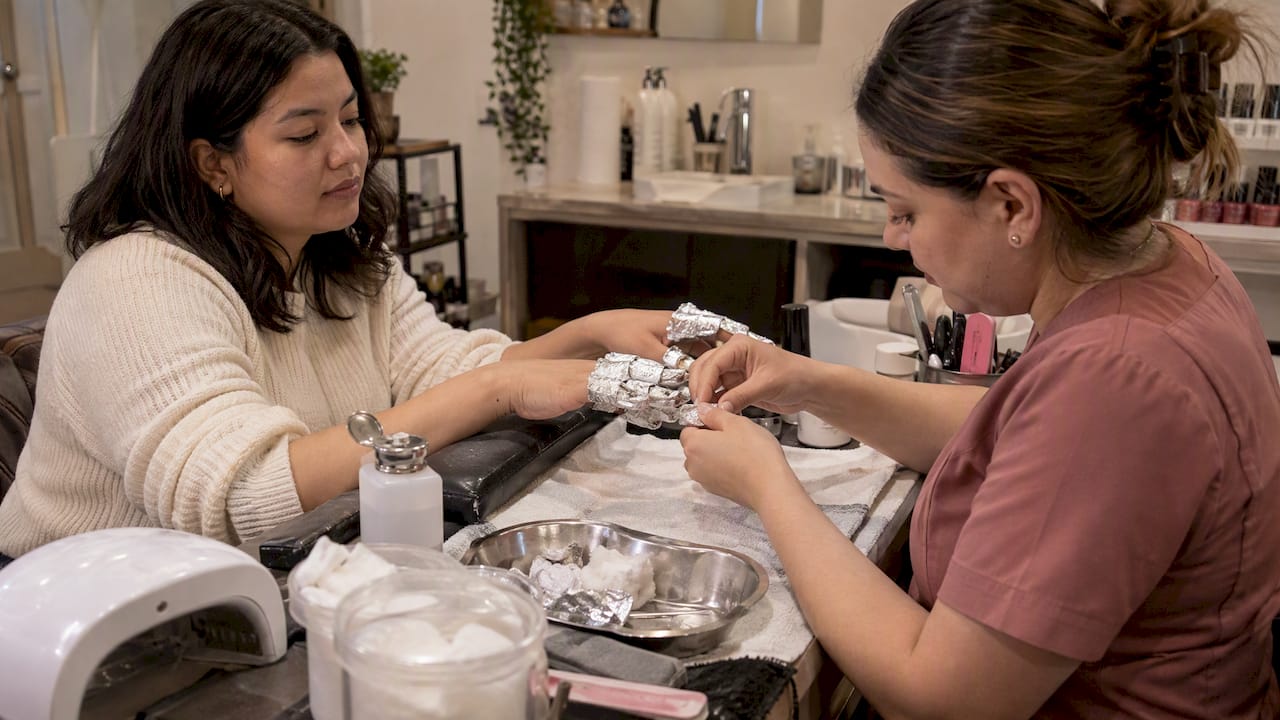
If more than a quarter of the nail is lifted, or you see multiple nails affected, soak cotton in acetone, place it over the nail, and wrap with foil for 10 to 15 minutes rather than prying the gel off. Never force a peel; if it resists, soak longer.
Pro Tip: If a lift is near the cuticle and feels tender, stop and let a technician handle removal. Tender skin under lifted gel can mean early irritation, not just a cosmetic issue.
Seek professional removal or medical care if you notice pain, swelling, discoloration, or a foul odor. Those are signs of possible infection, not routine wear.
How to prevent gel polish peeling next time
Prevention starts before the first coat goes on. A clean, dry, properly prepped nail holds gel far longer than one that’s rushed. Most of what causes early lifting starts at the cuticle, so that’s the first place to get right.
- Push back cuticles, remove surface oil, and lightly buff the nail plate before anything else.
- Use a dehydrator or primer when your nail type calls for it, especially on oily or ridged nails.
- Apply thin coats only, capping the free edge on every single layer.
- Avoid flooding polish into the cuticle fold, which traps weak, poorly adhered product.
- Match your base coat and top coat to the same product system rather than mixing brands.
Curing deserves the same attention as application. Use the lamp type specified for your product, follow the manufacturer’s cure time exactly, and cure each thin coat on its own rather than stacking layers and curing once at the end.
Aftercare matters just as much as the appointment itself. Limit prolonged water exposure and harsh cleaning chemicals, apply cuticle oil daily to keep the surrounding skin flexible, and book a fill before damage becomes visible rather than waiting for a full lift.
| Prevention step | What it does |
|---|---|
| Push back cuticle, remove oil | Creates a clean bonding surface |
| Cap free edge every coat | Seals the seam against water and friction |
| Cure each coat fully, correct lamp | Ensures complete polymerization |
| Daily cuticle oil, limit soaking | Keeps surrounding skin flexible, reduces lift |
| Rubber or flexible base for flexible nails | Reduces stress at the nail edge |
If you deal with chronic lifting despite good prep, a rubber or flexible base formulated for bendier nails can help, and switching systems occasionally can rule out product incompatibility.
Safety, allergies, and long-term nail health: when to stop gel services
Gel services carry two real risks beyond peeling: allergic contact dermatitis and cumulative mechanical damage from removal. A systematic review on gel polish side effects found allergic contact dermatitis in 70.5% of reported complications and mechanical nail disorders in 26.1%, with allergic symptoms often appearing after months or years of repeated exposure rather than immediately.
Dermatology literature consistently points to removal technique, not the gel formula itself, as the more common explanation for nail thinning and damage complaints.
A separate systematic review in the Journal of Cosmetic Dermatology reached a similar conclusion: professional application and removal, paired with reader education, reduce the rate of these complications. Watch for itching, redness, or swelling around the nail fold within one to four weeks of a new product; that timeline often points to a developing gel nail allergy rather than a one-time irritation. A simple patch test before a new product can catch sensitivity early.
Protect yourself by avoiding skin contact with liquid gel, asking your technician about e-file and curing controls before a service, and choosing professional soak-off removal over picking or peeling at home.
Salon perspective: what technicians actually do to stop peeling
Most peeling we see traces back to capping and curing, not the polish itself. Before any gel service, ask what lamp your tech uses, whether every coat gets capped at the free edge, and what their removal process looks like. A proper soak-off, not peeling, is what actually breaks the damage cycle and lets your natural nail recover between services.
— Cuong
Foxy Nails: book professional removal or a corrective gel manicure
Peeling gel usually means the removal was rushed or the application skipped a step, and that’s exactly what a proper salon visit corrects. Foxy Nails offers professional gel removal and corrective gel services built around full soak-off technique, capping on every coat, and flexible base options for nails prone to lifting.

A typical corrective appointment includes:
- A full nail inspection to check for thinning or irritation before any product goes on.
- Safe acetone soak removal instead of peeling or filing off old gel.
- Nail repair and strengthening recommendations where needed.
- A flexible base option for nails that lift chronically.
If your last manicure peeled within days, book a visit to have it assessed and redone right.
This article is general information, not a substitute for advice from a qualified doctor. Consult a qualified healthcare professional about your own circumstances before acting on anything here.
FAQ
Is peeling gel polish bad for your nails?
Peeling itself usually isn’t dangerous, but picking at it is: manual peeling is linked to measurable nail-plate thinning in clinical data on removal-related damage. The polish separating is a sign of a prep or curing problem, while the real harm comes from forcing it off.
How can I fix peeling gel nails?
For a small edge lift, gently buff the area, wipe it clean, and reapply a thin, fully cured base and top coat with the free edge capped. For larger lifts, soak the nail in acetone with a wrapped cotton pad rather than prying the gel away, or have it removed professionally.
Why does my nail polish always peel off after 2 days?
Peeling that fast almost always points to under-curing, skipped capping, or oil left on the nail before application. Industry guidance on acrylate curing notes that incomplete cures leave a soft, weak layer that lifts at the first contact with water or friction.
How long should gel polish last before peeling?
A gel manicure done with proper prep, thin capped coats, and full curing can reasonably last a few weeks before any natural regrowth lifting appears at the base. Peeling well before that window usually signals an application or curing issue rather than normal wear.
Sources
- Nail plate changes after gel polish removal — PubMed Central (PMC)
- The Nail Tech’s Guide to Chemistry: Acrylates, Under-Curing, and the Lifelong Risk of Allergies | Nails Magazine
- Dermatologic Conditions Associated With Various Types of Popular Nail Cosmetics: A Systematic Review – Journal of Cosmetic Dermatology
- Side effects of gel nail polish: A systematic review