
For most nail biters, the fastest practical result comes from pairing a short protective manicure or press-ons with a bitter-tasting polish and habit-reversal steps. Dermatology guidance from the American Academy of Dermatology backs aversive polish as a deterrent, and a clinical review of onychophagia supports combining a physical barrier with behavior training. We see this combination work in the salon chair more often than any single fix alone.
TL;DR:
- Request a short Gel X or hard gel overlay, minimal buffing, and pushed back cuticle care; schedule fills every two to three weeks.
- Fit press on nails to your natural nail width, keep them short, soak them off rather than peel, and refresh bitter polish every few days.
- Habit reversal training has the strongest support: track when and where you bite for a week, then use a competing response when urges arise.
- Keep nails short, moisturize surrounding skin, and see a dermatologist for nail lifting, persistent discoloration, or pain rather than continuing home treatment.
- If biting persists or occurs alongside anxiety, skin picking, or hair pulling, consult a therapist trained in cognitive behavioral therapy or habit reversal.
Table of Contents
- Salon solutions that help nail biters
- At-home protective and deterrent options
- Behavioral and clinical approaches that break the habit
- Healing damaged nail beds and the surrounding skin
- What our technicians recommend for nail biters
- A technician’s note on working with nail biters
- How Foxy Nails supports nail biters through recovery
- FAQ
- Sources
Salon solutions that help nail biters
A short, well-built overlay gives biters something they cannot easily tear with their teeth, and it buys the natural nail time to grow out undamaged. The best choices tend to be short Gel X, short hard-gel overlays, or a soak-off gel set kept close to the fingertip rather than extended into a long shape. Length is the variable that matters most: short sets give less leverage to pry at, which lowers the chance of lifting the nail from its bed.
When you sit down for a consultation, a few specific requests make a real difference:
- Ask for minimal buffing on the natural nail plate, since over-thinning weakens it further.
- Request a short length rather than a fashion length, especially for the first few sets.
- Say no to cuticle trimming if your cuticles are already irritated from biting, and ask for pushed-back cuticle care instead.
Fills every two to three weeks keep the barrier intact without letting product grow out far enough to catch and lift. A tech can also check for warmth, redness, or a foul odor under the product at each visit, all signs that something needs attention before the next scheduled fill. Our guide to short acrylics walks through what to ask for at that first appointment.
Pro Tip: Bring a photo of your natural nail shape before it got damaged. It helps your technician plan a shape that protects the weak spots first.
At-home protective and deterrent options
Between salon visits, press-ons and bitter polish do most of the work. Used correctly, they create both a physical barrier and an unpleasant taste that interrupts the automatic reach-to-mouth habit.
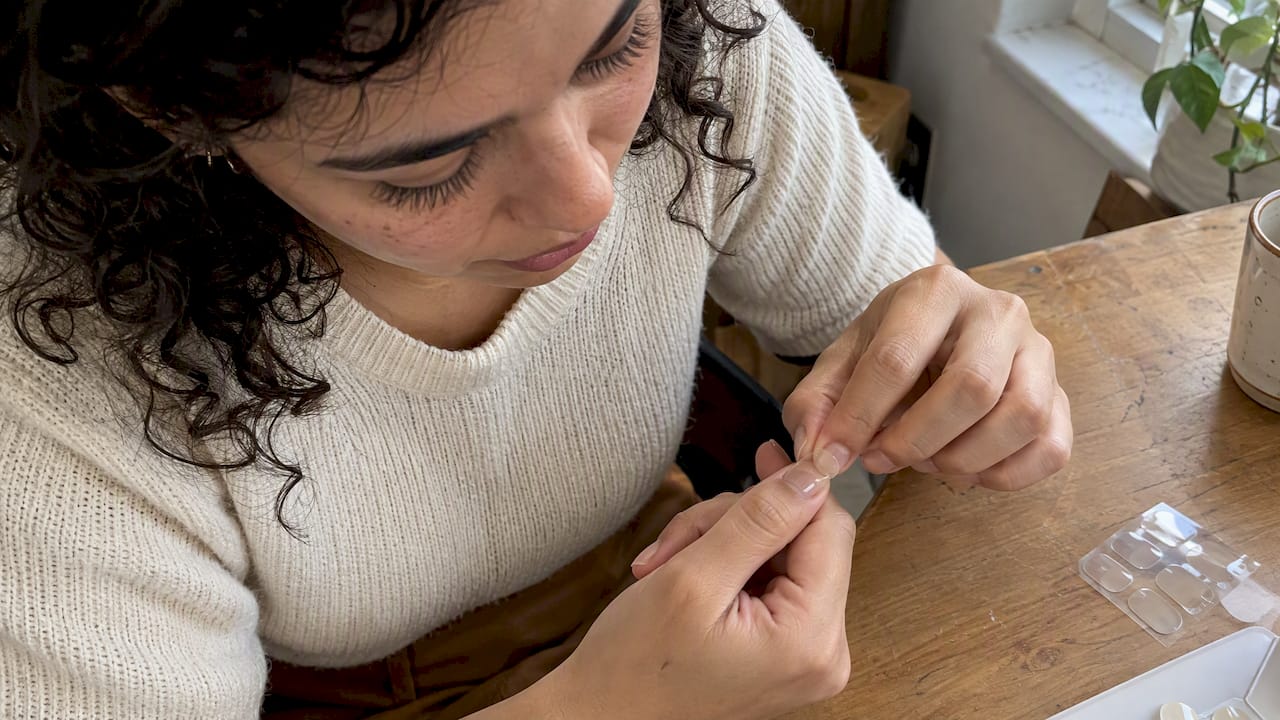
- Size press-ons to your actual nail width, not a slightly smaller or larger tab, since a poor fit gives you an edge to pick at.
- Clean and dry the natural nail before application, then keep lengths short for the first several sets.
- Reapply bitter-tasting polish regularly every few days, since the taste fades with hand washing and friction.
- Remove press-ons gently with a soak rather than peeling, and check the nail bed underneath for lifting before reapplying.
Denatonium benzoate is the compound most bitter nail polishes rely on, and dermatology guidance lists it as a practical over-the-counter deterrent. It works as an immediate sensory reminder rather than a cure, so it tends to work best alongside a physical barrier.
Transparent nail stickers or a simple fingertip bandage can also interrupt the habit discreetly during a stressful meeting or a long drive. Watch for warmth, swelling, or pus around the nail fold, and keep the area dry between showers since trapped moisture under a lifted press-on is where infection tends to start.
Behavioral and clinical approaches that break the habit
Barriers buy time, but the habit itself usually needs direct attention. Habit-reversal training (HRT) is the approach with the most support, and it starts with noticing the behavior before acting on it.
- Spend one week just tracking when and where you bite, without trying to stop yet.
- Pick a competing response, like pressing your thumb against your palm, to use the moment you notice the urge.
- Tell a friend or partner what you’re working on so they can give you a quiet signal when they catch you mid-habit.
Stimulus control works alongside HRT: keeping nails trimmed and filled removes the rough edges that invite picking, and swapping triggers (a stress ball at your desk, gum during a commute) removes the opportunity itself. The clinical review on onychophagia notes that combined approaches, stimulus control plus HRT, plus where needed, a nonremovable reminder, tend to outperform any single method.
If biting continues despite these steps, or if it’s tied to anxiety, skin-picking, or hair-pulling, a referral to a therapist trained in CBT or habit-reversal protocols is a reasonable next step. The same review describes N-acetylcysteine as a second-line option studied for body-focused repetitive behaviors, with limited evidence so far. Talk to a clinician before starting it, since dosing and suitability vary by individual.
Pro Tip: Pair your competing response with the moment you reach for your phone. That’s when most people catch themselves biting without noticing.
Healing damaged nail beds and the surrounding skin
Recovery is a daily habit, not a one-time fix.
- Trim and file nails short every few days to remove snag points before they tempt you to bite them off.
- Moisturize cuticles and the surrounding skin with hand cream or cuticle oil daily, and leave cuticles alone rather than cutting them.
- If skin around the nail is raw, a brief antiseptic soak once or twice a week helps, but stop home treatment if redness spreads or doesn’t improve within a few days.
- Watch for onycholysis (the nail lifting from its bed), persistent discoloration, or pain, all reasons to see a dermatologist rather than keep treating it yourself, per Mayo Clinic guidance.
An occasional light manicure, gel polish without heavy filing, protects the cosmetic appearance of regrowing nails without adding more mechanical stress. Our routine for strengthening natural nails covers the at-home side of this in more detail. For dry, cracked skin around the cuticles between visits, a water-free tallow-based hand repair cream is a simple option worth trying.
What our technicians recommend for nail biters
We keep first sets short and avoid heavy buffing on nails that show obvious biting damage, since delicate nails need gentler prep, not more of it.
- We favor short Gel X or hard-gel overlays over long acrylic for first-time biter clients.
- We recommend a gel polish add-on over bare polish since it holds up better against light picking.
- We check for warmth or tenderness at every fill before adding new product.
- We suggest cuticle oil between visits rather than a cuticle trim, especially on irritated skin.
Pro Tip: Tell your technician upfront that you’re a biter. It changes how we shape, buff, and schedule your fills.
A technician’s note on working with nail biters
We see a wide range of biting habits come through our chairs, and most clients improve once they pair a protective set with something behavioral, not either alone. There’s no shame in starting small. A short, low-maintenance set and a two-week check-in is often enough to build momentum.
— Cuong
How Foxy Nails supports nail biters through recovery
We build short, protective sets specifically for clients working through a biting habit, using gentle prep and realistic maintenance schedules rather than aggressive filing.
- Short Gel X or hard-gel full sets for a durable first barrier.
- Gentle gel manicures when nails are too short or raw for extensions.
- Refill and fill-in appointments every two to three weeks to protect new growth.
Ask for short length and minimal filing when you book. View our full services and pricing to find the right starting point.
This article is general information, not a substitute for advice from a qualified doctor. Consult a qualified healthcare professional about your own circumstances before acting on anything here.
FAQ
What to put on nails to keep from biting?
A bitter-tasting polish containing denatonium benzoate is the main over-the-counter deterrent dermatologists recommend, since the taste interrupts the habit the moment you bite. Reapplying every few days keeps it effective, and pairing it with a short protective set gives better results than either alone, per AAD guidance.
Do biting nails shorten nail beds?
Chronic biting can damage the nail bed and surrounding tissue, which sometimes makes nails appear shorter or misshapen as they grow back. The clinical review on onychophagia describes this kind of nail-matrix change as a reason some cases need dermatology follow-up.
Do nail biters have a stronger immune system?
There’s no credible evidence supporting this claim, and it isn’t addressed in dermatology or clinical sources on nail biting. Biting nails more commonly introduces bacteria into small skin breaks, which raises infection risk rather than building immunity.
Can you put false nails on bitten nails?
Yes, short false nails or press-ons can work well on bitten nails, but keeping them short reduces the leverage that leads to lifting and nail-bed damage, according to Cleveland Clinic. A professional application with gentle prep lowers the risk further compared with applying a long set at home.
Sources
- Stop biting nails | American Academy of Dermatology (AAD)
- Update on diagnosis and management of onychophagia and onychotillomania — PMC (clinical review)
- Potential risks of using press-on nails — Cleveland Clinic newsroom