
Keep your feet dry for the first few days after a pedicure. Skip the pool, the hot tub, and the bath, and don’t push or pick at the polish while it finishes setting. Wear open-toe shoes or sandals home, wait a couple of hours before applying cuticle oil, and stay out of anything that makes you sweat heavily. That’s it. Everything else is maintenance, and Foxy Nails builds its aftercare advice around exactly this window.
TL;DR:
- Staying out of water, avoiding hot tubs, and not pushing or picking at the polish during the first 24 to 48 hours minimizes infection risk and polish damage.
- Wearing open-toe shoes or sandals and thoroughly drying feet after water contact helps prevent bacterial and fungal infections during the vulnerable post-pedicure period.
- Reapplying topcoat every three to four days, avoiding hot showers, and choosing roomier shoes extend the pedicure’s appearance by preventing early chipping.
- Using sterilized tools, monitoring for signs of infection, and skipping fish pedicures significantly reduce the risk of contamination and transmission of bacteria or fungi.
- Waiting two to three hours after a pedicure before applying cuticle oil allows the nail fold to settle, and regular foot hygiene reinforces long-lasting results.
Table of Contents
- The 0-72 Hour Window: What to Do and What to Avoid
- Your First Week: Daily Foot Care After a Pedicure
- How to Make a Pedicure Last Longer
- Signs of Infection After a Pedicure: When to See a Doctor
- Salon Hygiene: What to Check Before Your Next Pedicure
- Foxy Nails’ Tips for Longer-Lasting Results
- Why This Simple Routine Matters
- Ready for a Professional, Aftercare-Friendly Pedicure?
- Sources
- FAQ
The 0-72 Hour Window: What to Do and What to Avoid
Right after a pedicure, your skin is softer than usual and your cuticles have just been trimmed or pushed back. That combination creates what foot care specialists call a vulnerability window, roughly 24 to 48 hours where the nail fold’s natural protective barrier hasn’t fully closed back up. Dermatologists note that this is the period when bacteria and fungi have the easiest access, and moisture only extends how long it stays open.
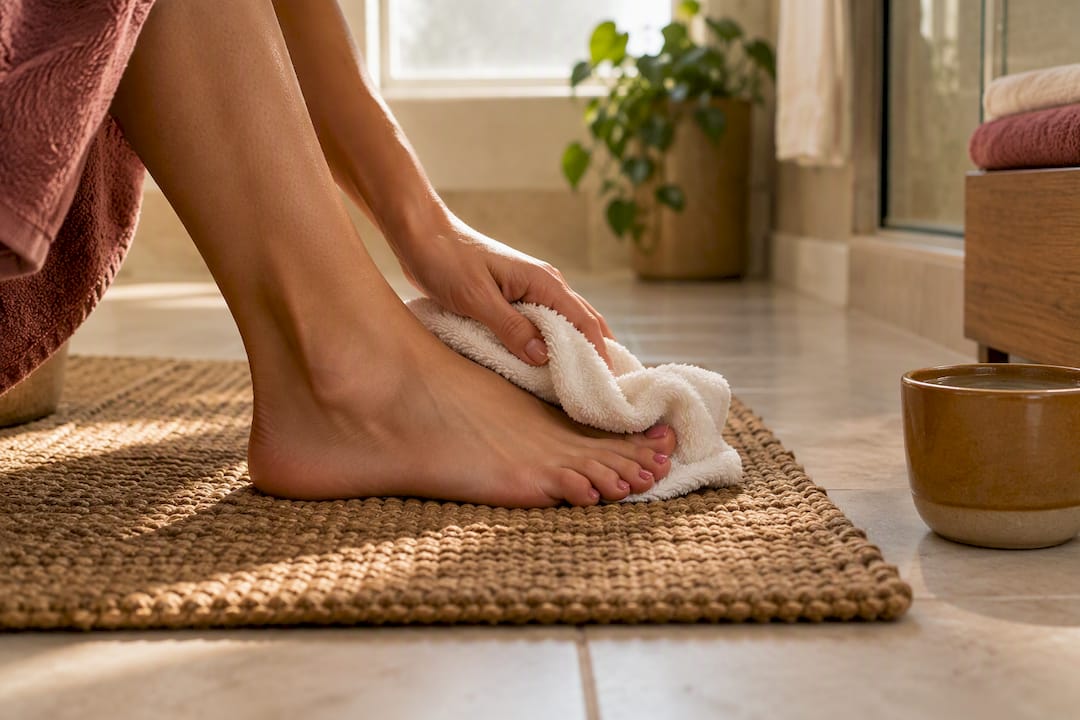
Polish needs real time to cure fully, not just feel dry to the touch.
Do this:
- Wear open-toe shoes, slides, or flip-flops for at least the first day.
- Pat feet thoroughly dry after any water contact, especially between the toes.
- Wait a couple of hours before applying cuticle oil.
- Keep your feet elevated and relaxed if you can, which reduces smudging risk.
Skip this:
- Baths, pools, hot tubs, or long showers that soak the skin.
- Workouts that cause heavy sweating or friction inside shoes.
- Picking at the polish edge or pushing cuticles back yourself.
- Tight, closed-toe shoes or boots.
Pro Tip: If you have to wear closed shoes the same day, size up and slip in a thin sock, that tiny buffer prevents the smudge marks that ruin a fresh coat faster than anything else.
Your First Week: Daily Foot Care After a Pedicure
The first week is where good habits either lock in the results or undo them. Keep the routine simple and repeat it daily.
- Wash gently. Use warm, not hot, water and a mild soap. Hot water strips moisture and can soften polish edges.
- Dry thoroughly. Pat between every toe. Damp spaces between toes are exactly where fungus takes hold, which is why the CDC’s foot hygiene guidance puts drying front and center.
- Moisturize the right way. Apply lotion to the tops and soles of your feet, but avoid the skin directly between toes, FootCareMD advises keeping that area drier to prevent fungal growth.
- Oil the cuticles. A small drop of cuticle oil once a day keeps the nail fold flexible without soaking the polish.
- Check your nails. Wipe away excess lotion before it pools around the nail bed, and file any snags with a fine emery board rather than clippers.
If you have diabetes or a circulation issue, inspect your feet every day for cuts, redness, or numb spots, and talk to your doctor before your next salon visit if you notice anything unusual.
How to Make a Pedicure Last Longer
A pedicure that looks fresh after three weeks instead of one comes down to a handful of small choices, not luck.
- Reapply topcoat every 3 to 4 days. A thin layer seals chips before they spread and restores shine without a full redo.
- Avoid hot showers on bare feet. Heat softens polish and speeds up peeling at the tips.
- Choose roomier shoes for the first week. Pressure at the toe box is the number one cause of early chipping.
- Stop picking. Even one lifted edge invites your fingernail to keep working at it until the whole thing peels.
- Book touch-ups, not full redos, for small chips. A single-nail fix takes minutes; a full pedicure just for one flaw is overkill.
Pro Tip: Keep a mini topcoat bottle in your bag. A 30-second swipe over dry, clean nails every few days does more for longevity than any expensive polish brand.
Signs of Infection After a Pedicure: When to See a Doctor
Most pedicures heal without incident, but knowing the warning signs matters. Contact a doctor promptly if you notice:
- Spreading redness, warmth, or swelling around the nail
- Pus, a red bump that grows into a boil, or increasing pain
- Fever along with any foot symptoms
- Discoloration or texture changes in the nail appearing two to six weeks later, which often points to a fungal infection rather than a bacterial one
People with diabetes or a suppressed immune system need to treat any cut, scrape, or nail injury as urgent. Medical guidance on diabetic foot care is clear that self-treating a wound in that situation carries real risk, and prompt medical attention is the safer call every time. When you do see a clinician, mention the date of your pedicure and which salon performed it. That detail helps them narrow down the cause faster.
Salon Hygiene: What to Check Before Your Next Pedicure
Infection risk starts at the tool tray, not at home. Metal implements should go through an autoclave between clients, and basins should use disposable liners or be pipeless entirely, both remove the biofilm buildup that regular wiping can’t reach.
- Ask what sterilizes their metal tools before your service starts.
- Ask whether the basin uses a liner or is pipeless.
- Request no aggressive cuticle cutting, gentle pushing back is enough for most nail beds.
- Bring your own file and buffer if you want zero shared-tool contact.
- Skip fish pedicures entirely. The CDC states plainly that the fish tanks used for this treatment cannot be effectively disinfected between clients.
Bringing your own sterilized implements is arguably the single biggest lever you control, since it removes the highest-risk transmission point in the entire service.
Foxy Nails’ Tips for Longer-Lasting Results
It is recommended to wait until the cuticle area has settled, usually a couple of hours, before applying oil at home, and to use a lighter touch with gel polish since it needs a slightly longer window to fully harden than standard lacquer.
- Shave your legs the night before your appointment, or wait a full day afterward, small nicks near a pedicure are an easy entry point for bacteria.
- Runners and anyone on their feet all day should ask for a straight-across toenail trim to reduce ingrown nail risk between visits, a detail covered in our pedicure guidance for runners.
- Space full pedicures roughly eight weeks apart, matching the interval FootCareMD recommends, and use quick touch-ups in between.
Why This Simple Routine Matters
Most problems I see traced back to a pedicure come from one of two habits: soaking feet again too soon, or letting someone dig too aggressively at the cuticle. Neither takes much to fix. Pick a salon that handles sterilization seriously, then give your feet a few quiet days at home. That combination does more than any product on a shelf.
— Cuong
Ready for a Professional, Aftercare-Friendly Pedicure?
Choosing a local nail salon alternative to discount chains ensures technicians can walk you through exactly what to ask for, gentle cuticle care, a proper soak time, and sterilized tools, so your aftercare routine starts on solid ground instead of playing catch up.

If you prefer professional care over guesswork, book a Spa Pedicure or check the full menu of pedicure options, from the Deluxe Pedicure to the Foxy Signature Pedicure, and mention at booking if you’d like a lighter cuticle treatment or your own tools used. Families are welcome too, our manicure and pedicure services for the whole family cover gentle options for kids alongside the adult menu. Call or book online, and let the technician know your aftercare preferences before your appointment starts.
Sources
- Artificial nails: Dermatologists’ tips for reducing nail damage (AAD)
- Tips for safe pedicures | FootCareMD
- Foot hygiene | CDC
- Preventing fungus after a pedicure | The Toenail Clinic NYC
FAQ
How Much Do You Tip for a $40 Pedicure?
A standard tip runs 15 to 20% of the service price, so a $40 pedicure typically gets a tip proportional to that percentage. Adjust upward if you added services like gel polish or nail art, since technicians spend more time on the extra work.
What Should You Not Do Before a Pedicure?
Don’t shave your legs right before the appointment, since small nicks create an infection entry point once your feet are soaking. Also skip shaving calluses yourself and avoid applying lotion right beforehand, since it can interfere with polish adhesion.
How Often Do You Really Need a Pedicure?
Spacing pedicures about eight weeks apart matches how long toenails take to grow out and matches most foot care specialists’ recommendation. Between full appointments, a quick topcoat refresh every few days keeps the polish looking fresh.
What Is the Best Thing to Soak Your Feet In for a Pedicure?
A plain warm water soak for about 10 minutes is enough to soften skin safely, according to foot care specialists. Avoid harsh additives or overly hot water, which can dry skin out or irritate small cracks you may not notice.
How Long Should I Wait to Apply Cuticle Oil After a Pedicure?
Wait two to three hours after your pedicure before applying cuticle oil, giving the nail fold time to settle first. After that initial wait, a small daily drop keeps cuticles flexible without disturbing fresh polish.