
Oval, almond, and squoval are the three most versatile nail shapes because they flatter nearly every hand type while staying practical for daily life. The rule for picking one: match the shape to your nail-bed width, your finger length, and how hard you are on your hands day to day. If you type all day, garden, or wrangle toddlers, start with round, squoval, or short oval, using pre-made nail art stickers and embellishments to add effortless style. If you want more drama, coffin and stiletto look incredible but need extensions and more upkeep to hold their shape safely.
- Wide or short nail beds: round, squoval, or oval
- Long, narrow beds: square, almond, or coffin
- Active hands or first-timers: squoval, round
- Willing to commit to fill appointments: almond, coffin, stiletto
Salon pros consistently point to oval and almond as the most universally flattering shapes because both elongate the finger regardless of hand size.
Key Takeaways
Choosing the right nail shape depends on matching your nail-bed width, finger length, and lifestyle to a shape’s maintenance demands, then filing or requesting it with the correct tools and angle.
| Point | Details |
|---|---|
| Start with versatile shapes | Oval, almond, and squoval flatter the widest range of hands and nail-bed widths. |
| Match shape to lifestyle | Hands-on work favors round or squoval; low-activity hands can carry almond or coffin. |
| Use the right file grit | Shape with 180 grit, smooth the edge with 220 grit or higher, always in one direction. |
| Extensions unlock drama | Coffin and stiletto usually need Gel X or acrylic extensions to hold their shape safely. |
| Reinforce tapered shapes | Builder gel or acrylic overlay at the stress point reduces breakage on almond, coffin, and stiletto. |
Table of Contents
- Nail Shapes Guide: What Each Shape Looks Like and Who It Suits
- How Do You Choose the Right Nail Shape for Your Hands?
- How to File Your Nails Into Each Shape, Step by Step
- Which Nail Shapes Work Best for Short Nails?
- How Long Do Different Nail Shapes Last?
- How Foxy Nails Approaches Nail Shape and Extensions
- What Actually Matters When Choosing a Nail Shape
- Sources
Nail Shapes Guide: What Each Shape Looks Like and Who It Suits
Before you can pick a shape, it helps to know what you are actually looking at. Nail shape terminology gets thrown around loosely at salons and on social media, so here is the real breakdown of what each one looks like, who it works best for, and how much upkeep it demands.
Round nails follow the natural curve of your fingertip with no straight edges at all. It is the lowest maintenance shape in this whole guide and the one most likely to grow out without needing a fix. Round works especially well on short nails and hands that see a lot of physical work, since there is no pointed tip to catch or chip.
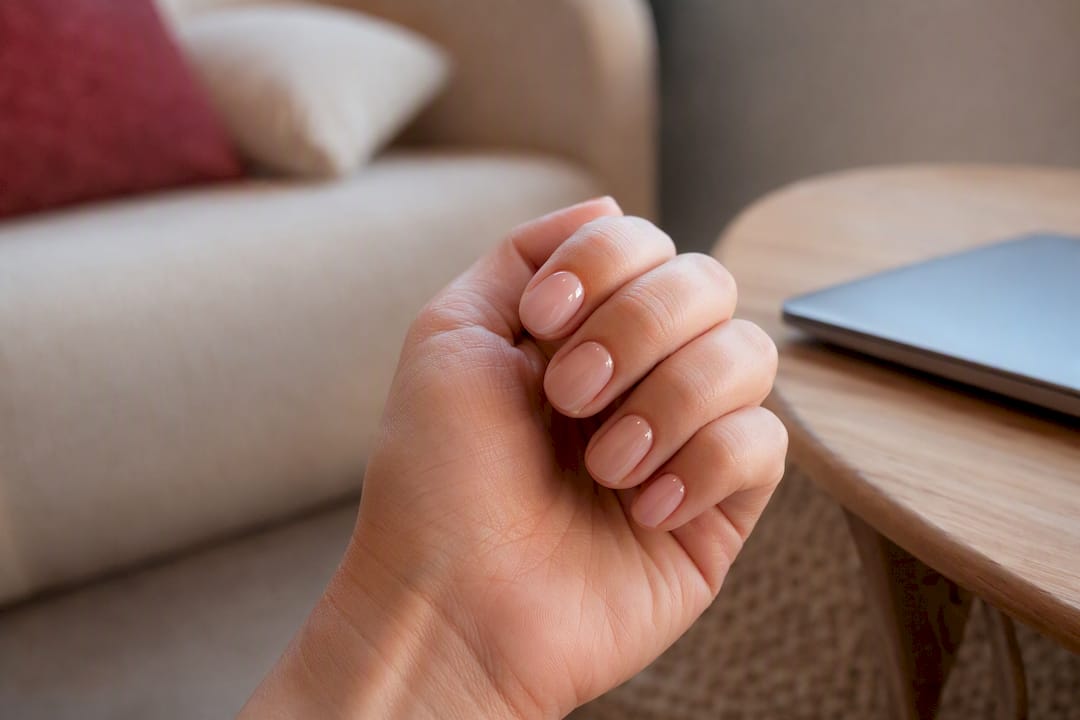
Square nails have a flat top edge and straight sides that meet at sharp corners. This shape reads clean and modern, but it needs a fairly long, narrow nail bed to look proportional. Corners are the weak point. They chip more than any other part of a square nail, so expect touch-ups sooner than with rounder shapes.
Squoval blends square and oval by keeping the flat top but softening the corners into a gentle curve. Guides consistently list round, square, oval, almond, and squoval as the core shapes that most clients request, and squoval earns its spot because it suits almost any hand while resisting snags better than a true square. It is also one of the most durable hybrids for grow-out, which makes it a smart default when you are unsure what else to try.
Oval takes the square base and rounds the sides into a tapered, elongated tip. It is a go-to for short or wide nail beds because the elongation effect is more noticeable there than on already-long fingers. Maintenance sits in the middle: the tapered tip needs occasional reshaping, but there are no sharp corners to break off.
Almond narrows further than oval, tapering to a soft point that mimics the shape of the nut it is named after. This one genuinely needs medium to long length to look right; too short and the taper disappears. Almond is fragile at the tip, so light daily use and a fresh topcoat matter more here than with rounder shapes.
Coffin (also called ballerina) has straight sides that taper to a flat, squared-off tip instead of a point. It reads dramatic and editorial, and it almost always requires extensions rather than natural growth because most natural nails cannot grow long enough to support the silhouette. Expect regular fills and careful handling around the flat tip edges.
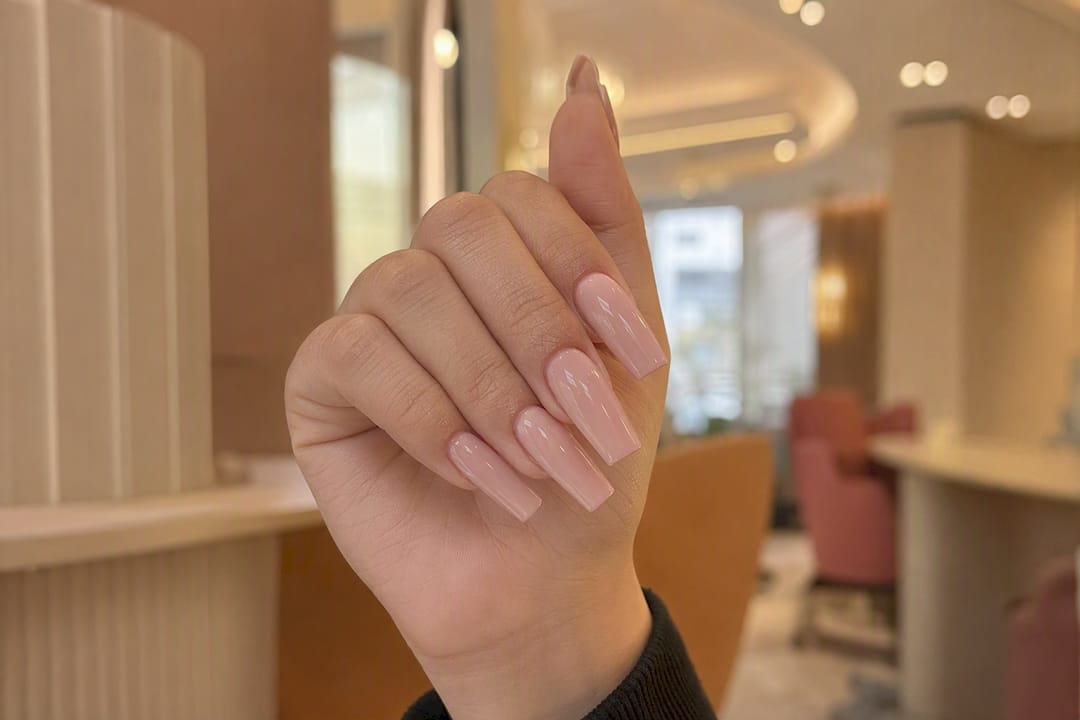
Stiletto is the sharpest, most attention-grabbing shape on this list: a long, narrow point built almost entirely with extensions. It is stunning in photos and genuinely fragile in real life. If you type, cook, or do anything with your hands for a living, stiletto is a tough daily commitment.
A handful of specialty shapes round out the list for readers who want something less common:
- Flare (or duck): widens dramatically at the tip; mostly a runway or nail-art statement, rarely practical day to day.
- Lipstick: a diagonal slanted tip resembling a lipstick bullet, usually reserved for nail art rather than everyday wear.
- Arrowhead: a pointed tip with straighter sides than stiletto, a middle ground for people who want edge without full fragility.
How Do You Choose the Right Nail Shape for Your Hands?
Picking a shape is not about trends. It is about three measurements and one honest conversation with yourself about how you actually live.
- Check your nail-bed width. Look at your nail from the cuticle to the tip. Wide beds look best in oval or round because those shapes create a slimming illusion; narrow beds can handle square or coffin without looking overwhelmed.
- Look at your fingertip silhouette. If your fingertips are naturally rounded, round or squoval will follow that line comfortably. If they are more squared off, almond or coffin will contrast nicely instead of fighting your natural shape.
- Measure how much free edge (white tip) you have to work with. Short free edge limits you to round, squoval, or short oval. Longer free edge opens up almond, square, or coffin.
- Run the lifestyle filter. Hands-on work, frequent hand washing, or a job that involves typing and lifting all favor lower-maintenance shapes. If your hands mostly get admired rather than used hard, dramatic shapes become realistic.
Concrete pairings help here: short and wide nail beds tend to look best in oval or round, while long and narrow beds can carry square, coffin, or even stiletto. Bringing a photo reference or nail-shape chart to your appointment closes the communication gap between what you picture and what your tech delivers.
Pro Tip: Ask your nail tech directly which shape will hold up best given how your nails naturally grow. A good tech will tell you honestly if your nail bed can’t support the shape you’re picturing, and will suggest a close alternative instead of just filing what you asked for.
Watch for a red flag: if a tech pushes a dramatic shape on very short, thin, or damaged nails without mentioning reinforcement or extensions, that is worth questioning before you commit.
How to File Your Nails Into Each Shape, Step by Step
Getting the shape right comes down to tools and angle discipline as much as skill. A 180-grit file handles the actual shaping work, while a 220-grit or higher file smooths the edge afterward so it does not snag on fabric. Filing angle guidance differs by shape: a 90-degree angle keeps a square tip crisp, while roughly a 25-degree angle creates the soft taper needed for almond.
The universal rule that prevents most breakage: file in one direction only. Sawing back and forth weakens the nail plate and causes splitting, especially near the free edge. Use clippers to remove bulk length first, then switch to the file for shaping. A cuticle pusher clears the base so you can see the true nail-bed shape you are working with.
Per-shape filing notes:
- Round: file the corners off first, then follow the natural curve of the fingertip. No flat sections anywhere.
- Square: hold the file flat across the tip at a 90-degree angle, then square off the corners without rounding them.
- Squoval: file the tip flat like square, then soften just the corners with two or three light strokes at an angle.
- Oval: taper the sides gently from the middle of the nail down to a rounded, elongated tip. No pointed peak.
- Almond: taper the sides more aggressively toward a soft point near a 25-degree angle, keeping the very tip slightly rounded rather than sharp.
- Coffin/stiletto: these shapes are built with extensions and typically shaped by a professional using acrylic or gel sculpting rather than filing a natural nail down.
Small angle adjustments, sometimes just a few degrees, change how dramatic or subtle a shape looks on your specific hand, which is why technicians fine-tune the same base shape differently for every client. If your nails are thin, peeling, or brittle, stop filing and see a professional. Weak nails need reinforcement before they can hold any shape beyond round or short squoval, and a salon visit will save you from cracking a nail down to the quick.
Which Nail Shapes Work Best for Short Nails?
Short nails are not a limitation. They just narrow the list. Round, squoval, and short oval are the three shapes that genuinely work on natural nails with minimal length, because none of them depend on extra free edge to look finished.
- Round needs almost no length and follows your existing fingertip curve.
- Squoval looks intentional even at very short lengths since the flat top reads as a style choice, not a placeholder.
- Short oval gives a hint of elongation without requiring the nail to grow out first.
Coffin, dramatic almond, and stiletto all typically need extensions to achieve their signature silhouette, since most natural nails cannot grow long enough to support the taper or flat tip without snapping. For extensions, the system matters as much as the shape: Gel-X or pre-shaped tips work well for coffin because the tip is already molded to the right silhouette, while sculpted acrylic gives stiletto the rigid support it needs to survive daily use. A soak-off gel overlay or BIAB (builder gel) adds reinforcement at the stress point before the final shape gets filed in, which is standard practice for anything with a tapered edge. If you want to try a longer shape for the first time, starting with a forgiving base like squoval or short oval and adding length gradually is safer than jumping straight to full stiletto length.
How Long Do Different Nail Shapes Last?
Upkeep expectations vary a lot by shape, and knowing them ahead of time prevents disappointment three weeks in.
- Round and squoval: grow out gracefully with minimal reshaping; fills every three to four weeks keep them looking fresh.
- Oval and almond: need more frequent attention at the tip since the taper grows out unevenly; expect a fill every two to three weeks if you have extensions.
- Coffin and stiletto: require the most frequent fills and repairs because the tapered sides and sharp or flat-edged tips are the first things to catch and chip.
Sharp corners and tapered tips are simply more likely to break than a rounded edge, which is basic physics as much as nail care. At home, gentle one-direction filing, a fresh topcoat every few days, and nightly cuticle oil do more to extend wear than anything aggressive. In fact, heavy-handed at-home filing is one of the most common causes of breakage, more so than normal daily wear. If your natural nails are thin or you are wearing a dramatic shape, ask about a builder gel or acrylic overlay for reinforcement. It adds strength at the stress point without changing the final look.
How Foxy Nails Approaches Nail Shape and Extensions
Foxy Nails, a salon in Reno, NV, builds every shape recommendation around the client’s actual nail health, not just what looks good in a photo. Services include acrylic, hard gel, dipping powder, and Gel X, which covers nearly every shape and durability need discussed in this guide, along with gentle options for kids.
- Nail health gets checked first: thickness, flexibility, and any existing damage determine whether a shape needs reinforcement before shaping begins.
- Reinforcement decisions follow the same logic pros use industry-wide: a thin acrylic base or builder gel overlay at the stress point before sculpting a tapered final shape, which is standard practice for anything from almond to stiletto.
- Readers who want to see filing and extension techniques in action can check the video demonstrations on the Foxy Nails site.
- For a deeper breakdown of extension systems and which one fits which shape, the nail extensions guide covers Gel X, acrylic, and hard gel side by side.
| Shape category | Foxy Nails approach |
|---|---|
| Natural, low maintenance | Round and squoval shaped directly, no extension needed |
| Elongating, medium upkeep | Oval and almond, often with a gel or dip overlay for strength |
| Dramatic, extension-based | Coffin and stiletto built with Gel X or sculpted acrylic and reinforced at the stress point |
What Actually Matters When Choosing a Nail Shape
Most nail shape content online treats this like a beauty quiz: answer three questions, get a shape, done. That undersells how much your actual daily habits should weigh in. A stiletto nail photographed on a hand model tells you nothing about how it survives a shift of data entry or a toddler’s bath time. The research here is consistent on one point that gets buried under trend content: lifestyle should filter your options before aesthetics do, not after.
The other thing conventional advice glosses over is filing angle. People treat “almond” or “square” as fixed templates, when a few degrees of angle change is what actually personalizes a shape to your specific hand. That is a skill difference between a technician who eyeballs it and one who measures.
If I had to prioritize one thing for someone starting from scratch, it is this: get honest about how your hands are used, then let a professional adjust the angle to your actual nail bed. The shape name matters less than the execution.
— Cuong
Sources
- An Expert Guide to the 10 Most Popular Nail Shapes | Vogue
- All of the Different Nail Shapes and Styles | Cosmopolitan
- Nail Shapes Guide: Almond, Coffin, Square, Oval & More | NailAtlas
- All the Nail Shapes to Know for Your Next Salon Appointment | Glamour