
Routine manicures are generally safe during pregnancy when done occasionally at a clean, well-ventilated salon. Poison Control confirms there is no evidence that occasional nail polish application harms pregnant people or their babies. The real risks come from chronic occupational exposure, not a monthly salon visit. That said, three things matter most: choose polishes with “free” labels (3-free or higher), avoid inhaling strong fumes, and verify the salon sterilizes its tools properly.
- Pick 3-free, 7-free, or 10-free nail polish whenever possible
- Sit near a door or window and ask about ventilation before you book
- Confirm the salon autoclaves metal tools or uses single-use files and buffers
Table of Contents
- Is a pregnancy safe manicure actually possible? Here’s the verdict
- What nail ingredients and salon practices to avoid while pregnant
- Which nail polishes are safest, and what do those “free” labels mean?
- Gel, shellac, acrylics, dipping powders, and UV lamps: what to know
- Why salon hygiene and ventilation matter more than product chemistry
- Pregnancy-specific issues: nausea, swelling, posture, and timing
- When to delay a manicure and when to call your healthcare provider
- How to choose a pregnancy-friendly salon: questions to ask
- How Foxynailsreno keeps pregnant clients safe
- How frequent manicures affect pregnancy skin sensitivity
- Safer alternatives to traditional manicures during pregnancy
- Post-manicure care tips for pregnant women
- Allergic reactions and heightened skin sensitivity during pregnancy
- Key Takeaways
- What I’ve seen working with pregnant clients at Foxy Nails
- Book a pregnancy-friendly appointment at Foxynailsreno in Reno
Is a pregnancy safe manicure actually possible? Here’s the verdict
Yes, and the evidence backs it up. MotherToBaby’s review of common nail ingredients, including formaldehyde, toluene, dibutyl phthalate (DBP), camphor, and acetone, concludes that the amounts absorbed through skin or inhaled during a routine nail treatment are small and not expected to cause problems for your pregnancy or breastfed baby. The key phrase is “routine.” A nail technician who applies polish eight hours a day, five days a week, faces a fundamentally different exposure level than someone who gets a manicure once a month.
NCT summarizes the same point: topical nail treatments are unlikely to affect the baby, and workplace protections exist precisely because chronic exposures differ from occasional ones. No official guidance requires pregnant people to avoid nail treatments entirely. The conversation is about smart precautions, not prohibition.
What nail ingredients and salon practices to avoid while pregnant
Chemicals worth knowing about
Three ingredients appear on most caution lists, and understanding why helps you make faster decisions at the salon.
Formaldehyde hardens nail polish and is sometimes used to disinfect tools. Some people are allergic to it even in small amounts, so if you have a known sensitivity, ask the salon whether their products contain it and choose formaldehyde-free alternatives. Toluene thins polish so it applies smoothly. It is a solvent, and solvents at high doses affect the nervous system, but the amount inhaled during a standard manicure is far below harmful thresholds. Dibutyl phthalate (DBP) makes polish flexible and chip-resistant. Small amounts have been detected in humans, but those levels are not expected to cause pregnancy complications based on current research.
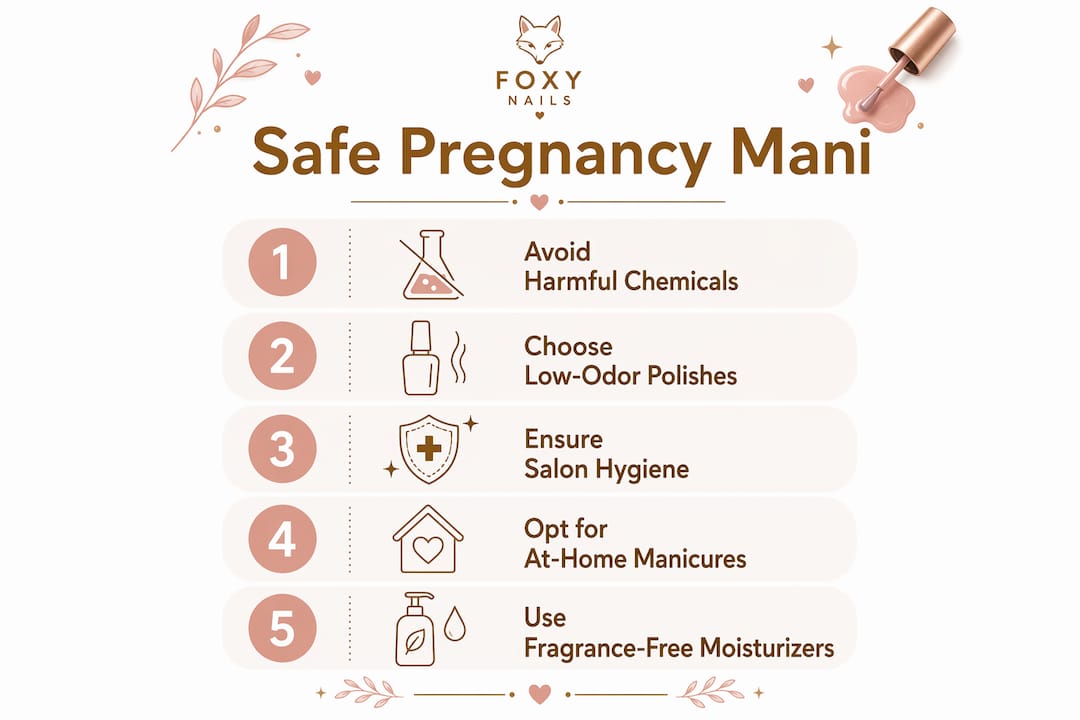
Beyond the “big three,” watch for camphor (a plasticizer and fragrance agent), methacrylate (found in acrylic systems), and acetonitrile (used in some artificial nail removers). All carry the same reassurance: the amounts involved in a salon visit are small.
Salon practices that add real risk
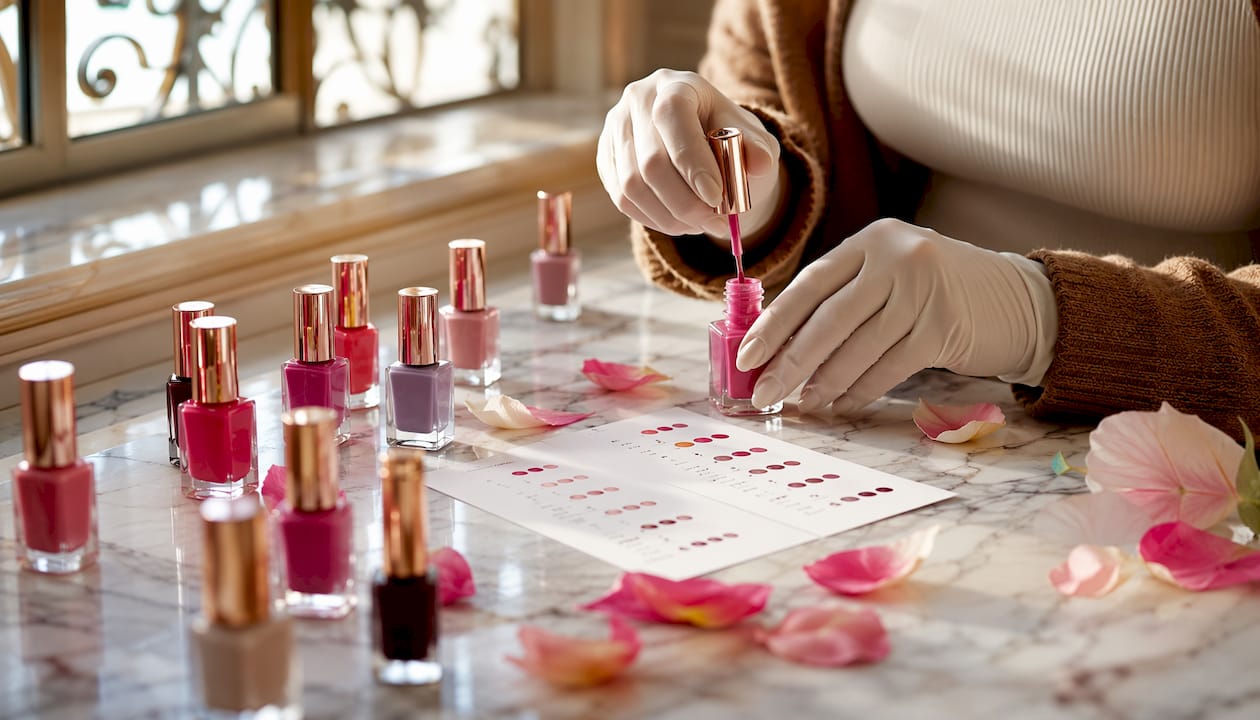
Cutting cuticles rather than pushing them back creates a small wound, which is an entry point for bacteria and fungal infections. Pregnancy already shifts your immune response, so even minor skin breaks deserve more caution than usual. Crowded, poorly ventilated workstations concentrate fumes. Dusty filing without local extraction sends acrylic particles into the air you breathe. And metal tools that are not properly sterilized between clients carry cross-contamination risk regardless of whether you are pregnant.
“If there is good air flow and plenty of fresh air, then it is not likely that much of the chemicals will get into the body by breathing the fumes. But if you have headaches, dizziness, or nausea while around nail care products, take a break and get some fresh air outside.” — MotherToBaby
Pro Tip: Schedule your appointment for a weekday morning when the salon is quietest and fumes have not built up from a full day of traffic. Ask to sit closest to the door or an open window.
Which nail polishes are safest, and what do those “free” labels mean?
Understanding the label tiers
The Bump explains that a 3-free polish omits formaldehyde, toluene, and DBP. A 7-free formula goes further, typically also excluding formaldehyde resin, camphor, triphenyl phosphate (TPHP), and xylene. A 10-free label adds more exclusions, often including parabens, fragrances, and additional plasticizers. Higher numbers mean fewer synthetic additives, though no label is a guarantee of zero risk.
Water-based polishes go even further. They use water as the primary solvent instead of chemical solvents, which dramatically reduces fume output. The tradeoff is durability: water-based formulas chip faster and may not be available at every salon.
How to check a polish label quickly
| Label | Key chemicals excluded | Typical durability | Best for |
|---|---|---|---|
| 3-free | Formaldehyde, toluene, DBP | Standard | Most clients |
| 7-free | Above + resin, camphor, TPHP, xylene | Standard | Sensitive skin |
| 10-free | Above + parabens, fragrance, others | Standard to good | Extra caution |
| Water-based | Solvent-free formula | Lower | Minimal fume preference |
- Look for the “free” claim on the bottle’s front label or the ingredient list on the back
- Ask your technician which brand the salon stocks and whether it meets 3-free standards
- Brands widely available in the U.S. that carry 3-free or higher formulas include Zoya, OPI (many lines), and Ella+Mila, though availability varies by salon
- If the salon cannot confirm the formula, bring your own bottle
Gel, shellac, acrylics, dipping powders, and UV lamps: what to know
BabyCenter notes that gel and acrylic nails are generally considered low risk for pregnant clients when done occasionally, with attention to ventilation and tool sterilization. Here is how each treatment type breaks down.
- Gel and shellac: Cured under UV or LED light. The chemistry is similar to standard polish with added durability. Main concern is the curing lamp, not the polish itself.
- Acrylics: Mixed from liquid monomer and powder polymer. The mixing process produces the strongest fumes of any common nail treatment. Good ventilation and a booth extractor make a significant difference.
- Dipping powders: Applied without UV curing. Fume output is lower than acrylics, but the powder itself can become airborne during filing. Ask the technician to use wet filing or work near an extractor.
- Soak-off removal: Acetone-soaked cotton wraps are standard. The exposure is brief and localized. Wash hands or feet afterward to remove residual acetone from the skin.
UV and LED lamp exposure
Per session, UV lamp exposure during gel curing is brief and localized to the hand. BabyCenter recommends simple mitigation if you want extra peace of mind: wear fingerless UV-protective gloves or apply a broad-spectrum sunscreen to the back of your hand before curing. LED lamps emit a narrower UV spectrum and cure faster, which reduces total exposure time compared with traditional UV units.
Pro Tip: Ask your technician to use a local extraction fan or open a window before mixing acrylic products. If the room smells strongly of chemicals within the first minute, that is a ventilation problem worth addressing before you sit down.
Why salon hygiene and ventilation matter more than product chemistry
Medical News Today reports that experts consistently rank operational standards, clean tools, autoclave use, fresh files and buffers, and good ventilation, above product chemistry as the primary safety drivers for salon clients. For pregnant clients, infection risk from contaminated tools is a more immediate concern than trace chemical exposure.
What autoclave sterilization actually means
An autoclave uses pressurized steam to kill bacteria, viruses, and fungi on metal instruments. It is the same sterilization standard used in medical and dental offices. Not every salon owns one. Some use barbicide (a chemical disinfectant), which reduces but does not eliminate all pathogens. Single-use tools, files, and buffers that come in sealed packaging and are opened in front of you are an equally safe alternative for non-metal items.
| Hygiene factor | What to look for | Red flag |
|---|---|---|
| Metal tool sterilization | Autoclave or sealed single-use | Soaking in liquid only |
| Files and buffers | Sealed packaging opened per client | Reused without cleaning |
| Foot bowls | Liner or visibly cleaned between clients | Standing water, no liner |
| Workstation | Clean towels, no debris | Clutter, dried product residue |
| Ventilation | Open windows, fans, or extraction hood | Stagnant air, strong fume buildup |
- Watch whether the technician opens a fresh file in front of you
- Check that foot bowls are rinsed or lined before your pedicure begins
- A well-run salon will not hesitate to answer hygiene questions directly
Pregnancy-specific issues: nausea, swelling, posture, and timing
Pregnancy changes how your body responds to a salon environment in ways that have nothing to do with chemical exposure.
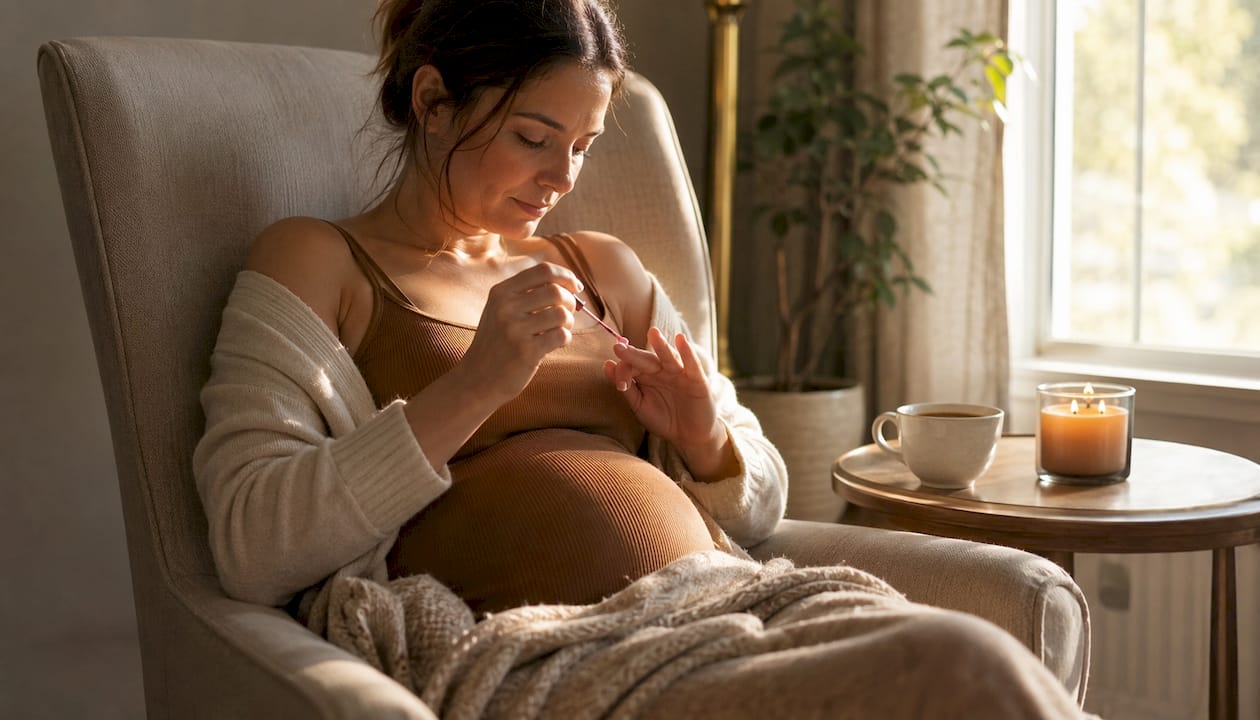
Nausea and scent sensitivity are the most common complaints. WhatToExpect notes that heightened olfactory sensitivity makes salon scents a frequent nausea trigger. Booking during off-peak hours, sitting near a door, and asking the salon to avoid strong-scented products during your appointment all help. Bring a small snack and water, and do not hesitate to step outside for a few minutes if you feel unwell.
Swelling and circulation become relevant from the second trimester onward. Extended time in a fixed position slows blood return from the legs. A quick manicure (hands only) is always an option if a full pedicure feels uncomfortable. If you do get a pedicure, ask for a footrest that keeps your legs slightly elevated rather than dangling.
Blood clot risk is real for pregnant people, particularly in the third trimester. If your provider has flagged any circulatory concerns, keep appointments short, stand and walk briefly between services, and skip any treatment that requires sitting still for more than 30–40 minutes. A spa pedicure with gentle massage can actually support circulation when performed safely, but timing and posture matter.
- Tell your technician you are pregnant before the appointment starts
- Request a chair with back support rather than a low stool
- Late in pregnancy, a standard manicure is often more comfortable than a full pedicure
When to delay a manicure and when to call your healthcare provider
Most salon visits during pregnancy are uneventful. A few situations call for pausing or escalating.
- Signs of infection after a salon visit: Increasing redness, swelling, warmth, pus, or a fever within 24–72 hours of a manicure or pedicure. Do not wait to see if it resolves on its own.
- Unexplained bleeding or nail-bed pain: If a cuticle was cut and the area bleeds persistently or becomes painful, clean it, cover it, and contact your OB-GYN or urgent care.
- Active skin conditions or open wounds: Eczema flares, psoriasis patches, or any broken skin on the hands or feet should be resolved before a salon visit.
- Provider-specific restrictions: If your clinician has advised against salon environments for any reason (immune suppression, preterm labor risk, or a specific skin condition), follow that guidance.
- Suspected infection action steps: Stop salon services immediately. Photograph the affected area. Contact your OB-GYN or an urgent care clinic. Keep the area clean and dry until you are seen.
How to choose a pregnancy-friendly salon: questions to ask
Before you book (phone or online)
- “Do you autoclave your metal tools between clients, or do you use single-use instruments?”
- “What nail polish brands do you carry, and are they 3-free or higher?”
- “Is your workspace ventilated? Do you have extraction fans or open windows?”
- “Can I request that my technician push back rather than cut my cuticles?”
An acceptable answer to the autoclave question is a direct yes or a clear explanation of their sterilization method. Vague answers like “we clean everything” are not sufficient.
When you arrive
- Watch whether the technician opens fresh tools or files in front of you.
- Check that the workstation is clean and free of dried product residue.
- Confirm the room has airflow: a fan, open window, or extraction hood.
- Ask the technician to use a lower-fume polish or the one you brought yourself.
- If anything feels off, it is completely reasonable to reschedule.
Pro Tip: Bring your own file and buffer in a small zip bag. It costs almost nothing and eliminates any uncertainty about whether abrasive tools were properly sanitized.
How Foxynailsreno keeps pregnant clients safe
At Foxynailsreno in Reno, NV, the protocols that matter most to pregnant clients are built into every appointment, not offered as special requests.
- Metal tools are sterilized using autoclave-grade methods between every client
- Fresh files and buffers are opened per client, never reused
- The salon maintains active ventilation throughout the workspace
- Technicians are trained to adjust techniques for clients with nail sensitivity, including gentler filing and cuticle pushing rather than cutting
- Clients may bring their own tools, and the team will work with them without hesitation
- Shorter appointment formats are available for clients who find extended sitting uncomfortable
Foxynailsreno also offers gel manicure options with LED lamps and can discuss UV mitigation steps with any client who asks. If nausea is a concern, the team can schedule you near the salon’s best-ventilated station and keep the appointment focused and efficient.
Pro Tip: When you call to book, mention that you are pregnant. The team at Foxynailsreno can note your preferences, assign you the most comfortable station, and flag any product substitutions before you arrive.
How frequent manicures affect pregnancy skin sensitivity
Pregnancy hormones, particularly the surge in estrogen and progesterone, change nail texture and growth rate noticeably. BabyCenter reports that some people experience faster, stronger nail growth while others find their nails become brittle or peel at the edges. Either way, the nail plate is more reactive than usual.
Frequent manicures, meaning more than every two to three weeks, can compound sensitivity. Repeated acetone exposure from polish removal dries the nail plate and surrounding skin. Aggressive buffing on an already-thin nail bed causes micro-damage that takes longer to heal during pregnancy. The practical recommendation from most nail care professionals is to space appointments every three to four weeks, use a nourishing base coat to protect the nail plate, and ask your technician to skip electric filing if your nails feel fragile.
Skin on the hands and feet also tends to be drier and more reactive during pregnancy due to hormonal shifts and increased blood volume stretching the skin. A rich, fragrance-free hand cream applied after every appointment helps maintain the skin barrier between visits.
Safer alternatives to traditional manicures during pregnancy
If you want to minimize chemical exposure further, several options work well.
Water-based polishes use water as the primary carrier instead of chemical solvents. Brands like Piggy Paint (marketed for kids but safe for adults) and Acquarella are available in the U.S. and produce almost no detectable fumes. Durability is shorter, typically five to seven days, but the tradeoff is worth it for clients in the first trimester when nausea is strongest.
Buffed natural nails require no polish at all. A good technician can shape, push back cuticles, and buff the nail to a natural shine in under 20 minutes. It is the lowest-exposure option and still leaves nails looking polished and well-kept.
At-home manicures let you control every variable: the product, the ventilation (open a window), and the timing. Apply polish in a well-aired room, use a 7-free or 10-free formula, and wash your hands after application to remove any residue from the skin around the nails.
Dip powder without UV curing is another option for clients who want longer wear without a UV lamp. The application process is fume-lighter than acrylics, and skipping the curing lamp removes that variable entirely.
Post-manicure care tips for pregnant women
The hour after a manicure matters more during pregnancy than it does otherwise.
Wash your hands or feet gently with mild soap after any treatment involving acetone or acrylic products. This removes residual solvent from the skin surface before it can be absorbed further. Pat dry rather than rubbing, since pregnancy skin tends to be more sensitive to friction.
Apply a fragrance-free, pregnancy-safe moisturizer to the hands and cuticles while the skin is still slightly damp. Ingredients like shea butter, jojoba oil, and glycerin are well-tolerated. Avoid products containing retinoids or high-dose salicylic acid, which carry their own pregnancy cautions.
If you had a pedicure, elevate your feet for 20–30 minutes afterward to help with any swelling that built up during the appointment. Check the skin around the nail beds and between the toes for any redness or irritation before putting on socks or shoes. Catching a minor reaction early is much easier than managing one that has had time to develop.
Allergic reactions and heightened skin sensitivity during pregnancy
Pregnancy can trigger new sensitivities to products you have used without issue for years. The immune system shifts during pregnancy, and skin barrier function changes, which means an ingredient that was previously tolerable can suddenly cause contact dermatitis or an allergic reaction.
Common culprits in nail products include methacrylate compounds (in acrylics and gel systems), formaldehyde resin, and certain fragrance components. Reactions typically appear as redness, itching, or swelling around the nail bed or on the fingertips within 24–48 hours of exposure.
If you notice a reaction, remove the polish or product with a gentle, acetone-free remover if possible, wash the area with mild soap, and apply a fragrance-free barrier cream. If the reaction spreads, blisters, or does not improve within 48 hours, contact your OB-GYN or a dermatologist. The American Academy of Dermatology notes that nail changes during pregnancy are common and usually benign, but any change that involves pain, significant swelling, or spreading inflammation warrants a professional look.
Tell your technician about any known allergies before the appointment. A patch test on a small area of skin 24 hours before a new product is applied is a reasonable precaution, especially for acrylic or gel systems you have not used before.
This article is general information, not medical advice. Confirm current guidance with your OB-GYN or a qualified healthcare provider for your specific situation.
Key Takeaways
Routine manicures are safe during pregnancy when you choose low-chemical polishes, confirm salon sterilization practices, and keep appointments in well-ventilated spaces.
| Point | Details |
|---|---|
| Occasional manicures are low risk | Poison Control and MotherToBaby confirm that routine salon visits do not carry the same risk as chronic occupational exposure. |
| Choose 3-free or higher polishes | Labels like 3-free, 7-free, and 10-free indicate which common chemicals have been removed from the formula. |
| Salon hygiene outweighs chemistry | Autoclave sterilization, single-use files, and good ventilation are the most effective safety measures for pregnant clients. |
| Space appointments with sufficient intervals to reduce nail sensitivity related to pregnancy hormones and exposure to acetone and buffing. | |
| Foxynailsreno accommodates pregnant clients | The Reno salon uses autoclave sterilization, fresh tools per client, and can adjust appointments for nausea, mobility, or shorter timing. |
What I’ve seen working with pregnant clients at Foxy Nails
The question I hear most often from pregnant clients is some version of: “Is it even okay for me to be here?” The honest answer is yes, with a few adjustments, and those adjustments are not complicated.
What actually worries me is not the polish. It is the salons that do not sterilize properly, that cut cuticles on every client without asking, or that run a full day of acrylic services in a room with no airflow. Those are the real risks, and they apply to everyone, not just pregnant clients. Pregnancy just makes it more urgent to ask the right questions before you sit down.
The clients who have the best experiences are the ones who tell us upfront that they are pregnant. That one sentence lets us assign the right station, swap to a lower-fume product if needed, and keep the appointment at a pace that works for them. Self-care during pregnancy is not a luxury. It is one of the few hours in the week that belongs entirely to you, and it should feel that way.
Book a pregnancy-friendly appointment at Foxynailsreno in Reno
Pregnant clients deserve a salon that has already thought through the details so they do not have to. At Foxynailsreno, every appointment includes autoclave-sterilized tools, fresh single-use files opened in front of you, and a ventilated workspace. The team is trained to adjust for pregnancy-related needs: shorter appointments, gentler techniques, cuticle pushing instead of cutting, and product swaps on request.
Whether you want a classic manicure, a spa pedicure with circulation-supporting massage, or a gel or dipping powder service with full ventilation and LED curing, Foxynailsreno has the option and the protocols to back it up. Located in Reno, NV, the salon welcomes pregnant clients at any stage of pregnancy. Mention your pregnancy when you book and the team will handle the rest. View services and book your appointment today.
Primary sources and further reading
- Poison Control: Can I use nail polish when pregnant? — Public health resource that addresses fetal risk from occasional nail polish use; distinguishes consumer from occupational exposure.
- MotherToBaby: Nailing Down the Facts — Peer-reviewed nonprofit that evaluates individual nail ingredients (formaldehyde, toluene, DBP, acetone, methacrylate) and their expected fetal impact.
- BabyCenter: Is it safe to get a manicure or pedicure while pregnant? — Medically reviewed pregnancy resource covering gel, acrylic, and UV lamp safety with practical mitigation steps.
- Medical News Today: Can you get your nails done while pregnant? — Evidence-based health publication emphasizing salon hygiene and ventilation as the primary safety factors.
- WhatToExpect: Manicures and pedicures during pregnancy — Widely-cited pregnancy resource covering nausea triggers, scheduling tips, and pedicure safety.
- NCT: Beauty and wellbeing treatments safe during pregnancy — UK-based charity with medically reviewed guidance on topical treatments and fetal exposure levels.
- Walnut Hill OBGYN: Beauty myths for pregnant women — OB-GYN clinic blog offering conservative clinical perspective on gel polish, UV lamps, and cuticle care.
- The Bump: Can I use nail polish while pregnant? — Pregnancy lifestyle resource explaining the 3-free, 7-free, and 10-free label system in plain language.
- Foxynailsreno: Services and booking — Local booking page for pregnancy-friendly manicure and pedicure appointments in Reno, NV.