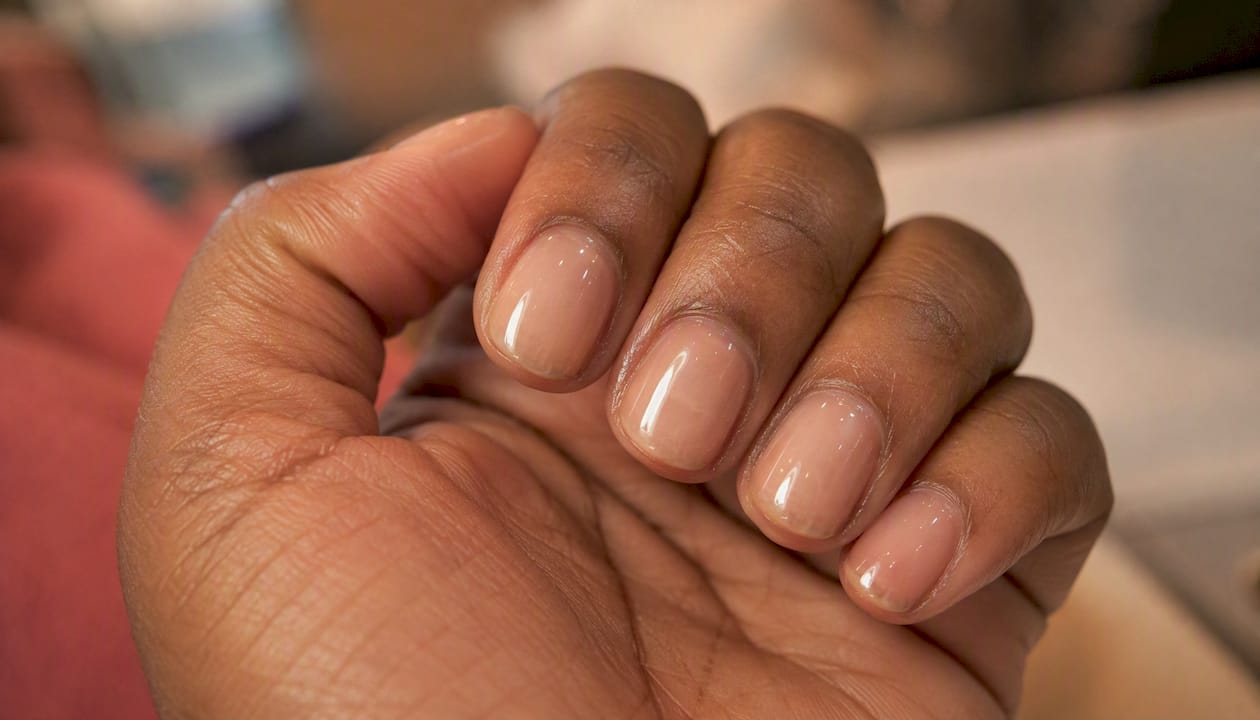
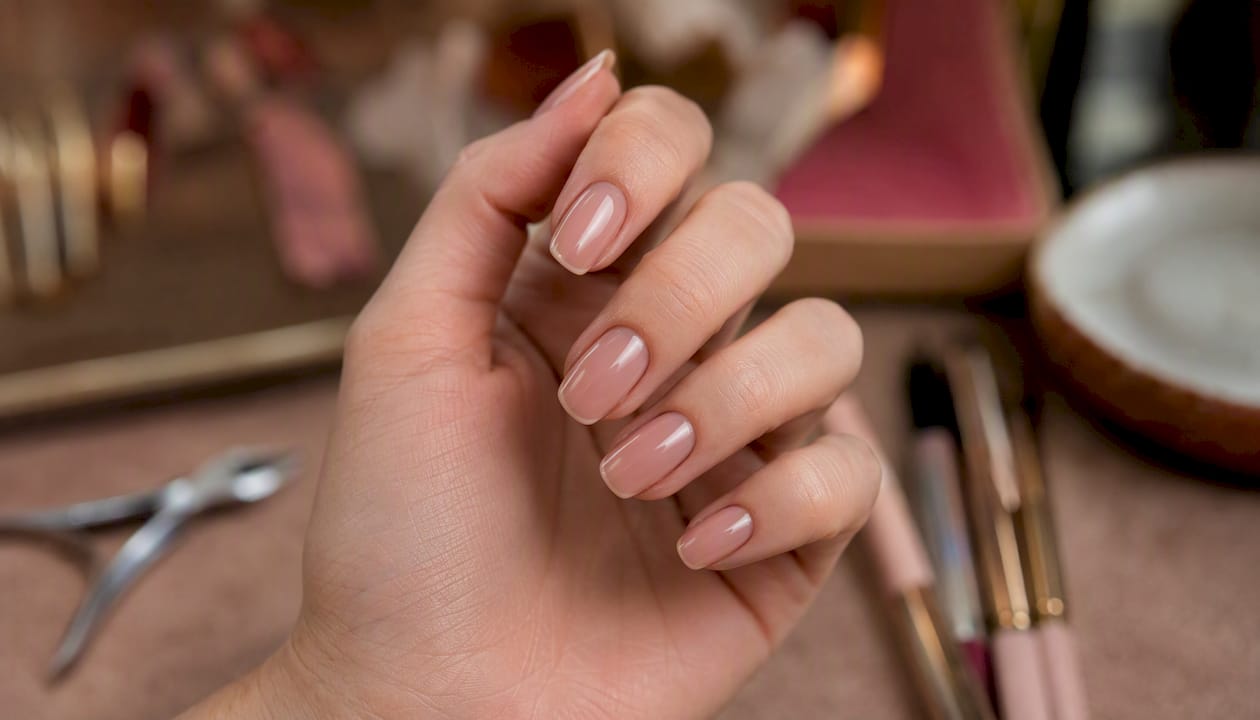
Nail overlays are a protective coating applied directly over your natural nail plate, typically without adding any real length, and their whole purpose is to strengthen, smooth, and shield what you already have. If your nails split at a certain length, peel in layers, or simply refuse to grow past your fingertips, an overlay is usually the answer you’re looking for.
Who benefits most:
- People with brittle, thin, or peel-prone nails
- Nail biters working to break the habit and grow length
- Anyone who wants low-maintenance shine without the bulk of a full acrylic set
Primary materials: acrylic overlay, hard gel, and builder/structure gel
Safety note: Professional removal is strongly recommended for all overlay types. Picking or peeling the product off is the most common way people damage their natural nails.
Table of Contents
- What nail overlays actually are (and what they’re not)
- Which overlay material is right for you?
- The real pros and cons of nail overlays
- How a salon applies nail overlays, step by step
- How long overlays last, what they cost, and what to ask when booking
- Aftercare and safe removal
- Overlays vs. extensions vs. full acrylic sets
- Are overlays actually good for your nails?
- What to expect at Foxynailsreno for an overlay appointment
- The part most overlay articles skip
- Nail overlays are a nail-health tool first, and a cosmetic service second — choosing the right material and maintaining a consistent fill schedule is what determines whether your natural nails come out stronger.
- Foxynailsreno: expert overlay services in Reno, NV
- Sources
What nail overlays actually are (and what they’re not)
An overlay is product built directly onto the natural nail plate. No tip. No form. No added length. According to NailKnowledge, an acrylic overlay is simply a protective layer of acrylic applied over the natural nail to strengthen and protect it, and that definition holds across all overlay materials.
The purpose is threefold: protect the nail from physical stress, smooth out surface irregularities, and give polish or nail art a stable, long-lasting base.
Here’s where people get confused:
- Overlays vs. extensions: Overlays stay at your natural nail length; extensions add length using tips or forms placed beyond the free edge.
- Overlays vs. gel polish: Gel polish is a thin color layer. Builder gel overlays are structurally thicker and add genuine support, not just color.
- Overlays vs. dip powder: Dip powder can function similarly to an overlay but uses a different application method (brush-on resin and powder layers) and typically requires acetone removal.
The key distinction is intent. Overlays are a nail-health service first.
Which overlay material is right for you?
The three main materials each have a distinct feel, durability profile, and removal process. Choosing the wrong one for your lifestyle is the most common reason overlays underperform.
Acrylic overlay
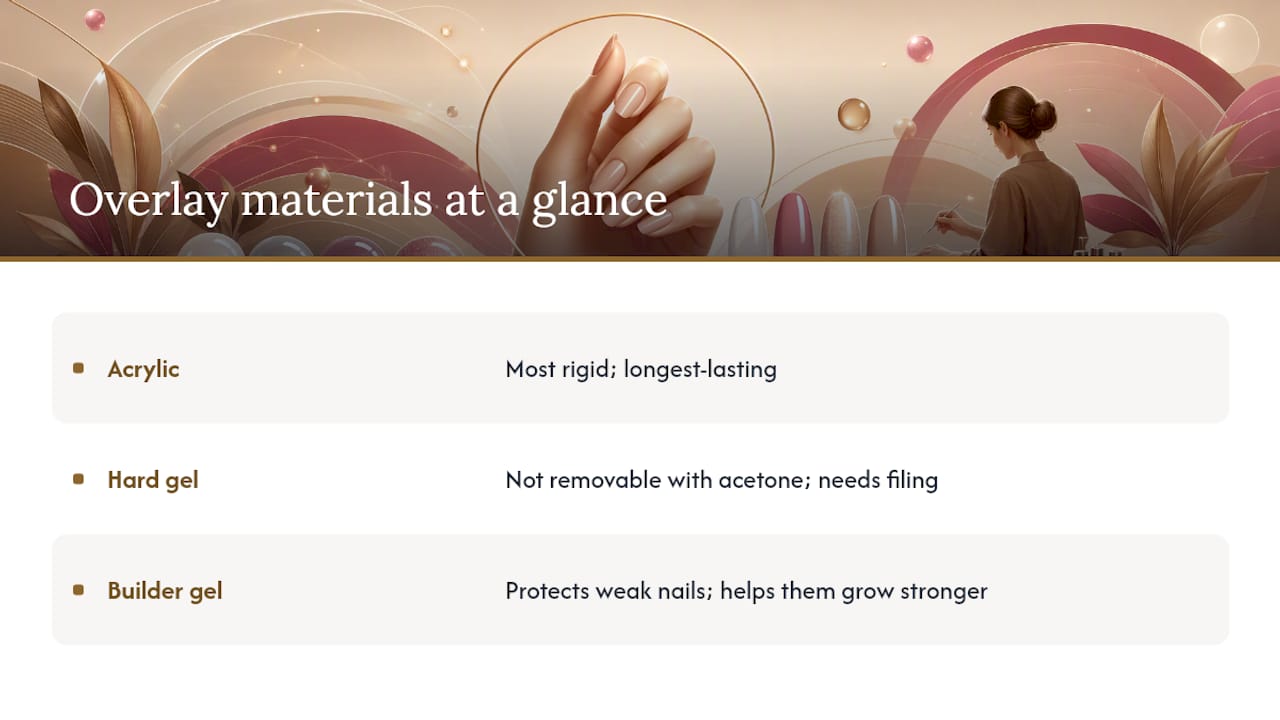
Acrylic is the most rigid and durable option. It holds up well under physical stress, resists chipping, and tends to last the longest between fills. The tradeoff is a harder, less flexible feel on the nail. Acrylic overlays are generally praised for maximum durability and strength, making them a strong pick for people who work with their hands or are hard on their nails.
Hard gel overlay
Hard gel sits between acrylic and builder gel in terms of rigidity. It cures under an LED or UV lamp, has a glossy finish, and is slightly more flexible than acrylic. It cannot be removed with acetone alone and requires filing down, which means removal takes more time and skill.
Builder/structure gel
Builder gel (sometimes called structure gel) is the most flexible of the three and delivers the most natural feel on the nail. Builder gel overlays are widely used to protect weak or damaged natural nails and, when applied consistently, can help nails grow stronger over several growth cycles. Products like Structure Gel 2.0 Clear are formulated with a self-leveling profile and specific cure times designed for overlays and infills, which reduces heat spike and improves comfort during cure.
Hybrid options (gel polish vs. builder gel)
Standard gel polish is not a true overlay. It adds color and a little protection but lacks the structural thickness to reinforce a weak nail. Builder gel is the right call when actual strengthening is the goal.
Pro Tip: If you’re very active with your hands, go acrylic overlay for durability. If you want something that moves with your nail and feels close to bare, builder/structure gel is the better fit.
The real pros and cons of nail overlays
Pros:
- Protects the natural nail from everyday physical stress and breakage
- Encourages growth by shielding the free edge at vulnerable lengths
- Lasts significantly longer than regular polish
- Adds minimal visible bulk, keeping a natural look
- Can smooth ridges and surface irregularities
Cons:
- Requires a maintenance schedule (fills every 2–4 weeks depending on material)
- Improper removal causes real damage; picking or forced peeling pulls layers from the natural nail plate
- Some clients develop sensitivity or allergic reactions to acrylic monomers or gel ingredients, including HEMA
- Not a permanent fix; the natural nail underneath still needs care
Red flags and contraindications:
- Active nail infection (fungal or bacterial): overlays trap moisture and can worsen the condition
- Severe nail dystrophy or psoriasis affecting the nail plate: consult a dermatologist before any overlay service
- Known allergy to acrylates: discuss HEMA-free or low-sensitizer products with your technician before booking
How a salon applies nail overlays, step by step
A well-executed overlay appointment typically runs 30–45 minutes for a natural-look finish. Here’s what a licensed technician actually does:
- Remove old product — any existing polish, gel, or overlay is fully removed before starting fresh.
- Shape and trim — nails are trimmed to your preferred length and shaped (square, oval, almond, etc.).
- Gentle buff — the surface of the natural nail is lightly buffed to remove shine and improve adhesion. This is not aggressive filing; it’s a light scuff.
- Cuticle work — cuticles are pushed back and excess skin is removed to prevent lifting at the base.
- Dehydration and primer — a dehydrator removes surface oils; a primer (acid-free or traditional, depending on the product system) prepares the nail for bonding.
- Base coat or bond — a thin bonding layer is applied and cured under an LED lamp.
- Structural product application — the overlay material (acrylic, hard gel, or builder gel) is applied in thin layers, building toward the apex (the highest point of the nail, roughly above the middle of the nail plate). The apex distributes mechanical stress and prevents cracking. The quality of the apex build determines service durability more than brand name.
- Cure — gel-based overlays cure under an LED or UV lamp between layers. Acrylic self-cures through a chemical reaction.
- Shape and refine — once the product is set, the technician files and shapes the overlay to the final look.
- Top coat — a gel top coat is applied and cured for gloss and protection.
Bring reference photos if you want a specific finish. A natural-look overlay is thinner and flatter than a sculpted set, so communicating that upfront saves time.
How long overlays last, what they cost, and what to ask when booking
Nail overlays are multiple thin layers of acrylic or gel applied over the natural nail, and wear time depends heavily on the material and how well the prep was done. Builder gel overlays typically last several weeks before a fill or maintenance appointment. Acrylic overlays can push toward the longer end of that range. Gel polish alone wears out faster, usually under two weeks.
Typical cost ranges vary by region, salon skill level, and add-ons:
- Basic overlay (no color): generally $35–$55 at most U.S. salons
- Overlay with gel color: $45–$70
- Overlay with nail art or designs: $60 and up, depending on complexity
Before you book, ask:
- What overlay material do you use, and can I choose?
- What’s your removal policy, and do you offer soak-off removal?
- How often should I come back for fills?
- Do you offer a patch test for clients with chemical sensitivities?
- What’s included in the service (prep, cuticle work, top coat)?
A salon that can answer all five questions confidently is worth booking.
Aftercare and safe removal
Daily habits make a significant difference in how long your overlays last and how healthy your nails stay underneath.
Do:
- Apply cuticle oil daily, especially around the base of the nail
- Use a fine-grit file to smooth any small snags before they catch and lift
- Wear gloves for cleaning, dishes, and any prolonged water exposure
- Moisturize your hands regularly
Don’t:
- Pick, peel, or force the overlay off — ever
- Use your nails as tools (opening cans, scraping surfaces)
- Skip fills past the recommended window; a grown-out overlay creates a stress point that can crack
Safe removal:
For builder gel and acrylic overlays, the standard salon method involves filing down the bulk of the product, then soaking in acetone-saturated cotton wrapped in foil for 10–15 minutes. Hard gel requires more filing since it resists acetone. Professional soak-off removal is recommended to avoid pulling layers from the natural nail plate. If you’re removing at home, patience is the whole game: let the acetone do the work, and never scrape product that hasn’t fully softened.
Overlays vs. extensions vs. full acrylic sets
The right service depends entirely on what you’re trying to achieve.
Overlays:
- Stay at your natural nail length
- Best for strengthening and protecting what you already have
- Lower profile, more natural appearance
- Shorter appointment time
Extensions:
- Add real length using tips or forms
- Best when you want longer nails than your natural nail can grow
- More product, more maintenance, higher cost
Full acrylic set:
- Typically includes tips for length plus an acrylic overlay over the entire nail
- Maximum durability and sculpted shape
- Requires more upkeep and a longer removal process
Quick decision checklist:
- Want protection at your current length? → Overlay
- Want longer nails? → Nail extensions
- Want maximum durability and a sculpted shape? → Full acrylic set
- Want to compare gel vs. acrylic options in detail? → Gel vs. acrylic guide
Are overlays actually good for your nails?
The honest answer: yes, when applied and removed correctly. No, when they’re not.
Builder gel overlays act like a preventive repair, redistributing mechanical stress away from the nail plate and letting the natural nail recover over multiple growth cycles. Clients who use overlays consistently often report longer nails after several months because the overlay prevents breakage at the length where nails usually snap.
Common causes of problems:
- Poor prep (oils left on the nail, inadequate dehydration) leads to lifting and moisture trapping
- Trapping moisture under a lifted overlay creates the right conditions for bacterial or fungal growth
- Allergic reactions to acrylates, most often from uncured product touching the skin during application
Recommended frequency:
- Fills every 2–3 weeks for most clients
- Full removal and reapplication every 3–4 months to let the nail plate breathe and be assessed
When to pause and see a professional:
- Persistent discoloration (green, yellow, or dark spots under the overlay)
- Pain or tenderness at the nail base
- Any sign of infection: swelling, pus, or odor
These are not “wait and see” situations. Book a removal appointment and, if symptoms persist, see a dermatologist.
What to expect at Foxynailsreno for an overlay appointment
Foxynailsreno is a luxury nail salon in Reno, NV, offering acrylic, hard gel, dipping powder, and Gel X services. An overlay appointment at Foxynailsreno covers the full prep-to-finish process: nail shaping, cuticle work, dehydration, structural product application, curing, and a finished top coat.
What clients can expect:
- Material options discussed at the start of the appointment (acrylic, hard gel, or builder gel)
- Finish choices from natural and low-profile to a polished, high-gloss look
- Clear guidance on fill schedules and removal options
- A welcoming environment that’s also family-friendly, with services available for kids
When evaluating any salon for overlay services, look for a technician who asks about your nail history, discusses material options, and explains the removal process before starting. Hygiene signals matter too: single-use files, sterilized metal tools, and a clean workstation.
Ready to book? Check out gel nail services in Reno or browse the full service menu at Foxynailsreno to find the overlay option that fits your nails and lifestyle.
The part most overlay articles skip
Most guides frame overlays as a cosmetic upgrade. The more useful frame is structural nail health.
The clients who get the most out of overlays are not the ones chasing a specific look. They’re the ones who’ve accepted that their natural nails have a structural limit and decided to work with it instead of against it. A builder gel overlay applied every three weeks is closer to a physical therapy protocol than a beauty treatment. It holds the nail at a length it couldn’t hold on its own, lets the plate grow out undamaged, and over time shifts the baseline.
What gets overlooked is the removal side. The overlay itself rarely causes damage. The removal does, when it’s rushed or done at home with a fingernail instead of acetone. Every technician who has seen a client’s nails after a forced peel knows this. The product comes off in seconds; the nail takes weeks to recover.
The other thing worth saying: not every nail problem is an overlay problem. Severe peeling, persistent discoloration, or pain at the nail base are signs to see a dermatologist, not book a fill. Overlays work best as a maintenance tool for structurally sound but fragile nails, not as a cover for an underlying condition.
Nail overlays are a nail-health tool first, and a cosmetic service second — choosing the right material and maintaining a consistent fill schedule is what determines whether your natural nails come out stronger.
| Point | Details |
|---|---|
| Overlays add strength, not length | They’re built on the natural nail plate and protect without extending beyond your free edge. |
| Material choice matters | Acrylic for maximum durability; builder/structure gel for flexibility and a natural feel. |
| Wear window is 3–6 weeks | Builder gel overlays typically last 3–6 weeks; fills keep the overlay functional and safe. |
| Removal is where damage happens | Picking or peeling causes the most natural-nail damage; always soak off or book a professional removal. |
| Foxynailsreno offers overlay services in Reno | Acrylic, hard gel, and Gel X options available with full prep-to-finish appointments. |
Foxynailsreno: expert overlay services in Reno, NV
Stronger nails without the bulk of a full acrylic set is exactly what Foxynailsreno delivers. Located in Reno, NV, Foxynailsreno offers acrylic overlays, hard gel, and Gel X services applied by skilled technicians who walk you through material options, set realistic expectations for wear and maintenance, and handle removal the right way so your natural nails stay intact.
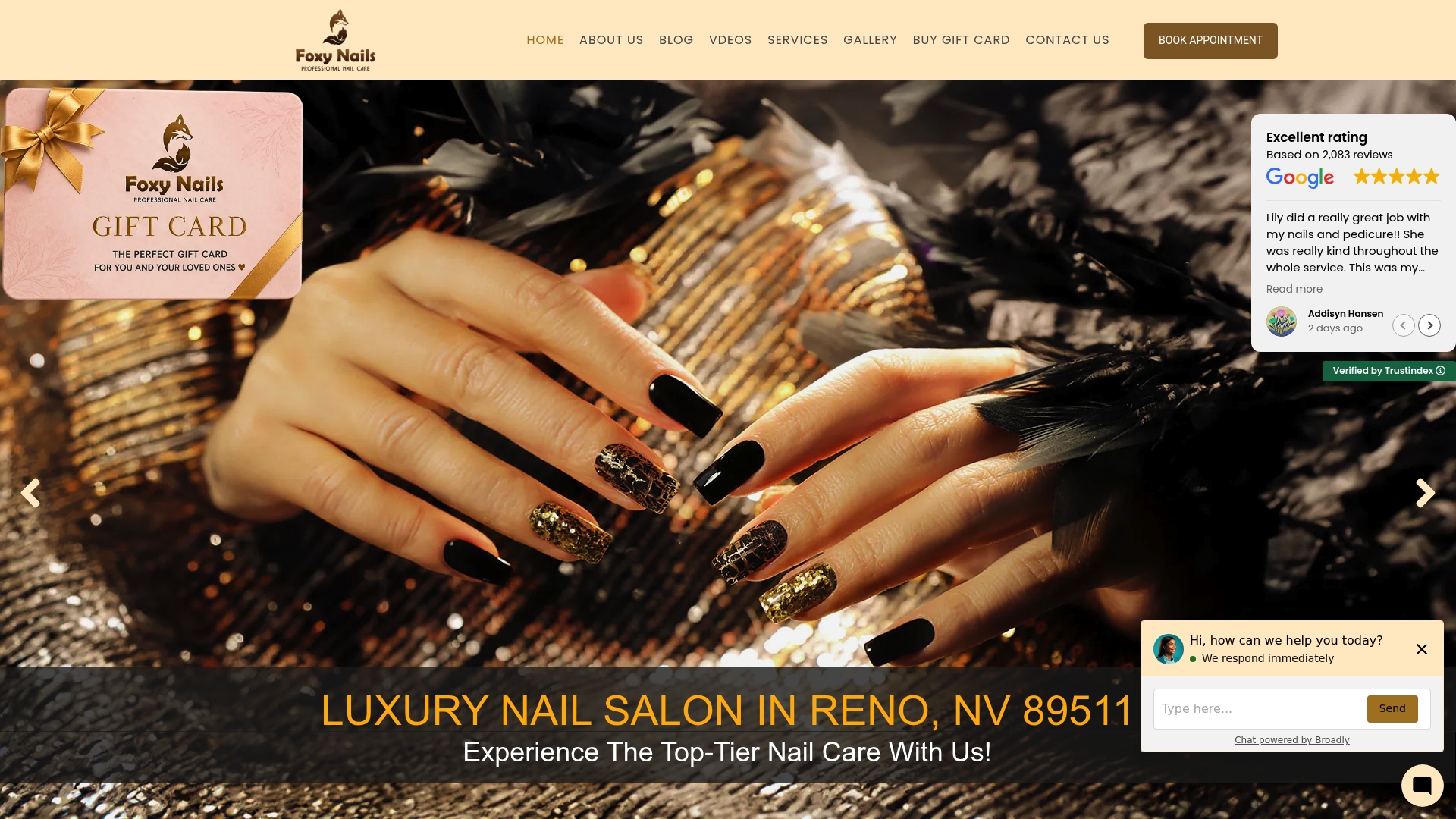
The difference between an overlay that lasts and one that lifts in a week comes down to prep and technique. At Foxynailsreno, every overlay appointment includes full nail prep, cuticle work, structural product application, and a finished top coat. The salon is family-friendly, so you can bring the kids while you’re in the chair.
Book your overlay appointment or explore the full range of nail enhancement services at Foxynailsreno to find the right fit for your nails and your schedule.
Sources
- Acrylic Overlays: Benefits, Risks, and More
- What is gel overlay? : r/Nails
- Builder Gel Overlay: Natural Nail Strengthening Method – DTK Nail Supply
- What Are Nail Overlays? Everything You Want To Know